

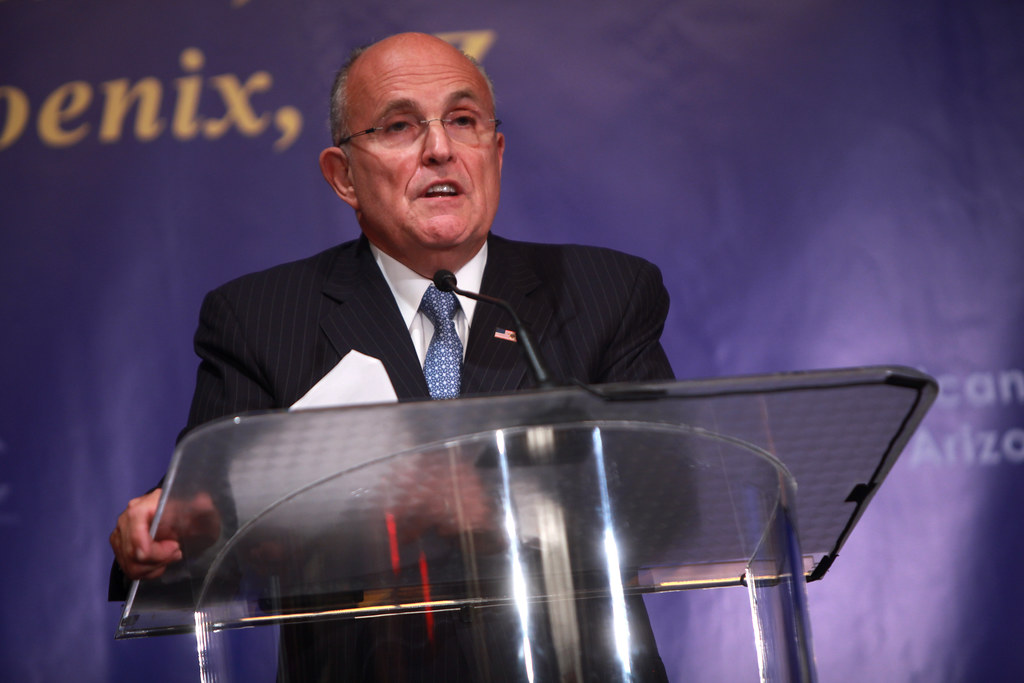
In a landmark trial that captured the nation’s attention, Rudy Giuliani, the former attorney to Donald Trump, faced the repercussions of his actions as a jury delivered a resounding verdict. Giuliani was ordered to pay a monumental sum of nearly $150 million to two Georgia election workers, Wandrea ArShaye “Shaye” Moss and Ruby Freeman, after spreading defamatory conspiracy theories following the 2020 election.
The eight-person jury’s unanimous decision came after days of deliberation, marking a significant moment in the legal repercussions surrounding post-election allegations. Giuliani’s accusations against the workers, implicating them in an election theft plot, resulted in a cascade of threats and harassment, permanently altering the lives of Moss and Freeman.
Throughout the trial, the two women recounted the harrowing consequences of Giuliani’s false claims. Moss detailed her desperate attempts to alter her appearance, fearing for her safety in the face of relentless targeting by right-wing extremists. Freeman, on her part, exposed the deluge of menacing messages threatening her and her daughter, magnifying the toll inflicted by Giuliani’s rhetoric.
Giuliani, unwavering in his stance, expressed no remorse following the verdict, vowing to contest the decision through an appeal. The trial highlighted not only the personal anguish suffered by Moss and Freeman but also the broader implications for democracy. Giuliani’s actions not only defamed these individuals but also sowed seeds of doubt in the democratic process, a point emphasized by the plaintiffs’ attorney in the trial’s closing arguments.
As Giuliani plans his legal strategy for an appeal, the profound impact of his defamation on both the lives of individuals and the broader context of election integrity continues to reverberate through a country grappling with the aftermath of a contentious election cycle.

