

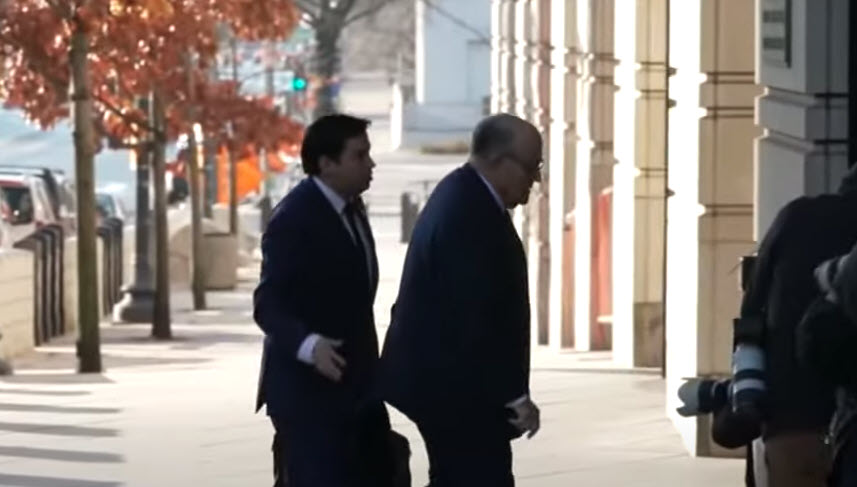
Jurors in Washington, D.C., are resuming deliberations today in the defamation trial against former Donald Trump lawyer Rudy Giuliani. They are tasked with determining how much he must pay to two Georgia election workers, Ruby Freeman and Shaye Moss, for spreading false claims about them after the 2020 election.
During closing arguments yesterday, Freeman and Moss’s attorney, Michael Gottlieb, urged the jury to award each woman $24 million. He emphasized the need to send a strong message: “These are not just damages for what happened to Ms. Freeman and Ms. Moss,” Gottlieb said. “These are damages that send a message to America that even powerful figures cannot assassinate the character of ordinary people without facing the consequences.”
Freeman and Moss, who worked as election workers in Fulton County, Georgia, during the 2020 election, faced a barrage of online threats and harassment after Giuliani, along with other Trump allies, falsely accused them of voter fraud. These accusations, the plaintiffs claim, caused them significant emotional distress and forced them to relocate from their homes.
Giuliani’s lawyers argued that he was merely exercising his First Amendment right to free speech and that he had a reasonable basis for believing his claims about election fraud. They also downplayed the extent of the harm caused to Freeman and Moss, arguing that the threats they received were not directly attributable to Giuliani’s statements.
The jury began deliberating yesterday afternoon and is expected to continue today. It is unclear how long it will take them to reach a verdict. The case is being closely watched as it could have implications for other lawsuits related to the 2020 election and free speech.
Key Points:
- Jurors are in their second day of deliberations in the defamation trial against Rudy Giuliani.
- Plaintiffs Ruby Freeman and Shaye Moss are seeking $24 million each in damages for false claims made by Giuliani about their role in the 2020 election.
- Giuliani’s lawyers argue that he was exercising his First Amendment right to free speech and that his claims were based on reasonable belief.
- The verdict could have implications for other lawsuits related to the 2020 election and free speech.

