

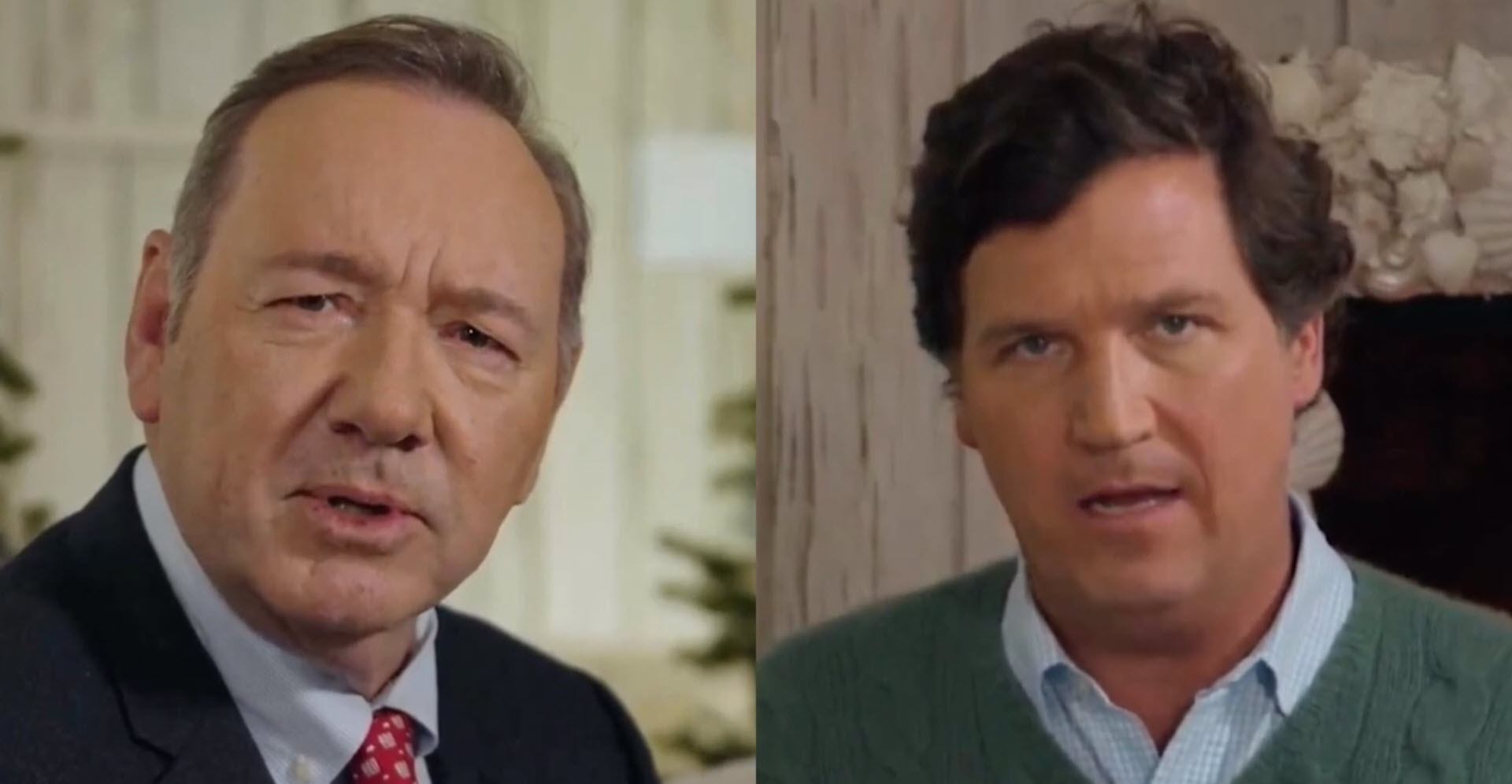
In a move that could only be conceived in the fever dream of cable news, Kevin Spacey has resurrected his infamous “House of Cards” character, Frank Underwood, for an interview with controversial pundit Tucker Carlson. Posted on X, the clip sees Spacey, facing his own career fallout from sexual misconduct allegations, commiserating with Carlson, recently ousted from Fox News over defamation claims. The result is a bizarre spectacle that is less political commentary and more a self-serving wallow in perceived victimhood.
Dressed in the signature Underwood garb, Spacey delivers familiar monologues about manipulation, power, and the “cruelty of the mob.” Carlson, adopting a fawning demeanor, plays the eager inquisitor, eagerly nodding along to Spacey’s pronouncements. The entire interview feels less like a genuine conversation and more like a shared grievance session, peppered with thinly veiled jabs at their respective former employers.
Spacey, facing multiple accusations of sexual assault and harassment, rails against Netflix for “cancelling” him based on “allegations alone.” He claims to have “put them on the map,” as if Netflix’s success solely rested on his portrayal of a fictional president. It’s a tone-deaf statement considering the gravity of the accusations against him and the numerous other talented actors who have graced Netflix screens.
Carlson, who was famously booted from Fox News after spreading false information about voting machine company Dominion Voting Systems, echoes Spacey’s sentiments. He paints himself as a martyr for free speech, conveniently glossing over the financial settlement with Dominion and the blatant falsehoods that got him fired.
The entire interview reeks of a desperate attempt at relevance from two figures clinging to past glories. Spacey, once a celebrated actor, now reduced to reliving a fictional character from years ago. Carlson, once a media darling, relegated to the fringes of online platforms. By clinging to their respective grievances, they attempt to rewrite their narratives, casting themselves as victims of a ruthless and unjust system.
However, the internet rarely forgets. Public memory, while fickle, can be unforgiving. Viewers are likely to see through the charade, recognizing the interview for what it truly is: a self-serving exercise in nostalgia and bitterness. It’s a reminder that actions have consequences, and even charming fictional personas cannot erase the realities of the present.
The “House of Cards” reunion on X offers no insightful commentary on politics or society. Instead, it serves as a cautionary tale, a reminder of the perils of unchecked ego and the dangers of mistaking grievance for righteousness. While Spacey and Carlson may find comfort in their shared sense of exile, it’s ultimately the audience who loses, left with a hollow spectacle that offers nothing but an uncomfortable glimpse into the self-absorption of the fallen.

