

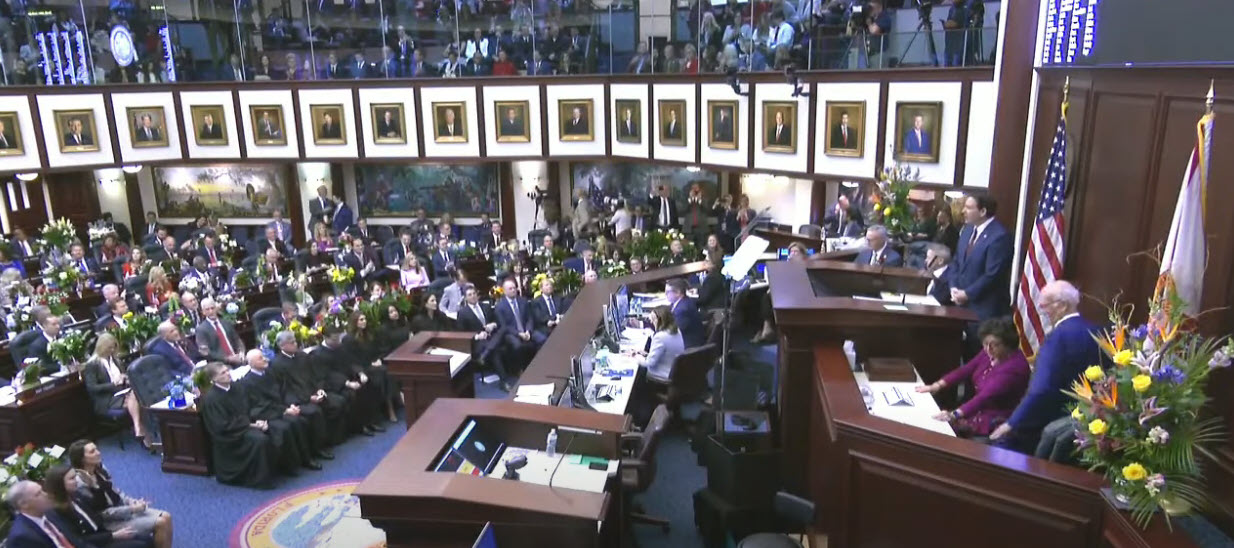
Governor Ron DeSantis, basking in Florida’s economic sunshine, painted a rosy picture of the state’s future during his State of the State address. However, Democratic lawmakers cast a shadow on the festivities, highlighting unresolved issues they claim DeSantis overlooks.
DeSantis championed Florida’s supposed ascent to the top, boasting its status as the “number one education state,” “leader in Gross Domestic Product,” and a haven for those fleeing “failed policies” in other states. He unveiled a budget proposal featuring teacher raises, Everglades restoration funds, tax cuts, and debt reduction, seemingly emphasizing fiscal responsibility and economic freedom.
Undeterred by the rosy outlook, Florida Democrats presented a counter-narrative. Rep. Michele Raynor criticized DeSantis for ignoring “basic issues” like affordable housing and healthcare, claiming Democrats have done more for the state than the current administration. Rep. Anna Eskamani accused DeSantis of neglecting Florida while campaigning for president, echoing calls from Senators Bobby Powell and Shevrin Jones for him to focus on governing rather than national ambitions.
This clash of viewpoints reflects a deeper ideological divide. DeSantis’ priorities seem geared towards economic growth, tax cuts, and conservative social policies, while Democrats advocate for greater social safety nets and addressing unmet needs.
The upcoming legislative session will be a critical test of these competing visions. Legislators will have to grapple with issues like education funding, environmental protection, and healthcare access, while navigating the political pressure of an election year.
Florida’s political landscape holds national significance, with its governor considered a potential presidential candidate. The state’s success or struggles could serve as a bellwether for future policies nationwide.

