

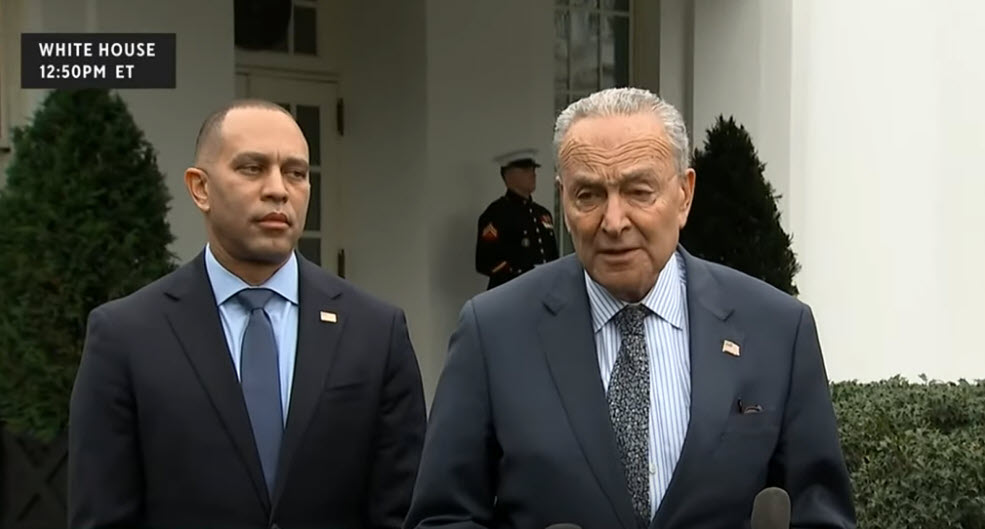
President Biden is engaging in high-stakes discussions with congressional leaders as the deadline for a government shutdown rapidly approaches. The meeting, attended by House Speaker Mike Johnson, Senate Majority Leader Chuck Schumer, Senate Minority Leader Mitch McConnell, and House Minority Leader Hakeem Jeffries, aims to chart a path forward to ensure continued government funding beyond March 1st.
The specter of a government shutdown looms large as the deadline inches closer, creating a sense of urgency in the nation’s capital. If no measures are taken to fund the government or extend current funding levels, a partial shutdown is set to commence at midnight Eastern Time on Saturday.
Senate Minority Leader Mitch McConnell emphasized on Monday that Congress possesses the tools necessary to avert a shutdown and underscored the detrimental consequences of such an outcome. McConnell stressed that shutdowns rarely yield positive results and urged a bipartisan effort to reach a funding agreement.
Should a government shutdown occur, critical agencies such as the Department of Veterans Affairs and the Food and Drug Administration (FDA) would bear the brunt of the impact. The potential disruption in government operations adds urgency to the ongoing negotiations between the executive and legislative branches.
President Biden’s meeting with congressional leaders reflects a commitment to finding a resolution and avoiding a government shutdown. The discussions center on navigating the complexities of budgetary negotiations, addressing key issues, and reaching a bipartisan agreement that ensures the continued functioning of essential government services.
As developments unfold, updates on the negotiations and any agreements reached during the meeting will be crucial in determining the immediate future of government funding. The ramifications of a shutdown extend beyond mere inconveniences, impacting the delivery of vital services and government operations.

