

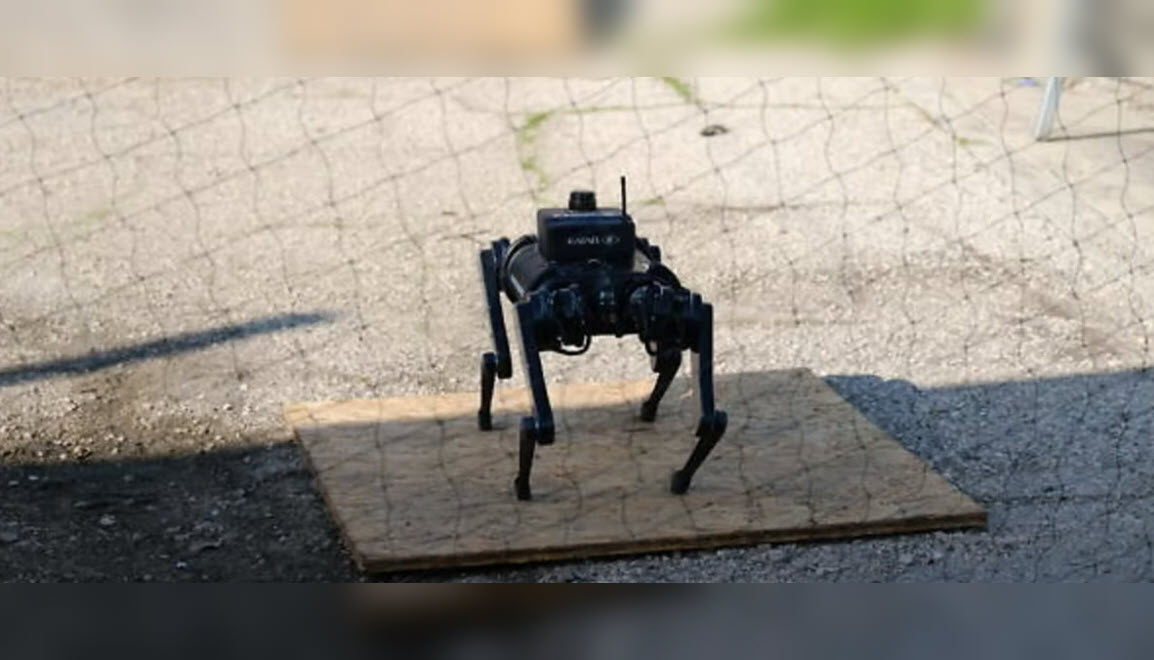
In a significant technological advancement, the Israel Defense Forces (IDF) have incorporated robots and artificial intelligence (AI)-guided weaponry into their operations in the ongoing conflict with Hamas across Gaza and the occupied Palestinian territories. Among the cutting-edge technologies employed are combat robots, prominently featuring “robodogs.” This article explores the IDF’s utilization of robotic innovations, shedding light on the evolving landscape of warfare and the implications of integrating advanced technologies in the volatile region.
The Israeli military has been increasingly embracing the use of combat robots in its efforts to counteract security threats posed by Hamas. These AI-guided machines play a pivotal role in navigating complex terrains, conducting surveillance, and engaging in combat situations. One notable inclusion in the IDF’s technological arsenal is the deployment of “robodogs,” showcasing a new frontier in military capabilities.
The term “robodogs” refers to quadruped robots equipped with advanced sensors, cameras, and weaponry. These robotic canines are designed to traverse challenging environments, providing real-time data to military operators while minimizing risks to human personnel. The IDF’s use of robodogs signals a paradigm shift in modern warfare, leveraging robotics to enhance strategic capabilities and adapt to evolving conflict scenarios.
Beyond robodogs, the IDF’s reliance on AI-guided weapons further exemplifies the integration of cutting-edge technologies in the conflict with Hamas. These AI-driven systems enhance precision in targeting, reduce collateral damage, and enable rapid responses to dynamic battlefield situations. As technology continues to play a central role in military strategies, the IDF’s adoption of AI-guided weaponry reflects a commitment to innovation in the pursuit of national security objectives.
While the integration of robotic technologies brings undeniable advantages in terms of efficiency and reduced human risk, it also raises ethical considerations and concerns about the potential escalation of conflict. The use of AI in warfare prompts discussions on the responsible and ethical deployment of such technologies, with implications for civilian safety, international norms, and the future trajectory of military engagements.
The IDF’s incorporation of robotic innovations has garnered international attention, sparking debates on the implications of AI and robotics in modern warfare. As conflicts evolve, the use of advanced technologies is likely to become more prevalent, influencing military doctrines and strategic considerations globally. The international community’s response to these developments will shape the discourse on the responsible use of technology in conflict zones.
The IDF’s deployment of combat robots, including the use of robodogs, represents a notable advancement in the intersection of technology and warfare. As AI-guided weaponry becomes integral to military operations, ethical considerations and international responses gain prominence. The ongoing conflict with Hamas serves as a testing ground for these technological innovations, raising questions about the future landscape of armed conflicts and the ethical boundaries that must be maintained.

