

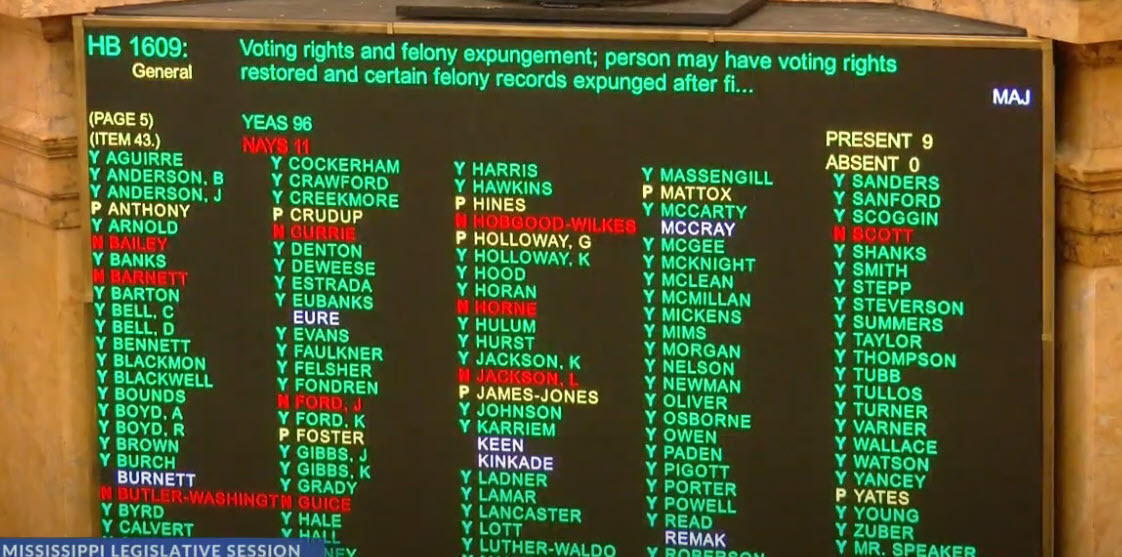
Mississippi lawmakers are considering a bill aimed at restoring voting rights for convicted felons, marking a significant step towards criminal justice reform in the state.
The proposed legislation seeks to address the disenfranchisement of individuals with felony convictions, a longstanding issue that disproportionately affects communities of color and low-income individuals. If passed, the bill would restore the right to vote for thousands of Mississippians who have completed their sentences and paid their debts to society.
Supporters of the bill argue that denying voting rights to individuals who have served their time undermines the principles of democracy and perpetuates systemic inequalities within the criminal justice system. They emphasize the importance of reintegration and rehabilitation for formerly incarcerated individuals, including their ability to participate fully in civic life.
However, the issue remains contentious, with opponents expressing concerns about potential risks to public safety and the integrity of the electoral process. Some critics argue that individuals convicted of serious crimes should not be granted the right to vote, citing the need for accountability and consequences for unlawful behavior.
The debate surrounding the bill reflects broader discussions on criminal justice reform and the need to address systemic barriers to reentry for formerly incarcerated individuals. Proponents of voting rights restoration view it as a crucial step towards promoting equity and inclusion, while opponents raise questions about the balance between rehabilitation and public safety.
As the bill continues to progress through the Legislature, its fate remains uncertain. However, its introduction signals a growing recognition of the need to reform voting rights laws and address the long-standing impacts of mass incarceration on disenfranchised communities in Mississippi.

