

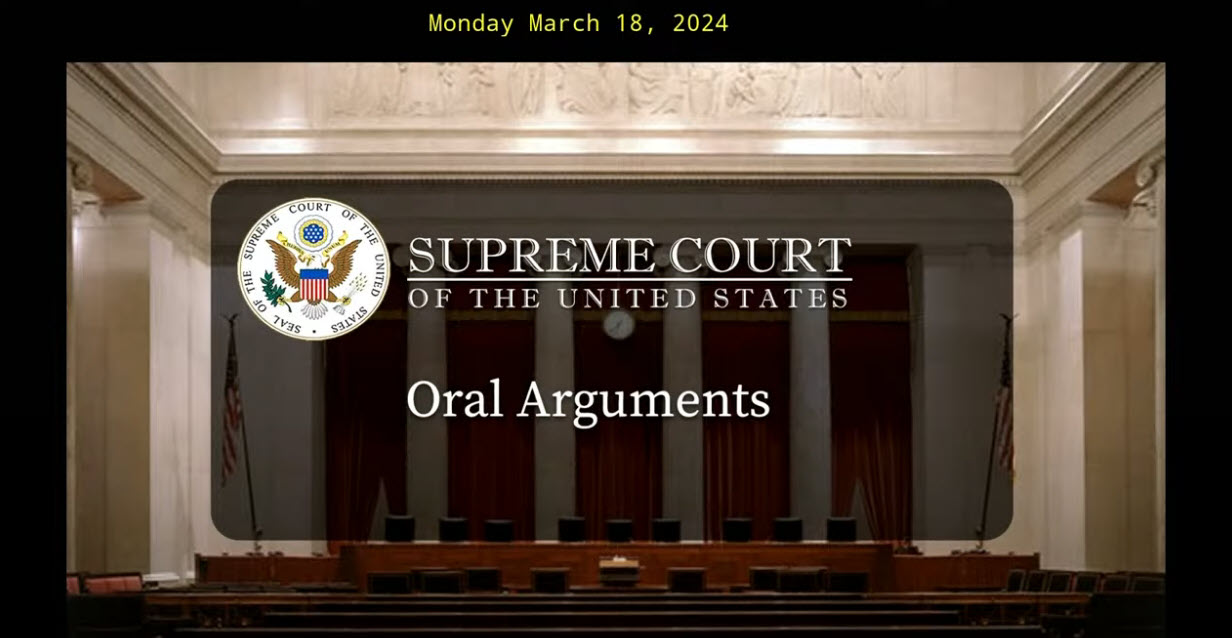
The Supreme Court is currently deliberating on a case that questions the legality of the Biden administration’s efforts to combat misinformation on social media platforms. This high-stakes legal battle centers on whether the government’s actions violate the First Amendment’s protections of free speech and expression.
Two Republican attorneys general brought the case against the administration, alleging that federal officials colluded with social media companies to engage in unconstitutional censorship. The heart of the matter lies in communications from administration officials urging platforms to regulate information related to the legitimacy of the 2020 election and the COVID-19 pandemic.
During the recent court proceedings, conservative Justice Samuel Alito expressed skepticism about the government’s approach, particularly its repeated interactions with Facebook. Alito characterized these interactions as “constant pestering,” highlighting concerns about potential government overreach and infringement on free speech rights.
The case raises fundamental questions about the role of government in regulating online content and the boundaries between combating misinformation and respecting individuals’ rights to express diverse opinions. The Supreme Court’s ruling on this matter is anticipated to have far-reaching implications for the regulation of social media platforms and the protection of free speech in the digital age.
In a related development, the Supreme Court also weighed in on a separate social media issue originating from the San Diego neighborhood of Poway. The court ruled that elected officials could be sued for blocking constituents on social media platforms if their accounts are considered “state action” or operate in an official capacity. This ruling underscores the evolving legal landscape surrounding social media interactions involving public officials and constituents.
As the Supreme Court continues to deliberate and issue rulings on social media-related cases, the outcomes will shape the legal framework governing online communication, information dissemination, and individual rights in the digital sphere.

