

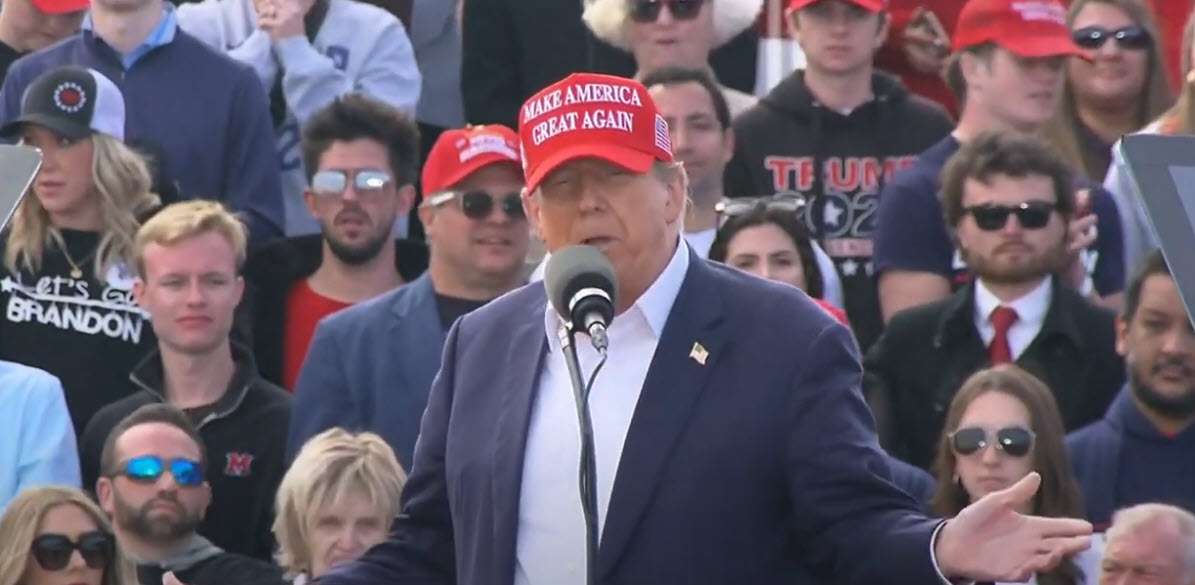
Former President Donald Trump has found himself embroiled in a heated debate after defending his recent “bloodbath” comment, which sparked controversy during a rally in Ohio. Trump’s remarks have ignited a firestorm of criticism from Democrats and the media, prompting him to clarify his statement and accuse his detractors of misinterpreting his words.
During the rally, Trump made headlines by stating that there would be a “bloodbath” if he were to lose the upcoming election in November. However, in a post on his Truth Social platform, Trump argued that his comments were taken out of context and misconstrued for political gain.
Trump clarified that his reference to a “bloodbath” was specifically about the potential impact on the auto industry if President Biden were to win re-election. He highlighted concerns about imports permitted under the current administration and expressed his views on the potential consequences for American industries.
The former president’s defense of his comment comes amidst swift condemnation from Democrats, including the Biden administration, who characterized Trump’s statement as a veiled call for political violence. The controversy surrounding Trump’s rhetoric underscores the heightened tensions and polarized political climate in the lead-up to the upcoming election.
Critics argue that Trump’s use of provocative language contributes to a divisive political discourse and raises concerns about the potential incitement of violence or unrest. Conversely, Trump’s supporters view his remarks as a bold assertion of his policy positions and a response to what they perceive as unfair attacks from political opponents and the media.
The clash over Trump’s “bloodbath” comment reflects broader debates about free speech, responsible political rhetoric, and the boundaries of acceptable discourse in the public sphere. As the election season intensifies, the role of language and messaging in shaping political narratives and mobilizing supporters remains a subject of scrutiny and debate.
The controversy surrounding Trump’s comment serves as a reminder of the complex and contentious nature of political discourse in contemporary America, highlighting the challenges of navigating sensitive issues while fostering constructive dialogue and civic engagement.

