

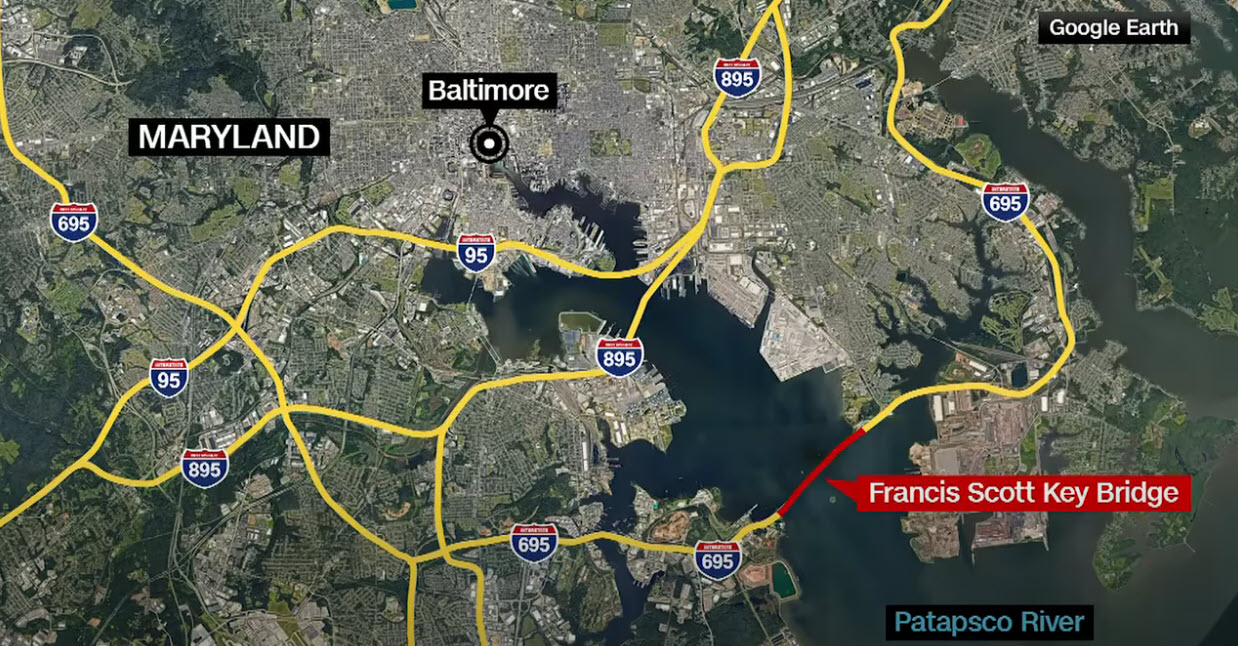
The recent collapse of Baltimore’s Francis Scott Key Bridge has sparked concerns about its economic repercussions, with both local and broader economic impacts coming into focus. The aftermath of this infrastructure disaster is raising questions about the region’s logistics, employment, and financial stability.
The collapse of the Francis Scott Key Bridge has resulted in uncertainty regarding the reopening of the port of Baltimore, a vital hub for regional and global trade. This uncertainty is rippling through various sectors, prompting discussions about the immediate and long-term economic consequences.
While alternate routes and ports along the east coast may mitigate some broader economic disruptions, the city of Baltimore is bracing for substantial impacts. The closure of the bridge directly affects over 15,000 port workers, many of whom face temporary furloughs. Additionally, the bridge’s collapse indirectly impacts nearly 140,000 jobs connected to port operations and related industries.
Economists suggest that any economic disruption caused by the bridge collapse will likely cycle through the economy in the coming weeks. However, they anticipate that the effects will become less noticeable by late April as recovery efforts and adjustments take effect.
Efforts to recover victims and salvage the bridge are underway, with officials shifting their focus to salvage and recovery operations. Maryland Governor Wes Moore has sought emergency relief funds from the federal government to aid in the response efforts and cover costs related to debris removal, demolition, and traffic operations.
There are promising signs regarding the funding for bridge reconstruction, as the federal government is expected to cover a significant portion of the rebuilding costs. Maryland Senator Chris Van Hollen has indicated that the reconstruction may be funded through the Federal Highway Administration’s emergency fund, with the state making an initial request for financial assistance.
In response to potential supply chain disruptions, governors of neighboring states, such as New York and New Jersey, have pledged to help minimize disruptions and maintain cargo flow. This regional cooperation aims to mitigate the impact of the bridge collapse on trade and commerce in the affected areas.
The economic fallout from the Baltimore bridge collapse underscores the interconnectedness of infrastructure, commerce, and employment. As recovery efforts progress and financial support is secured, stakeholders are optimistic about navigating through the challenges posed by this unforeseen disaster and restoring economic stability in the region.

