

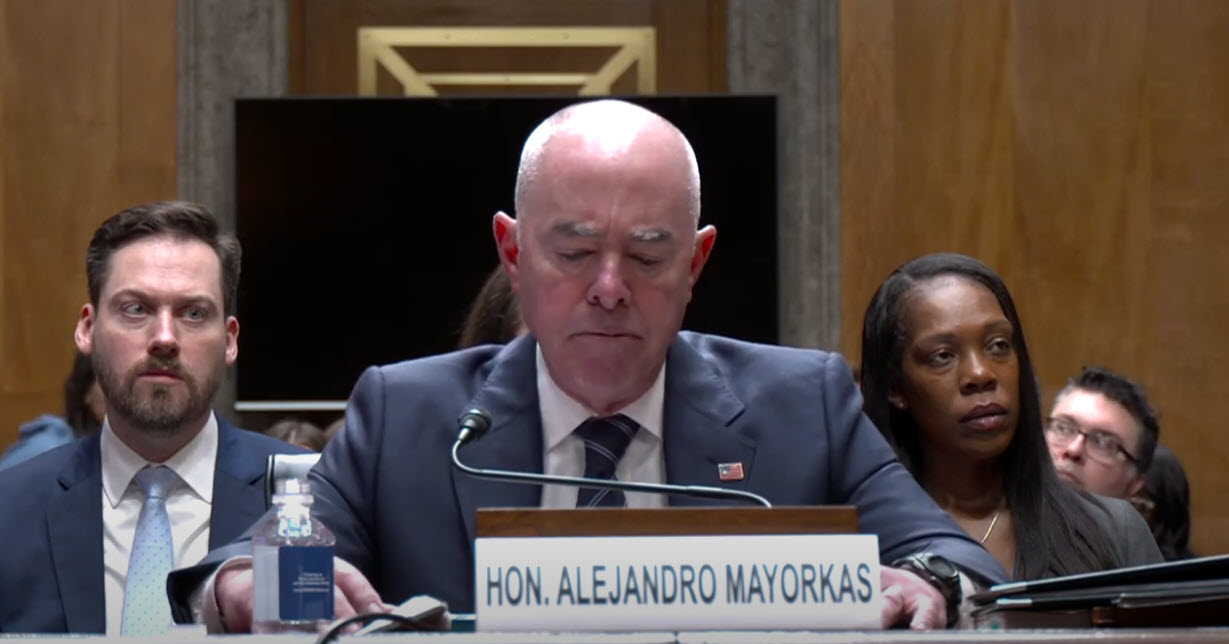
In a heated session on Capitol Hill, Homeland Security Secretary Alejandro Mayorkas faced intense questioning from Senate Republicans regarding a controversial murder case involving an illegal immigrant. The hearing comes just a day after the Senate dismissed impeachment charges against Mayorkas, who has been under scrutiny for his handling of border security issues.
During the session, Mayorkas vehemently refuted allegations from Congress that he lied under oath regarding the security of the southern border. He maintained that the border is secure and defended the policies in place for evaluating migrants before they are released into the country.
The focal point of the interrogation was the case of Laken Riley, a nursing student from Georgia who was tragically killed. Allegedly, the perpetrator was an illegal immigrant who crossed into Texas and was subsequently released due to a lack of available bed space. Senate Republicans pressed Mayorkas on this incident, demanding answers about the protocols followed and the decision-making process that led to the individual’s release.
Despite repeated questioning, Mayorkas refused to provide specific details about the Riley case, citing ongoing investigations and legal constraints. His stance drew criticism from Senate Republicans, who accused him of evading accountability and transparency regarding critical matters of national security and immigration enforcement.
The controversy surrounding Mayorkas’s testimony and the handling of the Riley case has fueled partisan tensions, with Democrats and Republicans clashing over immigration policies and border security measures. Mayorkas’s appearance before the Senate further highlights the deep divisions and contentious debates surrounding immigration reform and law enforcement practices.
Democrats have rallied behind Mayorkas, emphasizing the complexities of border management and the challenges faced by agencies like the Department of Homeland Security. They argue that comprehensive immigration reform is needed to address systemic issues and ensure both security and compassion in immigration policies.
As the Senate inquiry continues, the focus remains on accountability, transparency, and the broader implications of immigration policies on national security and public safety.

