

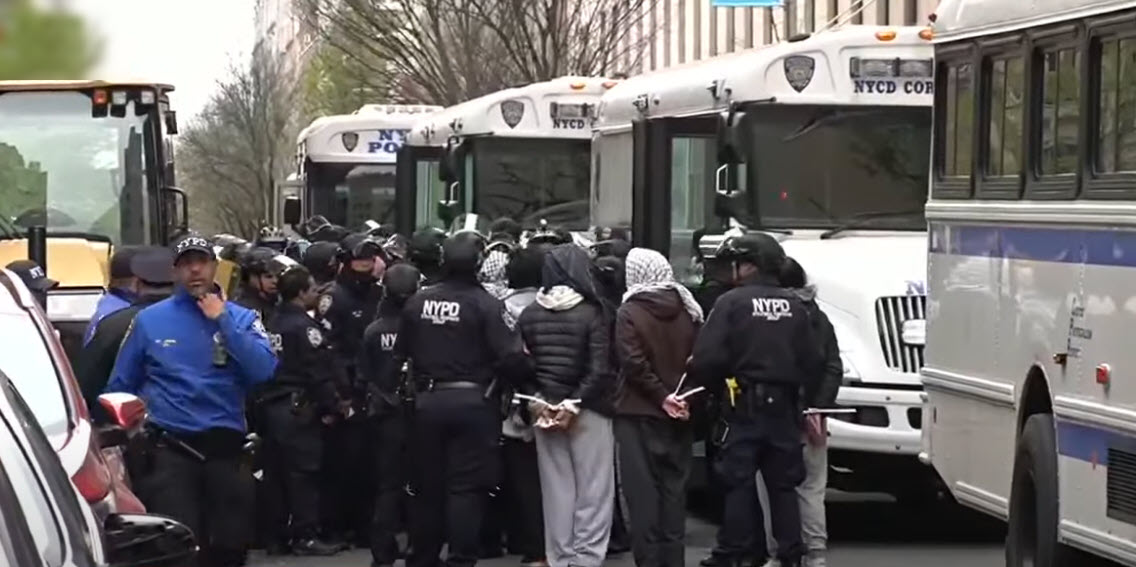
In a tense turn of events at Columbia University in New York City, the New York Police Department (NYPD) has taken action to arrest pro-Palestinian protesters who had set up camp on the university’s South Lawn. The arrests mark a significant escalation in the ongoing demonstrations and have sparked debates about free speech and campus activism.
The NYPD’s intervention comes after the university’s administration, led by President Minouche Shafik, authorized the removal of protesters and their tents from the campus grounds. This decision followed repeated requests from the school for protesters to dismantle their encampment and vacate the area.
The protesters, advocating for Palestinian rights and expressing solidarity with Palestine, had erected tents on the South Lawn as part of their demonstration. However, tensions rose as they refused to comply with the university’s directives to disperse, leading to the NYPD’s involvement to clear the area.
Videos and reports from the scene depict a significant police presence, with officers in riot gear working to dismantle the protest camp and arrest individuals for trespassing. Protesters are being escorted onto large NYPD buses as part of the clearing process.
The timing of these events is notable, occurring shortly after President Shafik’s testimony on Capitol Hill regarding antisemitism on Columbia University’s campus. The hearings, which received national attention, delved into the complexities of free speech, political activism, and campus safety in an era of heightened tensions around sensitive geopolitical issues.
The arrests and removal of protesters have sparked reactions from various quarters, with supporters of the demonstration condemning what they perceive as an attack on free speech and the right to peaceful protest. Conversely, others argue that the university has a responsibility to maintain order and ensure that protests do not disrupt campus activities or pose safety risks.
The incident at Columbia University reflects broader debates about the boundaries of activism, the role of law enforcement on college campuses, and the challenges of navigating contentious political issues in academic settings.

