

Pro-Palestinian protests have escalated across various U.S. college campuses, sparking controversy and drawing responses from authorities. At Columbia University in New York, protesters have taken drastic measures by barricading themselves inside an academic building overnight. The university has responded by suspending students who refuse to disband the encampment set up on campus, highlighting the intensifying tensions surrounding the protests. This action comes after a two p.m. Monday deadline was issued but ignored by the protesters.
NYPD officials are monitoring the situation closely after pro-Palestinian demonstrators caused damage and took over a building at Columbia University. Mayor Eric Adams stated that the police have been asked to patrol near the university entry points, emphasizing the need for maintaining public safety and order. The university, in response to the takeover, has restricted access to its Morningside Heights campus, allowing only essential personnel and students living on campus through a specific entry point.
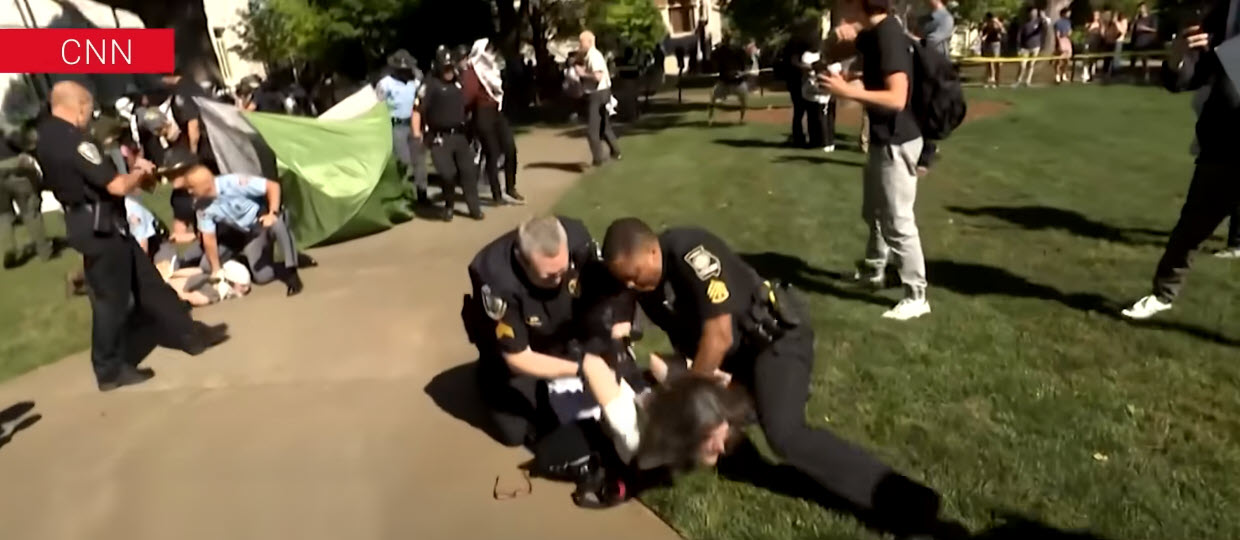
The escalation of protests has not been limited to Columbia University alone. At the University of North Carolina Chapel Hill, protesters are facing detention following a demand to disband their encampment. Similar situations unfolded at UT Austin and Virginia Tech, resulting in numerous arrests on Monday. In Portland, Oregon, Portland State University announced the closure of its campus after a demonstration against the war in Gaza turned illegal when protesters broke into the main library.
These developments have drawn strong reactions from various quarters. House Speaker Mike Johnson condemned the protests at Columbia University, describing them as “out of control” and emphasizing the need to respect free speech while ensuring the rights of all students. Governor Ron DeSantis of Florida took a firm stance, stating that the state’s university system would offer refuge to students dismayed by the escalating protests elsewhere.
House Speaker Mike Johnson spoke about visiting the university.
Secretary of Education Miguel Cardona expressed concern over the protests’ antisemitic chants and their impact on Jewish students’ safety. He warned that schools violating the Civil Rights Act by allowing discrimination based on religion could face the loss of federal funds. The demonstrations have also spread to California colleges and universities, including Cal-Poly Humboldt, USC, UCLA, UC Irvine, UC Riverside, Pitzer College, and Occidental College.
In his House floor remarks, Representative Mike Lawler (R-NY) strongly condemned the rise of antisemitism on college campuses, particularly highlighting a disturbing incident where the leader of the protest at Columbia University called for “death to Zionists.” Lawler emphasized the gravity of such hate speech and the dangerous implications it has for fostering intolerance and inciting violence. He stressed the need for universities to uphold free speech while also ensuring that hate speech and discriminatory rhetoric targeting specific groups, such as Zionists, are not tolerated in any form.
The ongoing protests underscore the complexities of free speech, campus activism, and the Israeli-Palestinian conflict. As universities grapple with balancing students’ rights to protest with maintaining order and safety on campuses, the debates surrounding divestment from Israel and calls for peace in Gaza continue to fuel passionate demonstrations and contentious discussions.

