

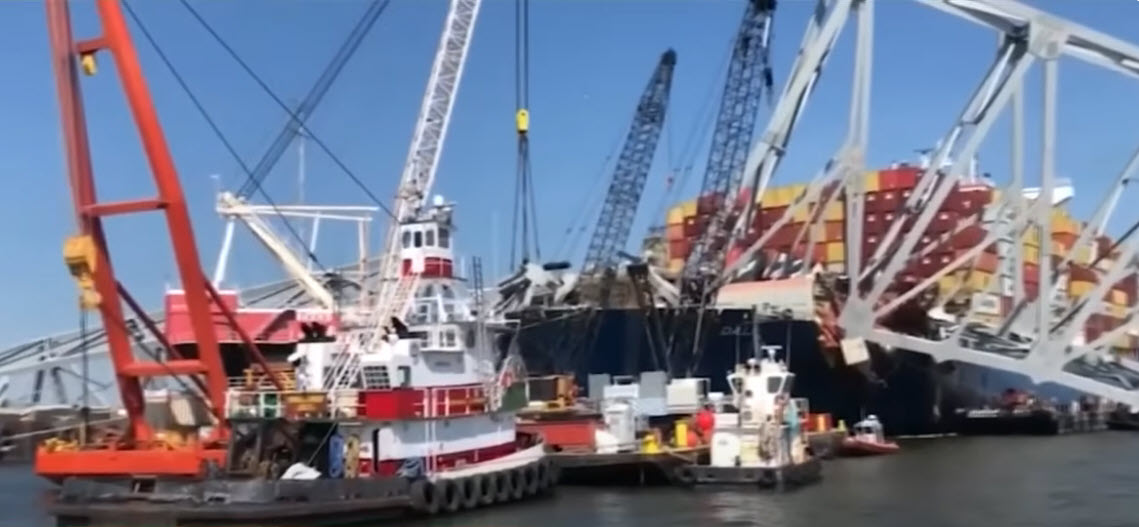
Maryland’s transportation authorities have unveiled plans to reconstruct the Francis Scott Key Bridge in Baltimore, estimating the cost of this ambitious project at a staggering $1.9 billion. This announcement follows the collapse of the bridge, a critical transportation artery, prompting urgent efforts to restore its functionality and safety.
According to Maryland Transportation Secretary Paul Wiedefeld, the projected cost for replacing the Francis Scott Key Bridge ranges between $1.7 billion and $1.9 billion. Wiedefeld’s remarks, reported by prominent news outlets like the “Baltimore Sun” and “Washington Post,” outline the substantial financial commitment required for this vital infrastructure undertaking.
The timeline for this ambitious endeavor aims for completion by the fall of 2028, signaling a focused effort to expedite the reconstruction process and minimize disruptions to regional transportation networks. The Francis Scott Key Bridge, a key link connecting various parts of Baltimore, plays a crucial role in facilitating commerce, commuting, and daily travel for thousands of residents and businesses.
In response to the substantial financial burden associated with this project, Maryland’s congressional delegation has taken proactive steps by introducing legislation to secure federal funding for the entire cost of replacing the bridge. This legislative initiative underscores the collaborative efforts between state and federal authorities to address critical infrastructure needs and ensure the safety and efficiency of transportation systems.
The collapse of the Francis Scott Key Bridge has raised concerns about the structural integrity of aging infrastructure across the United States. As investigations into the bridge collapse continue, authorities are focused on implementing robust safety measures and modernizing essential transportation assets to prevent similar incidents in the future.
The reconstruction of the Francis Scott Key Bridge represents a significant investment in Maryland’s infrastructure, signaling a commitment to enhancing transportation resilience, safety, and accessibility for communities across the region.

