

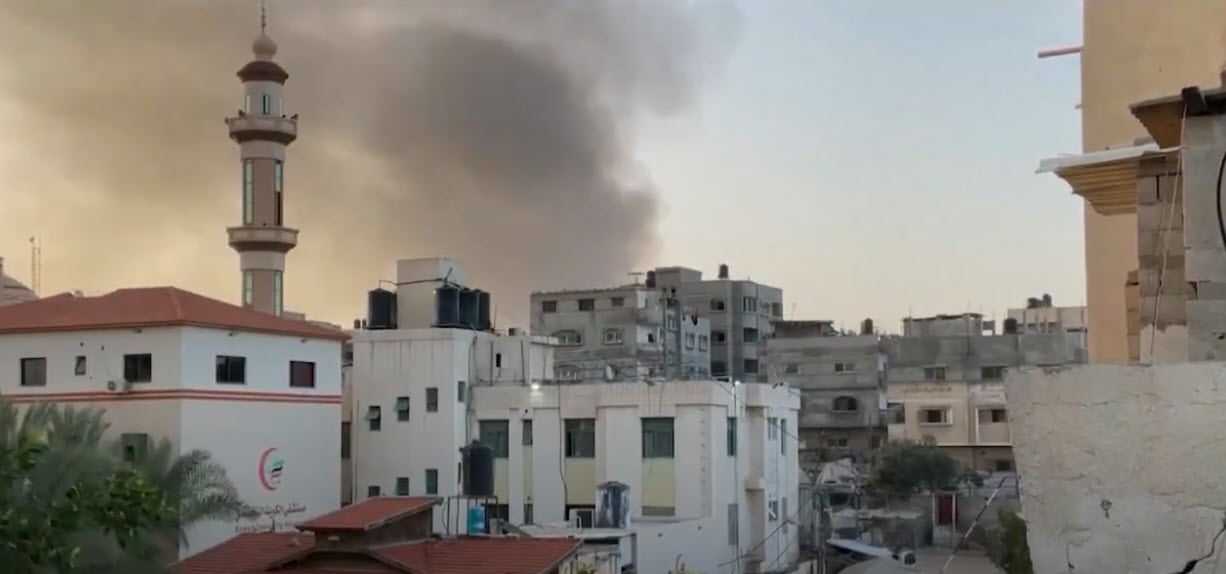
Israeli tanks have captured the main road through the center of Rafah, effectively encircling the eastern half of the city in the Gaza Strip. Today’s military maneuver has led to intense battles, with residents reporting explosions, gunfire, and heavy fighting between Israeli forces and militants from Hamas and Islamic Jihad. This operation comes despite recent warnings from President Biden that the U.S. would withhold offensive weapons from Israel if it attacked Rafah, where thousands of displaced Palestinian civilians have sought refuge.
Simultaneously, the Biden administration is preparing to release a report that assesses Israel’s military actions in Gaza, particularly in light of the use of American-supplied arms. According to ABC News, the report does not conclude that Israel violated international or U.S. law during its operations in Gaza. However, it is reportedly highly critical of some of Israel’s tactics throughout its military campaign against Hamas. The release of this assessment coincides with growing tensions over a potential full-scale Israeli invasion of southern Gaza.
Adding to the complexities, the White House has expressed serious concerns regarding a recent CNN report about an Israeli prison allegedly involved in the abuse of Palestinian detainees. National Security Council spokesman John Kirby highlighted the administration’s deep concerns about the conditions described in the report, which includes allegations of physical restraints and beatings of terror suspects detained amid the conflict with Hamas. The U.S. government is currently seeking explanations from Israeli officials in response to these allegations.
The political atmosphere in Washington D.C. is charged with tension as President Joe Biden’s threat to withhold an arms shipment to Israel divides Capitol Hill. Lawmakers from both sides of the aisle are locked in a fierce debate over the implications of the president’s decision, which could potentially alter the dynamics of U.S.-Israel relations. Supporters of the move argue that it is a necessary step towards ensuring that U.S. military aid is not used for actions that could exacerbate the conflict in the region, while opponents view it as an abandonment of a key ally at a critical moment. This division underscores the broader struggle within U.S. politics over how to balance strategic interests with ethical considerations in foreign policy.
As Israel intensifies its military operations in Rafah amidst the ongoing conflict with Hamas, the nation’s top military spokesman, Rear Admiral Daniel Hagari, has confidently addressed concerns about the potential impact of any arms holdup from the U.S. During a recent news conference, Hagari assured the public and international observers that the Israeli Defense Forces are well-prepared, possessing sufficient munitions for planned missions, including those in Rafah. His statement comes in response to the global scrutiny and diplomatic tensions arising from President Biden’s threat to withhold arms shipments, underscoring Israel’s readiness to continue its military objectives despite external pressures.
In the southern Gaza city of Rafah, Palestinians unable to flee the escalating conflict are trapped in precarious conditions, their vulnerability starkly highlighted by the flimsy nylon tents that serve as their only shelter. These tents, pitched on sandy grounds, offer little protection from the scorching early May sun and provide scant defense against the nightly bombings. While the UN agency responsible for Palestinian refugees reports that around 110,000 individuals have evacuated eastern Rafah, many families in other parts of the city remain, either by choice or necessity.
Youssef Al-Zahar, a father of seven, voices the dire situation: “This place is crowded with tents, there is nothing to protect us, there is intense fear and terror in our hearts,” he explains. “We were not able to move from this tent because we have no money and no car to transport us.” The grim reality for these residents is a waiting game filled with uncertainty and fear as they await their fate amidst ongoing combat.
These developments indicate a critical juncture in U.S.-Israeli relations and highlight the broader implications of the conflict in Gaza, which continues to draw international scrutiny and concern.

