

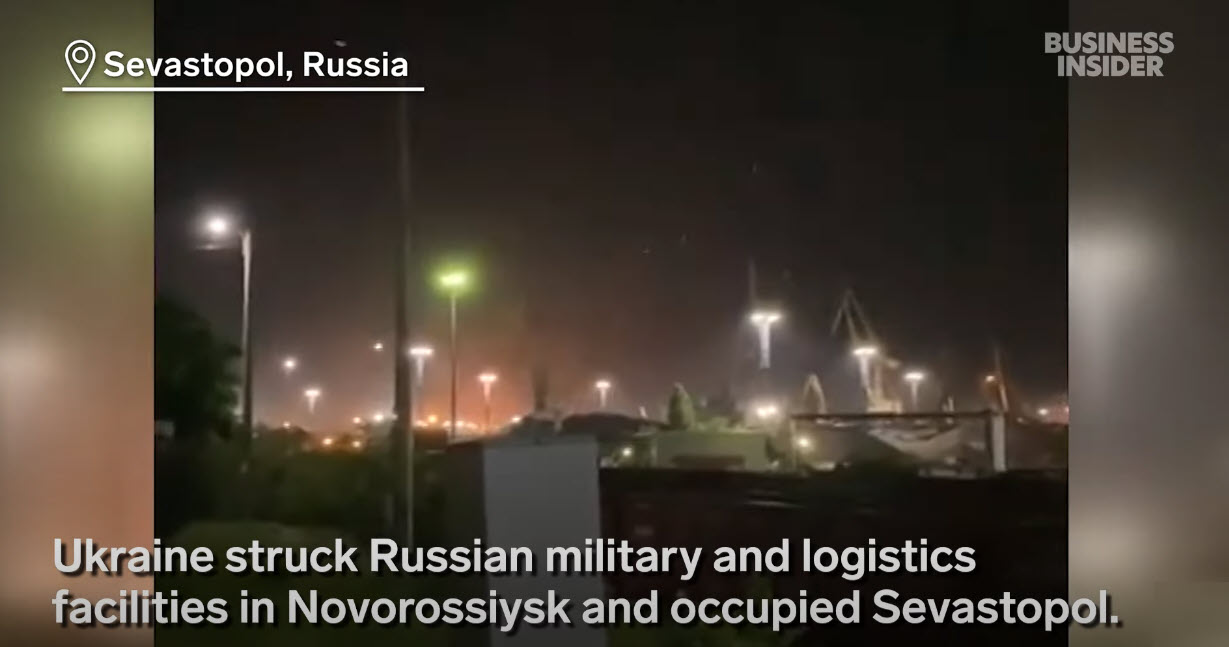
The war in Ukraine escalates dramatically as Russia suffers massive overnight attacks. The city of Kharkiv endured heavy bombardment last night, with reports of significant damage and casualties. Despite the intense assault, Russian President Vladimir Putin announces a strategic shift, stating that instead of capturing Ukraine’s second-largest city, the focus is now on establishing a buffer zone.
Putin explains that the renewed attacks in the Kharkiv region are a direct response to Ukrainian shelling in Russia’s Belgorod region. This marks a significant escalation in the conflict, with both sides intensifying their military efforts.
In addition to the ground assaults, Ukraine purportedly launched drone attacks on Russian soil, causing a fire at an oil refinery in Krasnodar. This incident highlights the expanding reach of the conflict and the increasing use of drone warfare by Ukrainian forces. The fire at the refinery underscores the vulnerabilities of critical infrastructure amid ongoing hostilities.
Russia claims to have intercepted over 100 Ukrainian drones in a massive counter-attack, yet the strikes on Russian border regions, including Belgorod, have resulted in significant casualties. Among the victims is a family tragically killed in the shelling, further escalating the human toll of the war.
The Russian military reports substantial damage to various targets and emphasizes their ongoing efforts to defend against Ukrainian advances. The intensity of the drone warfare and the effectiveness of these new tactics are becoming a central aspect of the conflict.
The shift in Russia’s strategy to establish a buffer zone rather than capturing key cities suggests a recalibration of military objectives. This move aims to create a protective barrier around critical areas while continuing to exert pressure on Ukrainian forces.
The international community watches closely as the conflict escalates, with concerns growing over the humanitarian impact. The attacks on civilian areas and critical infrastructure raise alarms about the worsening conditions for civilians caught in the crossfire.
Humanitarian organizations are calling for increased efforts to protect non-combatants and ensure access to essential services and aid. The escalation in hostilities complicates these efforts, making it more challenging to deliver humanitarian assistance to those in need.

