

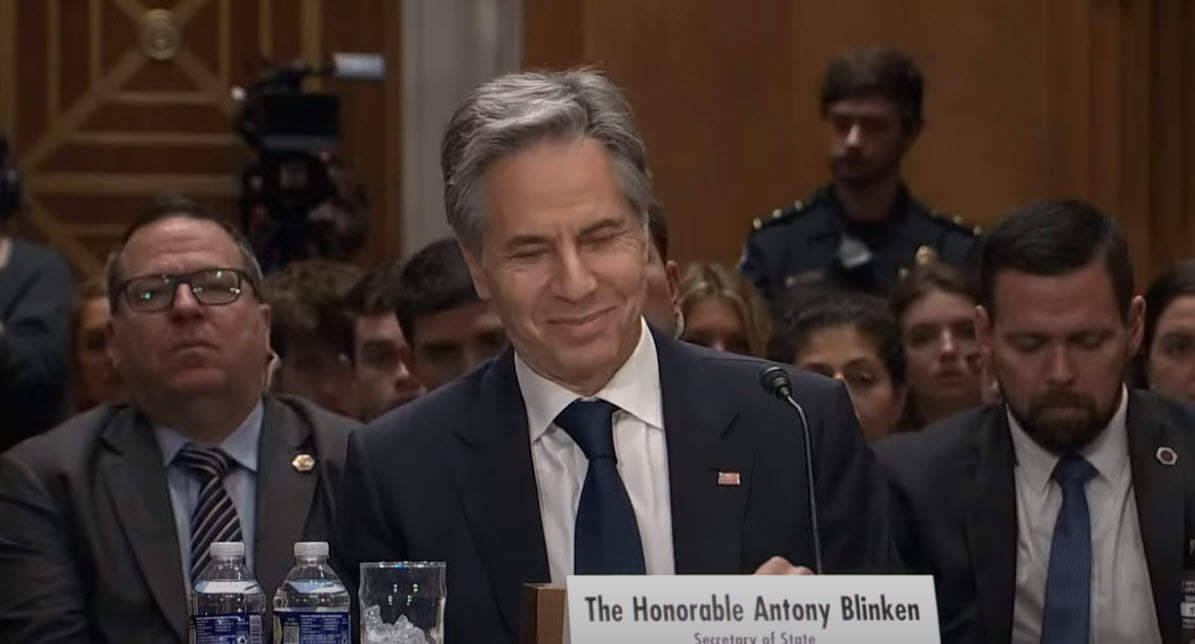
U.S. Secretary of State Antony Blinken signals his willingness to collaborate on legislative measures against the International Criminal Court (ICC) while facing intense scrutiny from the Senate Foreign Relations Committee. The discussion arises amidst escalating tensions and controversial U.S. foreign policy decisions concerning the war in Gaza.
Speaking at a Senate Foreign Relations Committee hearing on Tuesday, Blinken expressed openness to working with Senator James Risch, the committee’s top Republican, on potential legislative action against the ICC. This comes in response to the ICC’s recent application for arrest warrants for Israeli officials, a move Blinken denounced as a “profoundly wrongheaded decision.”
“I am open to looking at the appropriate steps we need to take in response to this decision by the ICC,” Blinken stated. Senator Risch indicated that he is already drafting legislation, to which Blinken responded, “the devil’s in the details,” committing to review the proposal thoroughly.
In addition to addressing the ICC issue, Blinken faced rigorous questioning from the Senate regarding President Biden’s handling of the ongoing conflict in Gaza. The session was notably disrupted by protesters who accused Blinken of being a “butcher” and a “war criminal,” reflecting the heated and divisive nature of the topic.
Blinken’s testimony follows President Biden’s recent announcement to delay a shipment of bombs to Israel and to consider withholding additional weapons should Israel proceed with a major invasion of the city of Rafah. These decisions have sparked significant debate and criticism from various political factions.
The Senate hearing underscored the contentious atmosphere surrounding U.S. foreign policy in the Middle East. Protesters’ interruptions highlighted the public’s deep concerns and anger over the U.S. government’s actions and its support for Israel amidst the Gaza conflict.
As Blinken navigates these complex issues, his statements suggest a readiness to engage in legislative efforts to counter the ICC’s decisions, potentially leading to significant diplomatic and legal ramifications. The ongoing scrutiny over the U.S.’s role in the Gaza conflict also indicates that the administration’s policies will continue to be closely examined and debated.
The proposed legislative actions against the ICC and the decisions regarding military support to Israel are likely to shape U.S. foreign policy discourse in the coming months. Blinken’s willingness to consider legislative measures against the ICC reflects broader geopolitical dynamics and the U.S.’s stance on international legal institutions.

