

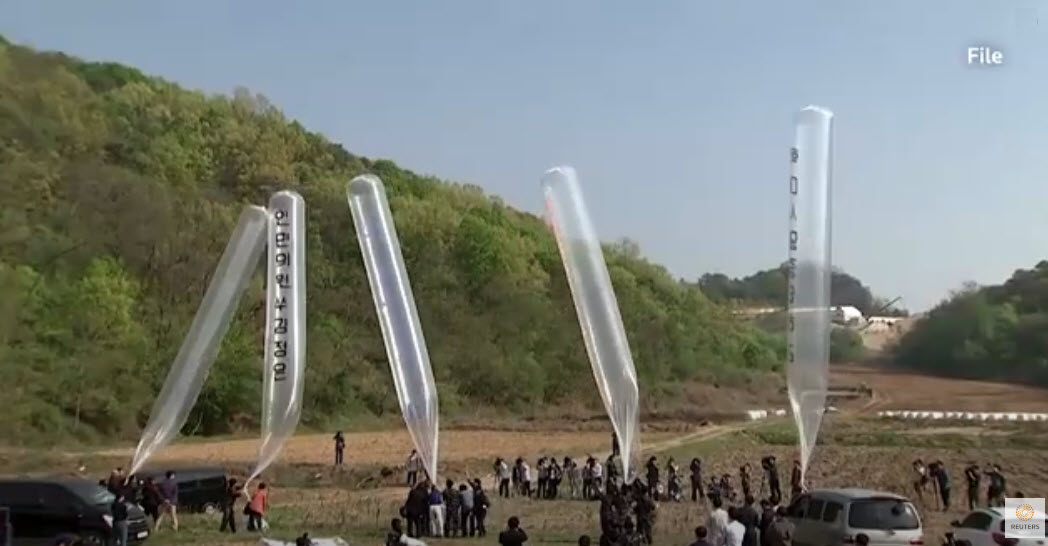
South Korea accuses North Korea of sending over 260 balloons filled with excrement across the border this week. The South Korean military reports that the balloons, seen floating across the Demilitarized Zone (DMZ), had various objects tied to them.
Upon inspection, military response teams discovered that most of the balloons, which landed on South Korean territory, contained trash and human waste. The incident marks a new form of provocation in the ongoing tensions between the two Koreas.
A spokesperson for the South Korean military condemned the actions, stating, “This act is not only a violation of our sovereignty but also a clear attempt to provoke and insult us. We are taking all necessary measures to ensure the safety and hygiene of our people.”
The deployment of such balloons is seen as a psychological tactic aimed at demoralizing and unsettling the South Korean populace. This incident follows a series of hostile exchanges and military posturing between the two countries, further straining their already tense relationship.
South Korea’s response includes enhanced border surveillance and the deployment of additional response teams to manage and dispose of the hazardous materials. The government is also urging residents near the border to report any suspicious objects or activities to authorities immediately.
International observers are closely monitoring the situation, as the act of sending balloons with excrement represents an escalation in the unconventional methods of provocation employed by North Korea. The global community, including the United Nations, has been briefed on the incident, with calls for North Korea to cease such activities that endanger public health and safety.
South Korea continues to seek diplomatic solutions to ease tensions, but this latest act of aggression underscores the challenges in achieving peaceful coexistence on the Korean Peninsula.

