

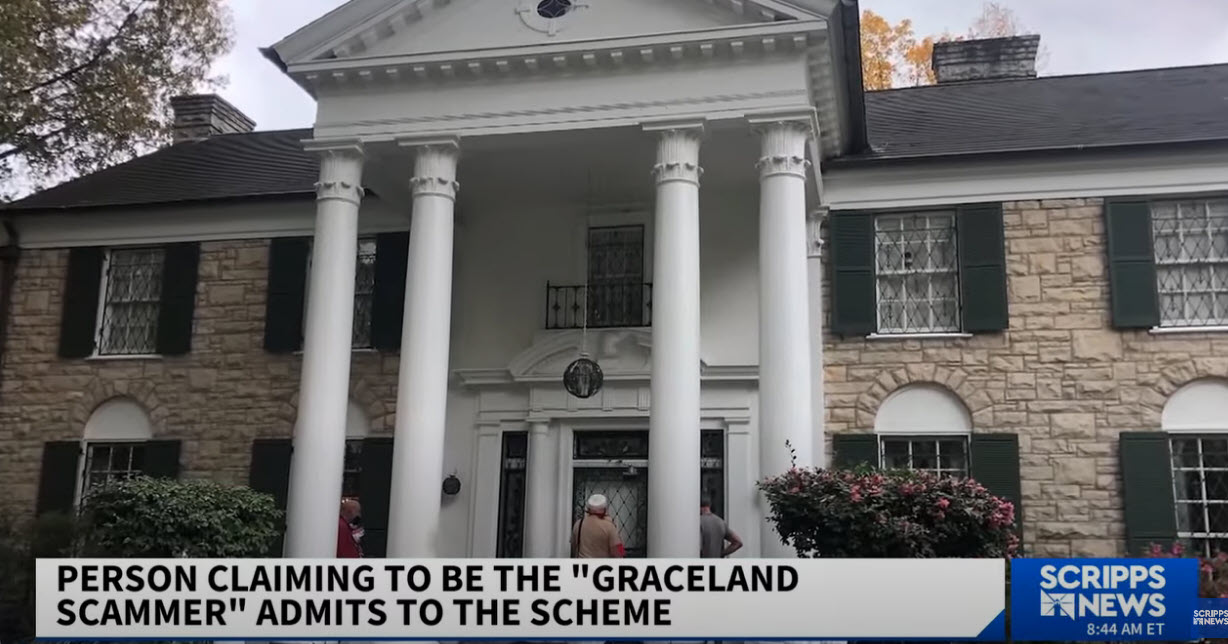
A self-proclaimed scammer is taking credit for an audacious scheme to force a foreclosure on Graceland, the iconic home of Elvis Presley. The scammer, reportedly based in Africa, claims that Elvis’ late daughter, Lisa Marie Presley, failed to repay nearly $4 million on an old loan, leading to a scheduled foreclosure auction. This shocking attempt was recently thwarted by Elvis’ granddaughter, Riley Keough.
The alleged scammer has come forward, boasting about the plot in an email sent to Inside Edition. The email reads, in part, “We’ve stolen millions from you blind fool Americans. We sit back and laugh at you idiots.” This brazen admission underscores the boldness of the scam, which has stunned fans and the Presley family alike.
The scammer posed as a representative of Naussany Investments, a company purportedly involved in the foreclosure process. However, it has since been revealed that this representative is part of a larger scam operation. In the email, the scammer admits to attempting to steal the identities of deceased individuals and senior citizens in the U.S., further complicating the ongoing investigation.
The plot to snatch Graceland nearly succeeded but ultimately fell apart last week when a judge intervened, postponing the foreclosure proceedings. This legal intervention gave Riley Keough and the Presley family the opportunity to uncover the fraudulent scheme and take action to protect the storied property.
The revelation of this scam highlights broader concerns about the security of iconic properties and the lengths to which fraudsters will go to exploit them. Authorities are now investigating the full extent of the scammer’s activities and working to identify and apprehend those responsible.
As the investigation continues, the Presley family remains vigilant in safeguarding their legacy. Graceland, a symbol of Elvis Presley’s enduring influence and cultural impact, remains under the family’s control thanks to the swift actions of Riley Keough and the legal system’s intervention.
This incident serves as a stark reminder of the pervasive threat of financial fraud and the importance of vigilant oversight to protect valuable assets from unscrupulous actors.

