

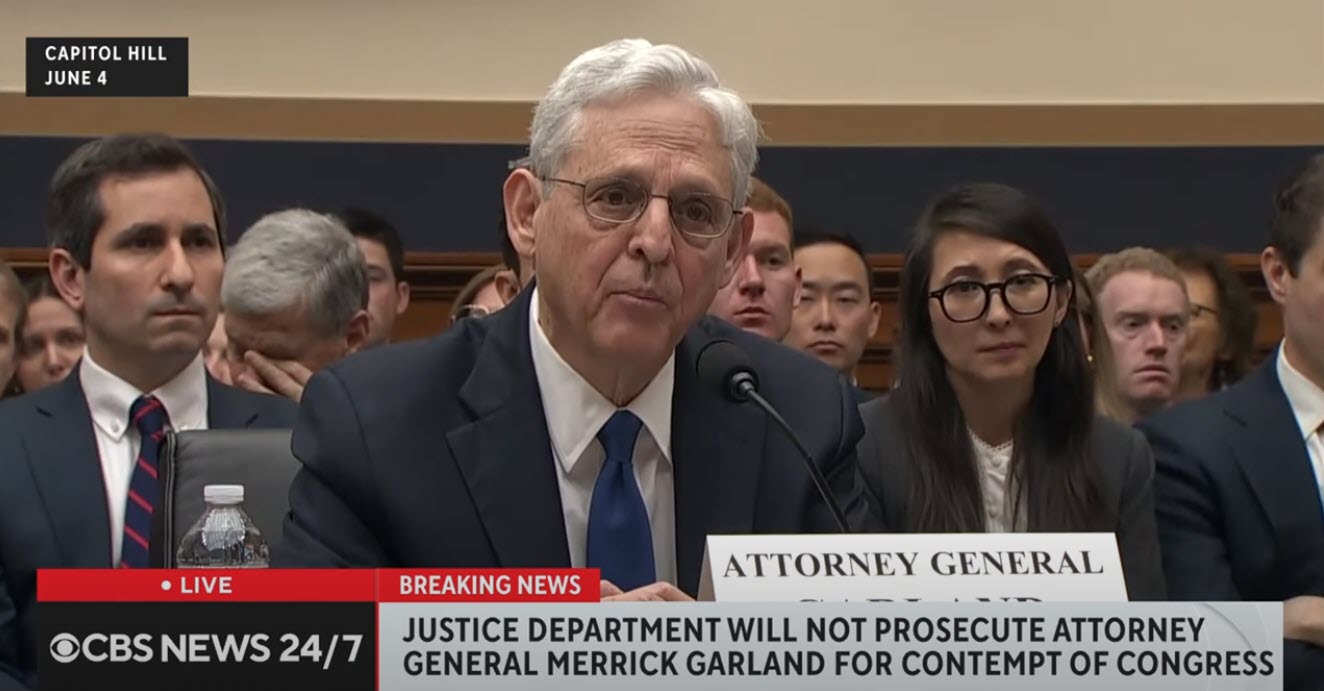
The Department of Justice (DOJ) announces that it will not prosecute Attorney General Merrick Garland following a House contempt vote against him. The decision, communicated to House Speaker Mike Johnson, underscores the DOJ’s longstanding policy of not prosecuting executive branch officials who withhold information from Congress under claims of executive privilege.
The Republican-led House vote to hold Garland in contempt stemmed from the DOJ’s refusal to release audio recordings of President Joe Biden’s interview with the special counsel investigating his handling of classified documents. The controversy escalated after special counsel Robert Hur stated that he would not pursue prosecution against President Biden. Hur’s reasoning—that a jury might view Biden as a “sympathetic, well-meaning, elderly man with a poor memory”—ignited a political firestorm.
The DOJ’s letter to Speaker Johnson emphasized the precedent of protecting executive branch confidentiality to maintain the separation of powers and the effective functioning of the government. “This position is critical to preserving the autonomy and integrity of the executive branch,” the letter stated, reaffirming the DOJ’s commitment to these principles.
The House vote reflects deepening partisan tensions over the investigation into President Biden’s handling of classified materials. Republicans argue that the administration is not being transparent and accuse Garland of obstructing congressional oversight. Democrats, on the other hand, defend the DOJ’s actions as necessary to uphold executive privilege and prevent political interference in legal proceedings.
Special counsel Hur’s decision not to prosecute Biden has further polarized the political landscape. His statement regarding the potential jury’s perception of Biden sparked outrage among Republicans, who see it as evidence of a double standard in the enforcement of laws governing the handling of classified information. Democrats, meanwhile, argue that Hur’s assessment underscores the complexities of the case and the difficulties in securing a conviction.
This development comes amid broader discussions about the balance of power between the executive branch and Congress. The use of executive privilege has been a contentious issue in numerous administrations, often leading to clashes over access to information and accountability.
As the DOJ maintains its stance on non-prosecution of executive officials, the political and legal battles surrounding this case are likely to continue. The decision not to prosecute Garland sets a significant precedent for future conflicts between Congress and the executive branch, reinforcing the DOJ’s role in navigating these complex constitutional issues.
The refusal to prosecute also highlights the challenges faced by the Biden administration in addressing concerns over transparency and accountability while protecting executive branch prerogatives. This balancing act will continue to shape the political discourse in Washington as both parties prepare for upcoming elections and ongoing investigations.

