

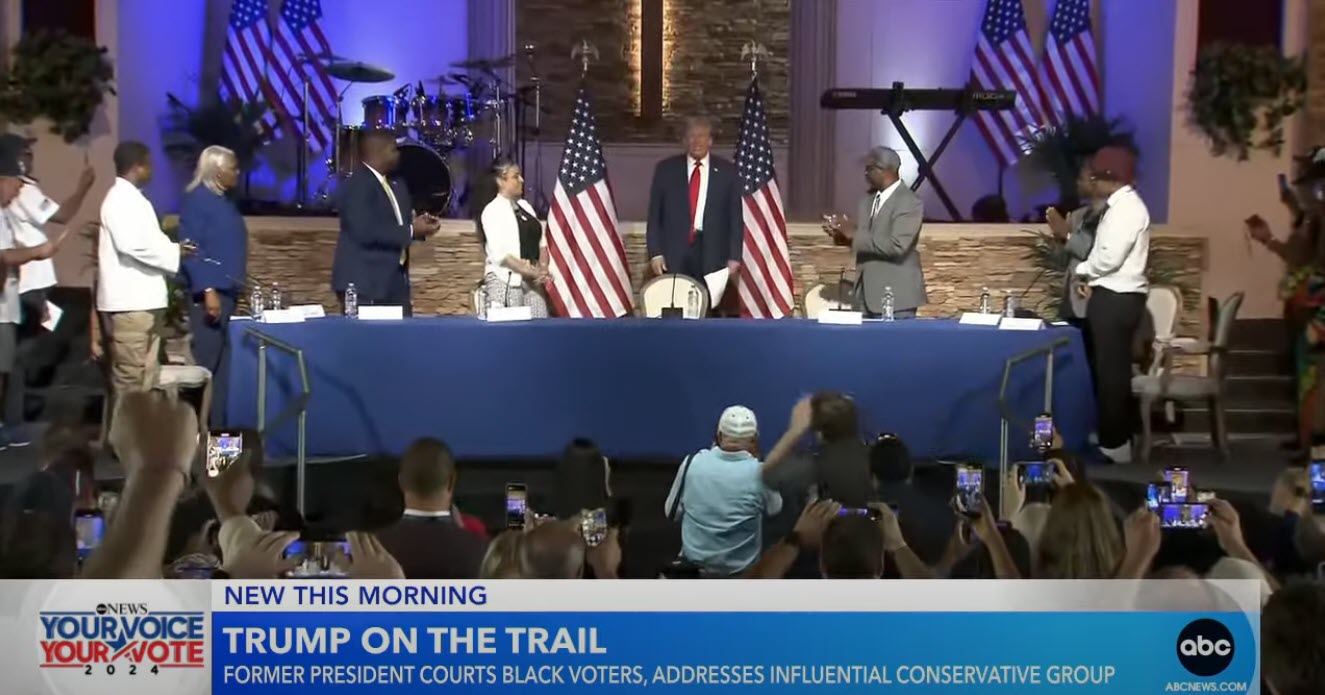
Former President Donald Trump spends the weekend making a significant appeal to Black voters in Detroit, marking a strategic effort to broaden his support base ahead of the 2024 presidential election. Trump’s visit includes several events aimed at connecting with the local community, drawing both praise and controversy.
One of the most notable moments of the weekend occurs when Pastor Lorenzo Sewell publicly thanks Trump for visiting his neighborhood, a gesture that quickly goes viral. Appearing on ‘America’s Newsroom,’ Sewell discusses the impact of Trump’s visit on his community, highlighting the former president’s growing popularity among Black voters even as President Joe Biden’s approval ratings decline. “Trump’s presence here shows that he cares about our community,” Sewell states, emphasizing the importance of political leaders engaging directly with constituents.
In his speeches, Trump addresses key issues affecting Black Americans, including economic opportunities, education, and criminal justice reform. He touts his administration’s record on job creation and the First Step Act, a bipartisan criminal justice reform bill he signed into law. “We need a leader who listens and acts,” Trump tells the crowd, aiming to convince attendees that his policies better serve their interests compared to those of his successor.
Trump’s efforts to appeal to Black voters come amidst mixed reactions. Rev. Al Sharpton responds to the outreach, referencing Trump’s past claims of having “many, many black friends” as evidence against accusations of racism. In an appearance on his show, Sharpton criticizes these assertions, suggesting they oversimplify and sidestep more profound issues of racial inequality and Trump’s controversial past statements and policies. “Having Black friends doesn’t exempt you from being scrutinized for your actions and policies,” Sharpton remarks.
The reception to Trump’s outreach is a microcosm of the broader political dynamics as the country gears up for the 2024 election. While Trump’s efforts resonate with some, drawing enthusiastic support and raising his profile among Black voters, others remain skeptical, questioning the sincerity and impact of his outreach.
As Trump courts this critical voter demographic, his campaign hopes to chip away at traditional Democratic support within the Black community. This strategy is part of a broader effort to present himself as a candidate who transcends racial divides and addresses the concerns of all Americans.
The evolving narrative surrounding Trump’s relationship with Black voters highlights the complexities of race and politics in America. It underscores the importance of genuine engagement and the potential for political realignments in an increasingly diverse electorate.

