

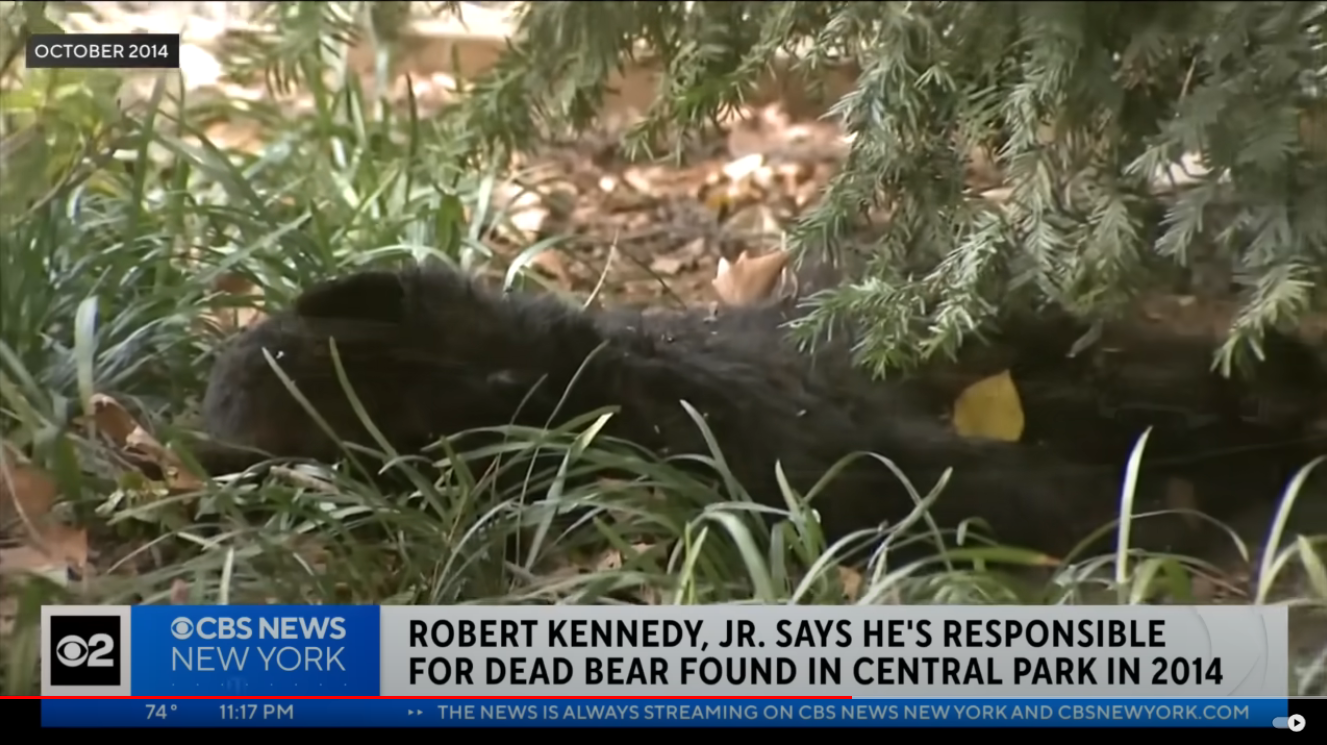
New Yorkers are expressing a mix of shock, confusion, and outrage after Robert F. Kennedy Jr. admitted to dumping a dead bear cub in Central Park nearly a decade ago. The revelation came from Kennedy himself, who posted a video on X (formerly Twitter) on Sunday, where he recounted the story to comedian Roseanne Barr. The independent presidential candidate said he wanted to come clean about the incident before an article about it surfaced in The New Yorker.
In the video, Kennedy explained that he had encountered the bear cub, which had been struck and killed on a road in the Hudson Valley. He decided to take the animal, intending to skin it and use the meat. “I put it in my van with the thought of taking it home,” Kennedy recounted. “But when I got to the city, I realized I couldn’t keep it, so I left it in Central Park.”
The bizarre confession has sparked a wave of reactions from the public and media alike. Many New Yorkers, known for their strong opinions and vocal expressions, have taken to social media and local forums to voice their thoughts. Some are bewildered by the sheer oddity of the act, while others are critical of Kennedy’s judgment and behavior.
City officials and environmental groups have also weighed in on the matter. The New York City Department of Parks and Recreation issued a statement condemning the act, emphasizing the importance of respecting urban wildlife and park spaces. “Central Park is a sanctuary for many forms of life, and actions like these are deeply irresponsible and disrespectful,” the statement read.
Animal rights organizations have expressed concern over Kennedy’s handling of the situation. PETA (People for the Ethical Treatment of Animals) issued a statement criticizing Kennedy’s decision to transport and dispose of the animal in such a manner. “This incident shows a blatant disregard for wildlife and proper protocols,” PETA’s spokesperson said. “There are established procedures for dealing with deceased animals, and this was not one of them.”
Political analysts are also scrutinizing the impact of this revelation on Kennedy’s presidential campaign. Known for his environmental advocacy and outspoken views, this incident contrasts sharply with the image he has cultivated over the years. Some experts believe it could alienate potential voters, particularly those who prioritize animal rights and environmental stewardship.
Despite the backlash, Kennedy has remained unapologetic, stating that his actions, while perhaps unconventional, were not intended to cause harm or disrespect. “I thought I was doing the right thing at the time,” he said in the video. “Looking back, I can see how it might seem strange or inappropriate.”
The story has quickly become a topic of conversation across the city, with many New Yorkers debating the ethical and legal implications of Kennedy’s actions. While some are willing to dismiss it as a quirky anecdote from a complex figure, others see it as a troubling sign of poor judgment.
As the public continues to react, the incident highlights the broader issues of how urban residents interact with wildlife and the responsibilities of public figures in setting examples for behavior. The controversy surrounding Kennedy’s confession is likely to linger, impacting his campaign and public perception in the weeks to come.

