

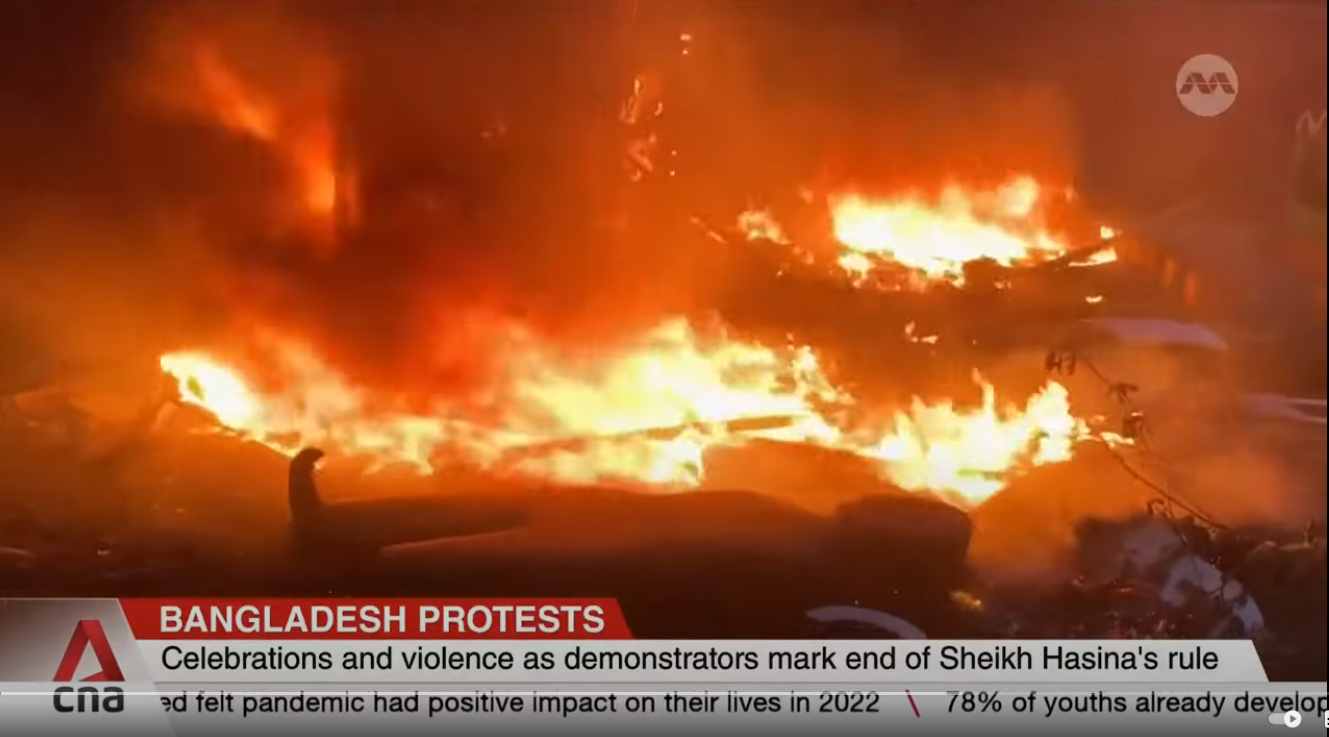
Negotiations are currently taking place between protest leaders and the military in Bangladesh following the dramatic resignation and flight of Prime Minister Sheikh Hasina. The Prime Minister fled to India after massive protests turned violent, resulting in the deaths of more than 100 people.
The unrest reached a peak on Monday when huge crowds stormed Hasina’s official residence in Dhaka. The capital saw widespread looting and disorder as demonstrators expressed their fury against what they call a “mafia state” created under Hasina’s 15-year rule.
The protests, which began in July with demands to abolish civil service job quotas, quickly escalated into broader calls for Hasina to step down. The situation deteriorated to such an extent that the military had to intervene, promising the establishment of an interim government and the announcement of new elections. However, details about these plans remain sparse.
Bangladesh’s army chief has stated that the interim government will be announced soon, yet the student leaders, who have been at the forefront of the protests, have made it clear that they will not accept a military-led government. “Our movement is for democracy and civilian rule, not military control,” a student leader declared during a rally in Dhaka.
The departure of Sheikh Hasina marks a significant shift in Bangladesh’s political landscape. Hasina, who has been a dominant figure in Bangladeshi politics, faces accusations from protesters of establishing a corrupt and autocratic regime. Demonstrators have been vocal in their demand for an end to what they describe as a “mafia state.”
The military’s promise of new elections is seen as a critical step towards restoring order, but the path forward remains uncertain. The international community is closely monitoring the situation, with calls for a peaceful resolution and respect for democratic principles.
In the meantime, the streets of Dhaka and other major cities in Bangladesh remain tense. The military’s presence is heavily felt, and there is a palpable sense of urgency for a resolution that will address the protesters’ demands without further bloodshed.
As talks continue, the outcome of these negotiations will be pivotal in determining the future political direction of Bangladesh. The world watches as the nation navigates this period of upheaval, hoping for a peaceful and democratic resolution.

