

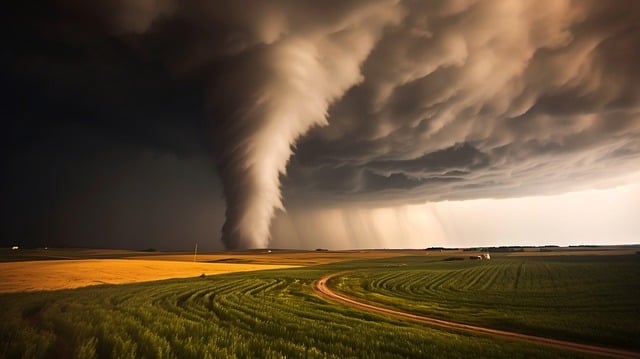
The recent surge of severe weather events in Iowa and Nebraska has sparked discussions and theories about the shifting boundaries of “Tornado Alley.” Notably, more tornadoes have been confirmed east of the Mississippi River this year, leading some to question whether the traditional concept of Tornado Alley is still accurate.
Rich Thompson, a meteorologist with the National Weather Service (NWS) Storm Prediction Center, suggests that advancements in technology may play a significant role in these observations. “Forecasters have gotten better at confirming tornadoes outside of ‘Tornado Alley,'” Thompson explains. He adds that it’s possible the concept of Tornado Alley has been flawed all along, and the recent data reflects a broader understanding of tornado activity across the United States.
Despite the increase in confirmed tornadoes in regions traditionally not associated with Tornado Alley, forecasters at the NWS Storm Prediction Center advise caution against jumping to conclusions about a geographical shift. They emphasize that improved tornado detection capabilities have contributed to the higher number of confirmed tornadoes in areas east of the Mississippi River.
Severe weather experts are analyzing data to better understand these patterns. The enhanced detection and confirmation of tornadoes outside the traditional Tornado Alley highlight the need for continuous adaptation and update of meteorological theories based on new evidence and technology.
The term “Tornado Alley” has historically referred to the region of the central United States where tornadoes are most frequent, typically encompassing parts of Texas, Oklahoma, Kansas, and Nebraska. However, as detection methods improve, the ability to confirm tornado occurrences in other regions increases, suggesting that tornado risk may be more widespread than previously thought.
Forecasters at the NWS Storm Prediction Center are committed to refining their understanding of tornado activity and ensuring that all regions at risk receive accurate and timely warnings. This ongoing research is crucial for public safety and improving preparedness for severe weather events.

