

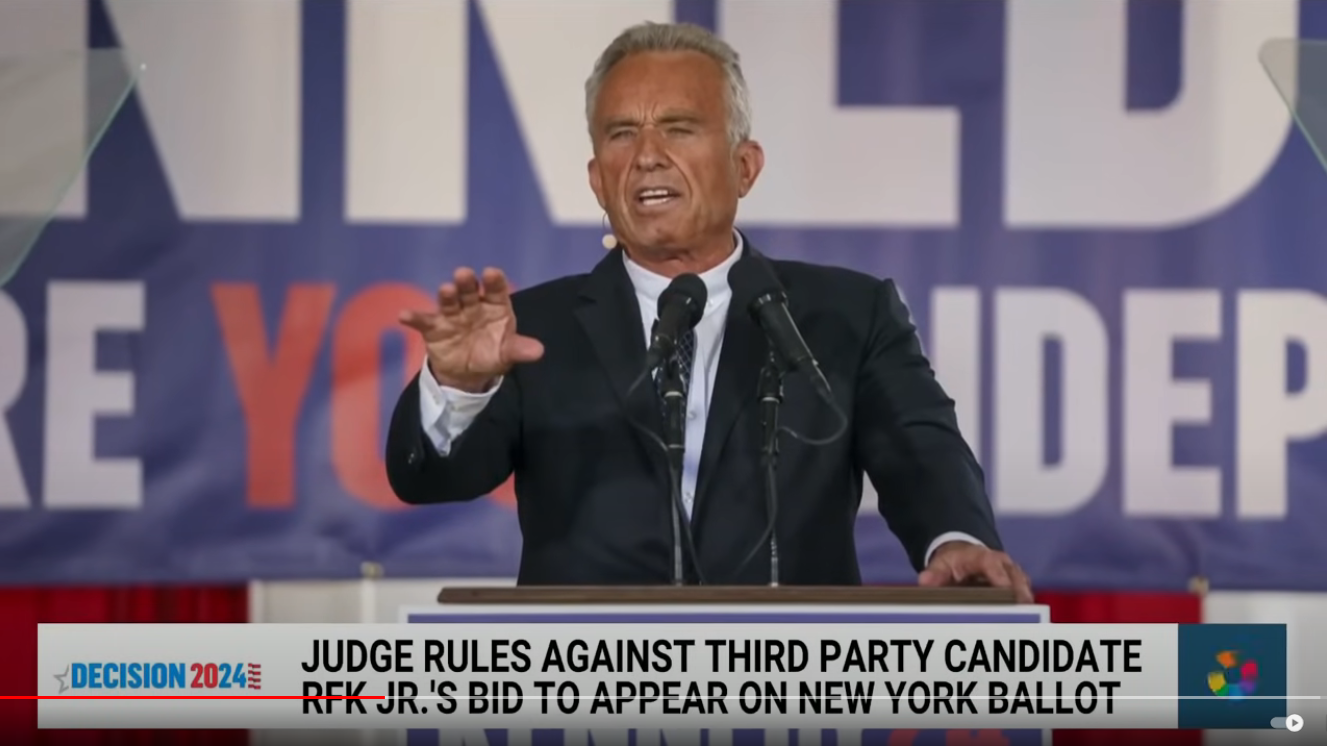
Independent presidential candidate Robert F. Kennedy, Jr. is set to appeal a New York judge’s decision that disqualified him from appearing on the state’s ballots for the upcoming fall election. The ruling, which has sparked controversy, centers around questions regarding Kennedy’s residency claims in New York.
The judge ruled that Kennedy falsely stated New York as his primary state of residency, a requirement for ballot eligibility. According to court documents, Kennedy listed an address in Katonah, New York, where he claims to have rented a room last year. However, the judge found that Kennedy did not pay rent for several months and may have stayed at the residence for no more than one night. The court also noted that Kennedy spends most of his time with his wife at their home in California.
Kennedy, however, argues that he is a legitimate New York resident, citing that he votes in the state. He asserts that based on this, his attorney advised him to declare New York as his official residence for the purpose of his presidential candidacy. Kennedy’s team is challenging the ruling, insisting that his New York voting status should suffice to meet residency requirements.
The appeal comes at a critical moment in Kennedy’s campaign as he seeks to establish himself as a viable independent candidate in a tightly contested race. The outcome of this legal battle could significantly impact his campaign strategy, particularly in a state as pivotal as New York.
Kennedy’s supporters are rallying behind him, arguing that the ruling undermines the democratic process by excluding a major candidate from the ballot. Meanwhile, opponents view the decision as a necessary enforcement of residency laws intended to ensure candidates have a genuine connection to the states they wish to represent.
As the appeal moves forward, all eyes are on how this legal dispute will affect Kennedy’s standing in the race and his broader strategy to appeal to voters across the nation.

