

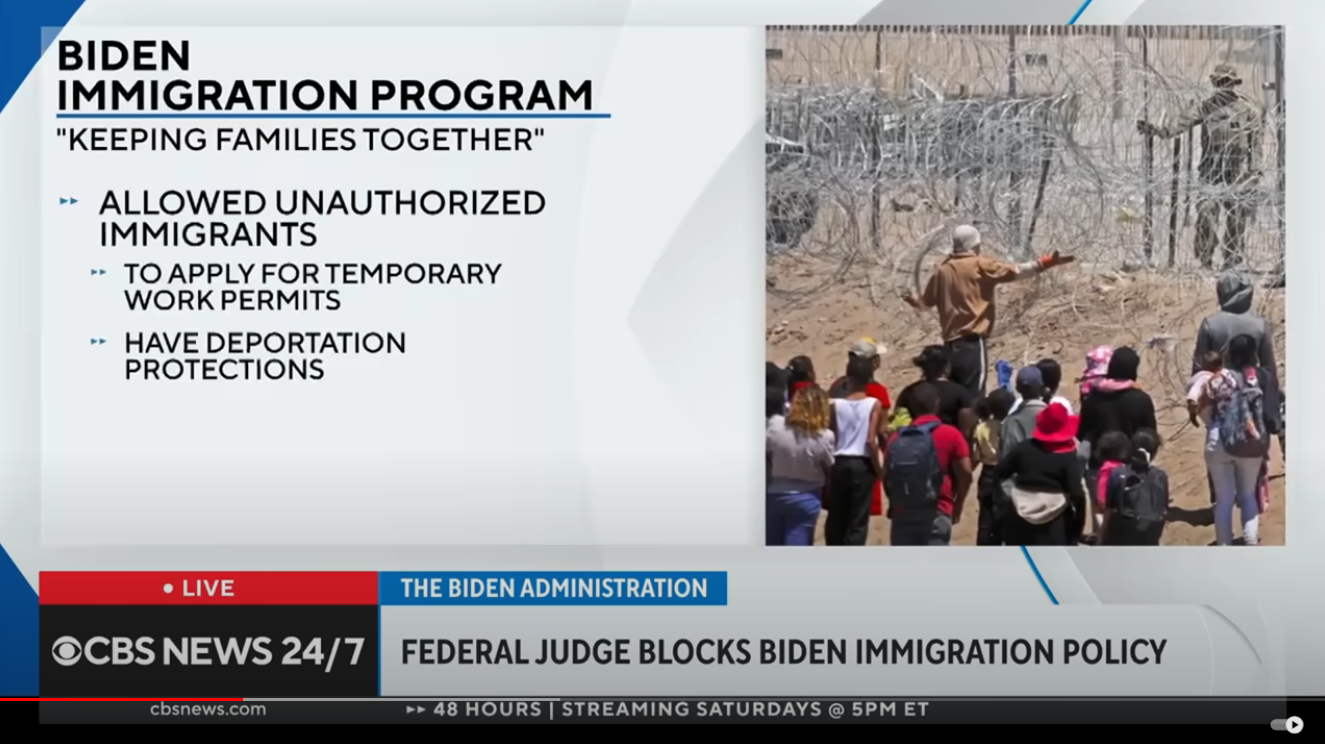
A federal judge in Texas has issued a temporary order blocking a Biden administration program that would have provided a path to legal status for certain undocumented immigrants married to U.S. citizens. The decision marks a significant setback for one of President Biden’s key immigration initiatives.
The program, which began accepting applications earlier this month, aimed to offer legal status to an estimated 500,000 undocumented immigrants who are married to American citizens, along with about 50,000 of their children. Under this initiative, eligible individuals could apply for green cards without having to leave the country first, a process that traditionally could involve years of separation from their families.
The temporary stay was issued by U.S. District Judge J. Campbell Barker in response to a lawsuit filed by 16 states led by Republican attorneys general. These states argue that the administration is bypassing Congress for “blatant political purposes” and claim the program could cost them millions in healthcare and other expenses for undocumented immigrants.
Judge Barker, appointed by former President Donald Trump, stated that the claims against the program “are substantial and warrant closer consideration”. The order pauses the program for two weeks, with the possibility of extension. Barker has set a timeline for both sides to file briefs by October 10, potentially leading to a decision shortly before the November 5 presidential election or before a new president takes office in January.
The Department of Homeland Security, which oversees the program, has not yet commented on the court order. The Biden administration has argued that the program is designed to keep families together and streamline the immigration process for those already living and working in the United States.
The court’s decision has left many applicants in limbo. Some families had already been notified of the receipt of their applications before the order was issued. Advocacy groups express concern about the impact on thousands of families who were hoping to benefit from this program.
This legal battle unfolds against the backdrop of a heated political debate over immigration policy in the United States. With immigration being a key issue in the upcoming presidential election, the outcome of this case could have significant implications for both political discourse and the lives of many immigrant families.
As the legal process continues, both supporters and opponents of the program are closely watching for further developments. The case highlights the ongoing tension between executive actions on immigration and the role of Congress in shaping immigration policy.

