

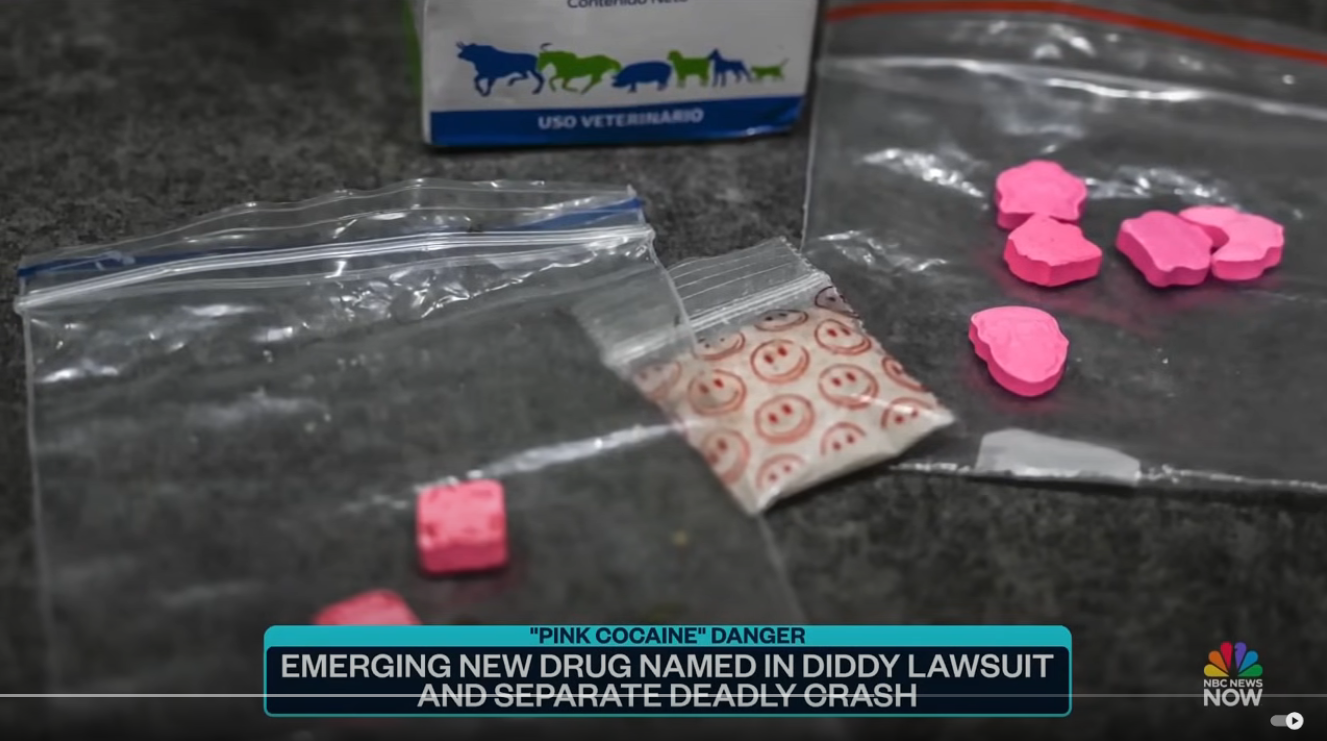
A new and potentially lethal drug known as “pink cocaine” is rapidly gaining popularity in nightclubs and party scenes across the United States, raising alarm among law enforcement and health officials. Despite its name, this substance often contains little to no actual cocaine, instead consisting of a dangerous cocktail of various psychoactive compounds.
What is Pink Cocaine?
Pink cocaine, also known as “tusi” or “tucibi,” is a synthetic drug that typically contains a mixture of ketamine, MDMA (ecstasy), and caffeine, along with pink food coloring and sometimes strawberry flavoring. The drug’s appealing color and sweet scent have contributed to its growing popularity, particularly among young adults and club-goers.
The drug has recently been thrust into the spotlight due to its alleged involvement in several high-profile incidents:
- Sean “Diddy” Combs Lawsuit: In a lawsuit filed against music mogul Sean “Diddy” Combs, producer Rodney “Lil Rod” Jones accused Combs of threatening him, sexually harassing him, and drugging him. Court documents mention “tusi” as one of the substances allegedly kept on hand by Combs’ staff.
- Miami Fatal Crash: In a tragic incident earlier this month, a high-speed crash in downtown Miami resulted in two fatalities. The driver, 24-year-old social media model Macy Marie Lathers, reportedly confessed to police that she was under the influence of “2C,” another name for pink cocaine, at the time of the accident.
Law enforcement officials and health experts are sounding the alarm about the unpredictable nature of pink cocaine:
- Varied Composition: The drug’s ingredients can vary widely, making it difficult for users to know exactly what they’re consuming.
- Potent Effects: The combination of stimulants and hallucinogens can lead to intense and potentially dangerous experiences.
- Addiction Potential: Regular use of pink cocaine can lead to physical and psychological dependence.
- Legal Risks: As an illegal substance, possession and distribution of pink cocaine carry severe legal consequences.
Authorities are concerned about the ease with which pink cocaine can be obtained. The drug is not only sold on the streets but is also advertised and distributed through social media platforms, making it accessible to a wider audience.
Health officials are urging the public to be aware of the risks associated with pink cocaine and to seek immediate medical attention if they suspect someone has ingested the drug. Prevention efforts are focusing on education, particularly targeting young adults and frequent club-goers.As pink cocaine continues to emerge as a significant threat, law enforcement agencies are ramping up efforts to crack down on its distribution networks. Meanwhile, addiction specialists are preparing for a potential influx of cases related to this new and dangerous substance.The rise of pink cocaine serves as a stark reminder of the ever-evolving landscape of illicit drugs and the ongoing challenges faced by public health and law enforcement officials in combating substance abuse.

