

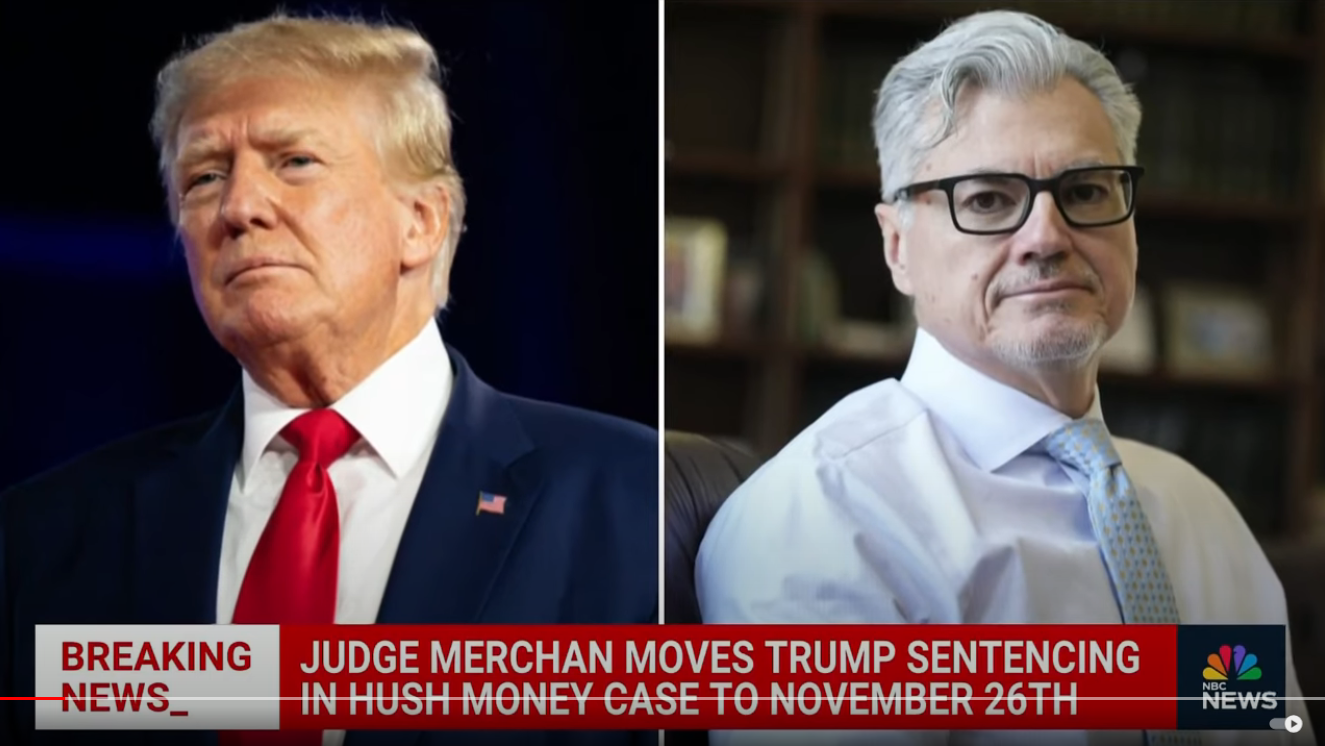
A New York judge has delayed the sentencing of former President Donald Trump in his hush money case, pushing the date back until after the November election. Trump, who was originally scheduled to be sentenced on September 18th, will now face sentencing on November 26th for his felony conviction related to payments made to adult film actress Stormy Daniels.
The judge’s decision comes after Trump’s legal team requested more time to prepare an appeal, citing the need to address issues surrounding a Supreme Court ruling about presidential immunity. The defense argued that the case raises significant constitutional questions about whether a sitting or former president can be held accountable in certain criminal matters.
In his ruling, Judge Juan Merchan expressed concerns about the timing of the sentencing and emphasized that he wanted to avoid any perception that the court’s actions might influence the upcoming November election. Merchan acknowledged the historic nature of the case, stating that a first-of-its-kind prosecution involving a former U.S. president required careful consideration.
Former U.S. Attorney Chuck Rosenberg has noted that the judge likely weighed multiple factors, including the political implications of sentencing a former president so close to an election. Rosenberg pointed out that the case highlights unprecedented legal challenges that could set new precedents in the future.
Trump’s conviction stems from payments made during his 2016 presidential campaign to silence Stormy Daniels regarding her allegations of an affair. Trump has denied the affair and maintains that the payments were unrelated to campaign activities. Despite his conviction, Trump continues to contest the legal basis for the charges and plans to appeal.
As the new November 26th sentencing date approaches, legal experts and political analysts alike are closely watching the case, which could have significant implications for Trump’s political future and the broader legal landscape surrounding high-profile political figures.

