

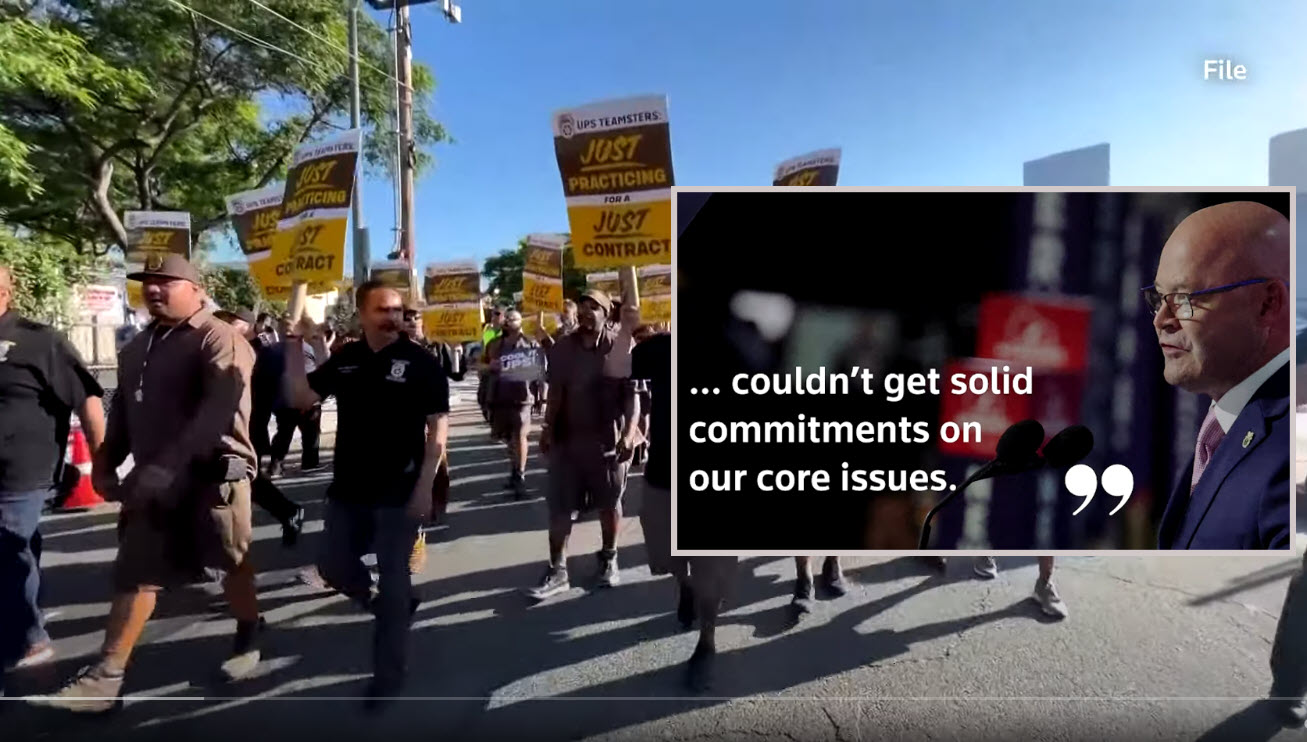
In a surprising move, the International Brotherhood of Teamsters, one of the largest and most influential labor unions in the United States, has announced that it will not endorse any candidate in the upcoming presidential election. Historically, the Teamsters have backed Democratic nominees in past races, including Joe Biden in 2020, Hillary Clinton in 2016, and Barack Obama in both 2008 and 2012. The decision comes with fewer than 50 days until the election, marking a significant shift in the political landscape.
The union’s decision not to endorse a candidate has caught political observers off guard, as the Teamsters are widely viewed as a powerful force in labor politics. With 1.4 million members, their support often signals the direction of blue-collar votes and can have a profound impact on the outcome of elections, particularly in swing states. As the last major labor union to announce its position, the Teamsters’ choice to remain neutral leaves a void in organized labor’s influence this election cycle.
The Teamsters’ decision is a departure from its recent history of support for Democratic presidential candidates. The union’s endorsement of Biden in 2020 played a pivotal role in helping him secure votes from working-class communities, particularly in battleground states like Pennsylvania and Michigan. Likewise, its backing of Clinton and Obama in previous elections helped solidify the Democratic Party’s relationship with labor groups.
However, sources within the union suggest that dissatisfaction with both major political parties may have contributed to the lack of endorsement this year. Internal debates about the state of labor laws, wages, and workers’ rights have reportedly led to frustration with what some members see as unfulfilled promises from previous Democratic administrations. Additionally, union leadership may be wary of aligning with any particular candidate amidst growing division within its ranks over which political direction to support.
The Teamsters’ choice not to endorse could be emblematic of broader discontent within the labor movement. Many union members are concerned about issues such as stagnant wages, rising healthcare costs, and the slow pace of reforms aimed at protecting workers’ rights. While President Biden’s administration has made some efforts to support unions, such as appointing pro-labor officials to the National Labor Relations Board (NLRB), critics argue that more needs to be done to address the challenges facing working Americans.
At the same time, the rise of automation and shifts in the global economy have left many unions grappling with how to protect their members in industries that are rapidly changing. The Teamsters’ decision may reflect a desire to push for more aggressive policies on these issues, rather than simply endorsing a candidate based on party lines.
The absence of the Teamsters’ endorsement in this election could have significant political ramifications. Traditionally, labor unions provide a powerful grassroots network, mobilizing members to vote and engaging in on-the-ground campaign efforts. Without the backing of a major union like the Teamsters, Democratic candidates could struggle to rally the support of working-class voters in key regions.
For the Republicans, the union’s neutrality presents a potential opening to court disillusioned labor voters. In recent years, the GOP has made attempts to appeal to blue-collar workers, particularly in manufacturing and transportation industries. While traditionally not a stronghold for Republican candidates, the lack of a union endorsement may encourage more members to consider alternatives outside the Democratic Party.
As the political landscape continues to shift, the decision of the International Brotherhood of Teamsters could mark a turning point for labor unions across the country. Many labor leaders have expressed the need for a new approach to politics—one that is less tied to partisan loyalty and more focused on achieving concrete results for workers. Some union members have called for the creation of a more independent labor political movement, one that would hold both parties accountable and advocate for stronger protections and benefits for workers.
In the weeks leading up to the election, political strategists and analysts will closely monitor the impact of the Teamsters’ decision. With millions of working-class voters at stake, the lack of a formal endorsement from one of the nation’s most powerful unions adds a new layer of uncertainty to an already unpredictable election season.

