

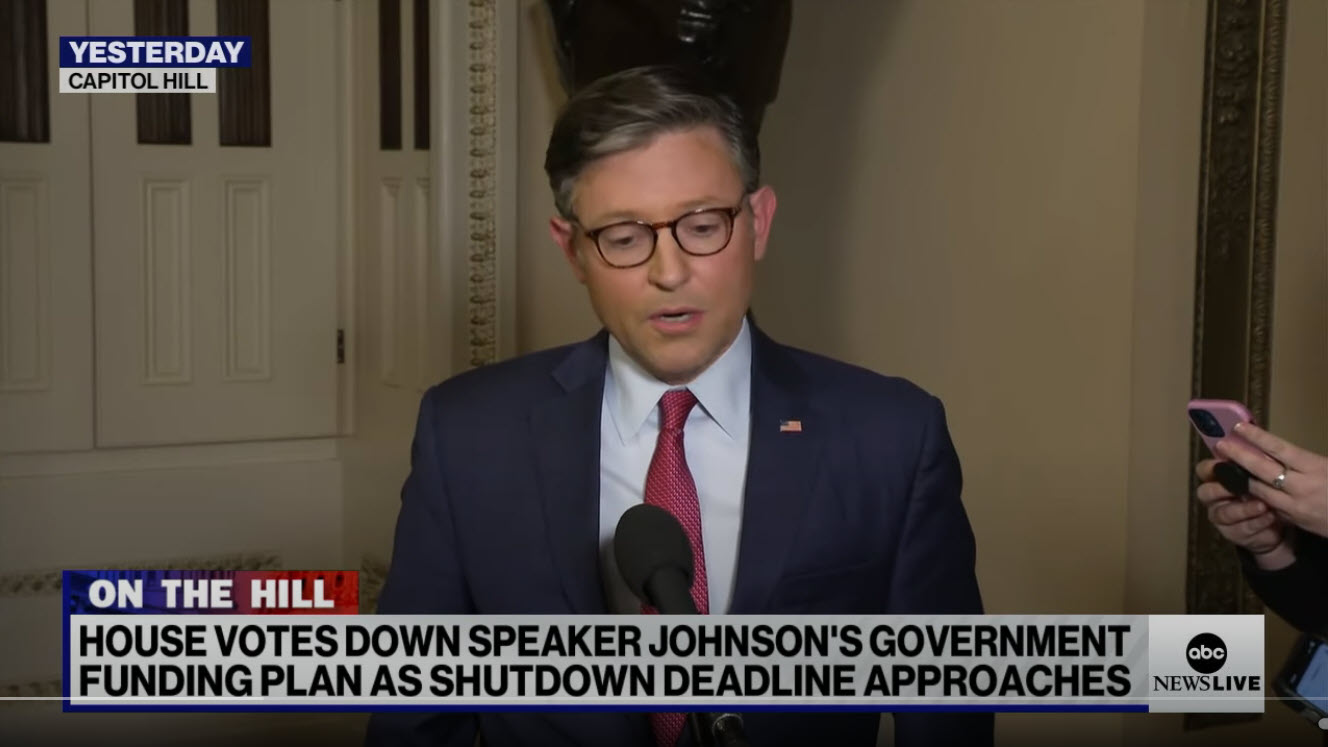
The House of Representatives has rejected Speaker Mike Johnson’s proposed spending bill, leaving the U.S. government at serious risk of a shutdown on October 1st. The bill, which would have extended funding at current levels for the next six months, failed to garner enough support within Johnson’s own party due to its inclusion of voter-ID law provisions, which fractured Republican backing.
The defeat of the bill has intensified the uncertainty surrounding the federal budget, as lawmakers scramble to find a solution to avoid the imminent shutdown. Johnson’s proposal aimed to prevent the government from running out of money at the end of the month by offering a short-term extension. However, the addition of language requiring stricter voter-ID laws alienated 14 Republican members, who withdrew their support, dooming the bill’s chances of passing.
Voter-ID Laws Prove Divisive
Speaker Johnson, a Republican from Louisiana, introduced the bill as a temporary stop-gap measure to keep the government funded through the end of the year. Yet, by tying the proposal to a push for stricter voter-ID laws, the bill immediately faced opposition not only from Democrats but also from moderate Republicans who viewed the voter-ID requirements as an unnecessary partisan addition to a critical funding measure.
The proposed voter-ID laws would have required stricter identification for individuals casting ballots in federal elections, a measure that has been a point of contention in U.S. politics for years. While many Republicans argue that such laws are necessary to prevent voter fraud, Democrats and voting rights advocates counter that voter-ID laws disproportionately affect minority and low-income voters, potentially suppressing voter turnout.
For some GOP members, Johnson’s decision to link the budget extension to voter-ID laws complicated what could have been a more straightforward effort to prevent a government shutdown. These lawmakers argued that a funding bill should focus on maintaining essential services rather than wading into contentious election law battles.
GOP Divisions and Legislative Gridlock
The vote against Johnson’s bill highlights the deep divisions within the Republican Party, as factions split between hardline conservatives pushing for stricter policies and moderates who prefer a more pragmatic approach to governing. The 14 Republicans who voted against the bill expressed concern that Johnson’s proposal was too politicized and could jeopardize their ability to negotiate with Democrats.
“The priority should be keeping the government running,” said one GOP lawmaker who voted against the bill. “We can debate election laws separately, but tying it to the budget risks a shutdown that will hurt all Americans.”
Democrats, meanwhile, largely opposed the bill from the outset, condemning the inclusion of voter-ID provisions as a thinly veiled attempt to restrict voting access. House Minority Leader Hakeem Jeffries stated, “Republicans are once again trying to hold the government hostage to advance an extreme agenda. Voter-ID laws don’t belong in a spending bill.”
Government Shutdown Looms
With the rejection of Johnson’s bill, the clock is ticking for Congress to find an alternative solution to fund the government. If lawmakers fail to pass a stop-gap funding measure before October 1st, the federal government will shut down, forcing the closure of non-essential services, the furlough of thousands of federal employees, and delays in government payments.
A government shutdown would have far-reaching consequences, affecting a range of services from national parks to the processing of Social Security checks and veterans’ benefits. Economic experts warn that even a short-term shutdown could slow the economy and erode public confidence in Washington’s ability to manage the nation’s finances.
Speaker Johnson now faces an uphill battle to rally his party behind a new spending plan. He must navigate the ideological divisions within the GOP while also working to broker a deal that can gain bipartisan support. Analysts predict that Johnson may have to drop the voter-ID provisions to win over moderate Republicans and Democrats, but it remains unclear whether hardline conservatives will accept a compromise that lacks those measures.
Path Forward
The failure of Johnson’s spending bill leaves Congress with little time to avert a shutdown. The House of Representatives may attempt to pass another short-term funding extension, though it is unclear whether Republicans will present a new proposal before the deadline. Senate Majority Leader Chuck Schumer has urged the House to work quickly, stating that the Senate is ready to move forward on a clean funding bill if one reaches the floor.
Both parties are expected to return to the negotiating table in the coming days, but with the deadline fast approaching, the risk of a government shutdown grows larger by the hour. If no agreement is reached, millions of Americans could be affected by the loss of government services and financial disruptions.
As political tension mounts, Speaker Johnson is facing pressure from both inside and outside his party to steer the House toward a resolution that keeps the government running while addressing the competing demands of various factions.

