

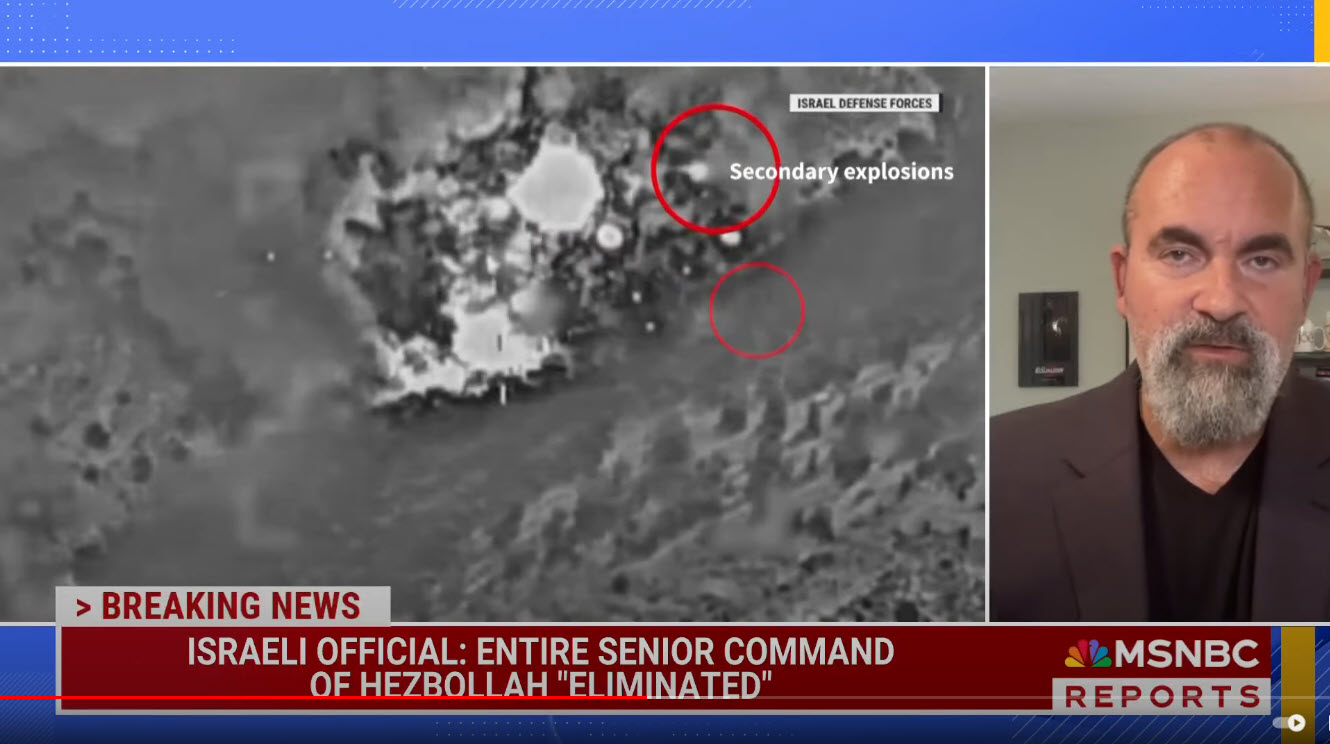
Israel claims it has killed a senior Hezbollah commander in a targeted airstrike in Lebanon, marking a significant escalation in the ongoing conflict with the Iran-backed Lebanese militant group. The strike, which occurred Friday, involved the use of over 100 rockets and is part of Israel’s broader effort to weaken Hezbollah’s influence and military capacity along its northern front.
The operation reportedly included innovative methods such as booby-trapping pagers and communication devices belonging to Hezbollah agents, resulting in dozens of deaths and injuries. Although Israel has neither confirmed nor denied the specific details of the mission, U.S. officials believe that the Israeli Defense Forces (IDF) were responsible for the attack.
Israel’s Defense Minister has described the incident as a turning point in the conflict, saying, “A new era in Israel’s war effort against Hezbollah has begun on the northern front.” This statement suggests that the IDF is intensifying its military operations against Hezbollah as the group continues to threaten Israel’s northern border with Lebanon.
Hezbollah, which is heavily supported by Iran, has promised retaliation after these recent attacks, claiming that Israel deliberately targeted its communications network, leading to widespread casualties. The attacks, which saw the use of explosive devices in pagers and walkie-talkies, have killed dozens and injured thousands more, according to Hezbollah sources.
Meanwhile, Israel remains focused on multiple fronts. In addition to confronting Hezbollah in the north, the Israeli government is still working to secure the release of hostages taken by Hamas during its deadly assault on Israel on October 7th. Hamas, based in Gaza, remains a central focus of Israel’s military campaign as well.
President Joe Biden has urged continued efforts toward a possible ceasefire between Israel and Hamas, but the likelihood of achieving such an agreement appears increasingly uncertain. With Hezbollah vowing further retaliation and regional tensions rising, there are growing fears that the conflict could spiral into a broader, all-out war across the Middle East.

