

Dr. Jay K. Varma, former senior health advisor and COVID czar for New York City, is at the center of a growing controversy after a hidden-camera video surfaced, showing him bragging about attending sex parties with his wife and criticizing former Mayor Bill de Blasio’s handling of pandemic-related decisions. The video, posted by a conservative podcaster, has sent shockwaves through the city’s public health community and drawn widespread media attention.
In the video, which has been circulating on social media, Varma is seen speaking candidly about his personal life and his views on de Blasio’s leadership during the COVID-19 pandemic. Varma refers to de Blasio as a “weenie,” accusing him of yielding to pressure from the teachers’ union by keeping schools closed, a move that Varma claims hurt children. He also criticizes de Blasio’s initial reluctance to enforce vaccine mandates across the city.
“He’s a bit of a weenie. He had a lot of problems,” Varma is heard saying, expressing frustration over what he described as inconsistent decision-making by the former mayor during the height of the pandemic. Varma also claims that de Blasio’s slow response to the vaccine mandates was a major failing, while appearing to mock the overall handling of the crisis by City Hall.
However, the most explosive part of the footage involves Varma’s admission of attending sex parties with his wife, an aspect of his private life that has now become a public spectacle. Varma can be seen boasting about these activities in the video, adding a layer of scandal to the revelations.
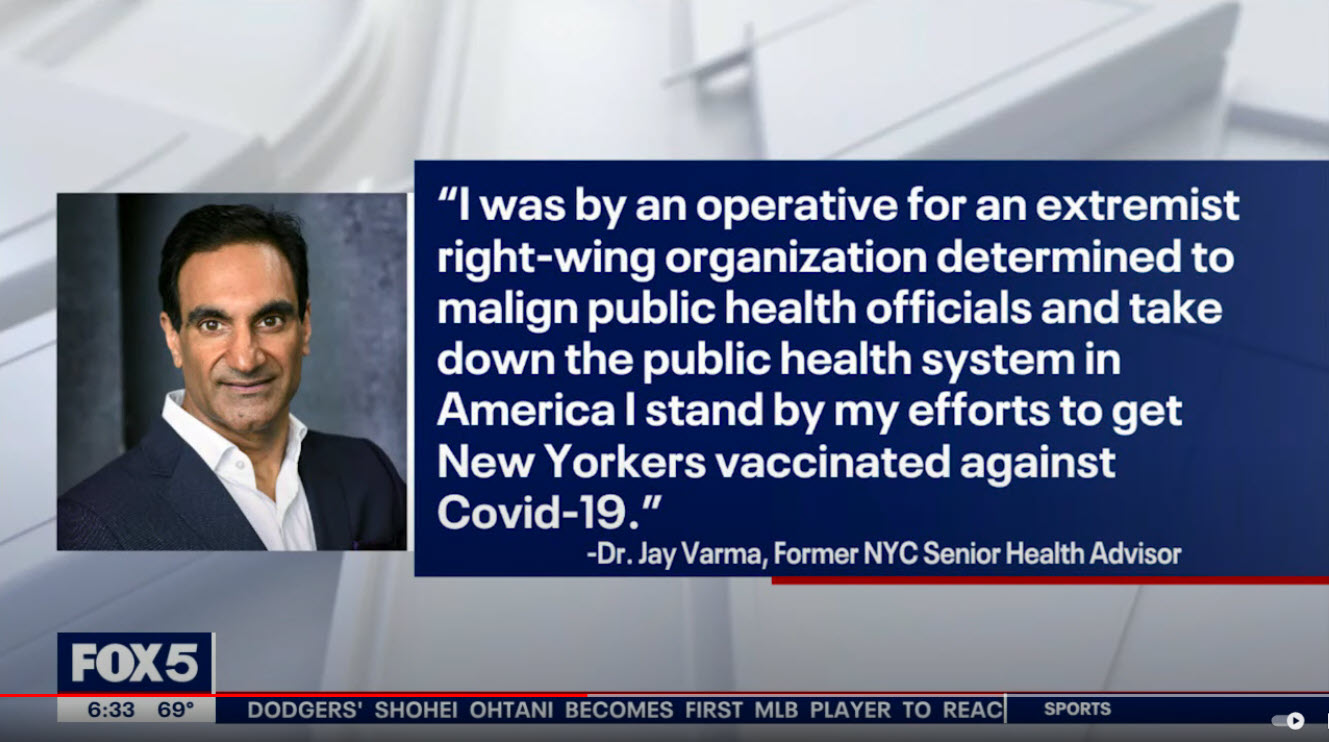
Following the release of the video, Varma issued a statement accusing the podcaster and the organization behind the video of intentionally editing his comments to create a sensationalized narrative. He described the people behind the video as “an extremist right-wing organization determined to malign public health officials and take down the public health system in America.” Varma defended his efforts to help New Yorkers during the pandemic, stating, “I stand by my efforts to get New Yorkers vaccinated against COVID-19.”
Varma claims that his remarks about sex parties were taken out of context and “spliced and diced” to mislead the public. He emphasized that the focus should be on his public health work rather than his private life, asserting that the video is part of a broader effort to discredit health officials who played a pivotal role during the pandemic.
New York City Mayor Eric Adams, who appointed Varma to his role during the pandemic, has also weighed in on the controversy. While Mayor Adams expressed disappointment over the personal nature of the revelations, he stated that Varma’s work on COVID-19 response helped save lives and acknowledged the difficult and unprecedented circumstances in which Varma operated.
Meanwhile, NYC Council Member Joseph Borelli used the opportunity to criticize the public health leadership during the pandemic. In a statement, Borelli said, “I recall being treated like a pariah for pointing out the obvious at the time—that many of our so-called leaders were just making up illogical rules as they went along. Still, I couldn’t have predicted how full of it they actually were.”
The video has raised questions about the transparency and consistency of decision-making among city officials during the pandemic. Many of Varma’s comments reflect the frustration felt by some public officials regarding the conflicting pressures they faced in responding to the crisis. While Varma’s personal revelations have captured much of the public’s attention, his harsh critique of de Blasio’s handling of school closures and vaccine mandates has reignited debates over how city leadership managed the pandemic.
As the scandal unfolds, legal experts suggest that Varma may pursue defamation claims against those responsible for releasing the video, particularly if he can prove that his comments were deliberately manipulated. Public reaction remains divided, with some criticizing Varma for his personal conduct and others defending him as a victim of political targeting.
The fallout from this incident has not only cast a shadow over Varma’s public health legacy but also reignited a larger conversation about the personal and professional accountability of those in public office during times of crisis.

