

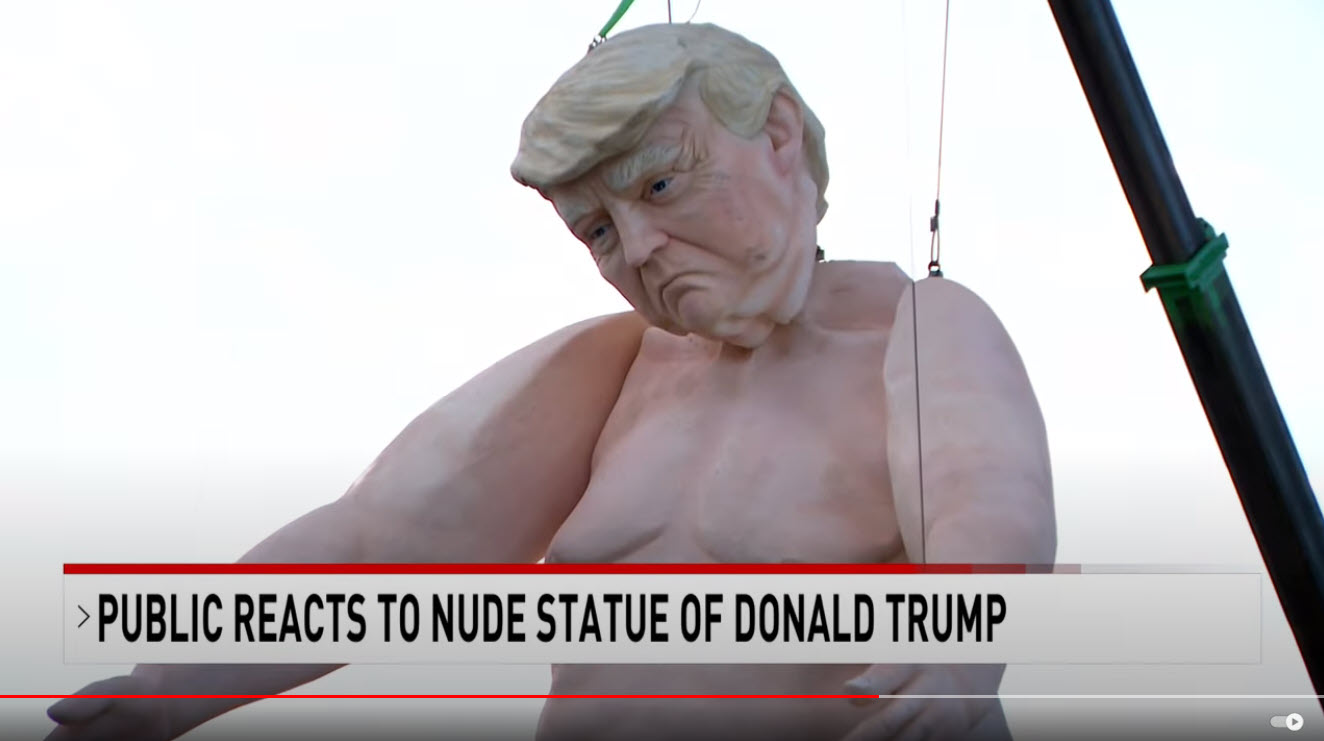
A massive 43-foot statue of former President Donald Trump, depicted nude, has been erected just outside of Las Vegas, igniting widespread conversation and controversy. The towering sculpture, which quickly became the talk of both social media and the local community, has drawn mixed reactions, with some calling it a bold political statement while others see it as an offensive and unnecessary provocation.
The statue, assembled over the weekend near a busy highway leading into Las Vegas, features an exaggerated and hyper-realistic portrayal of Trump, similar to a series of naked Trump statues that appeared in major U.S. cities in 2016. This latest installation, however, is much larger and has sparked intense debate over its meaning and impact.
While the artist behind the statue remains anonymous, some speculate that it is a form of protest art meant to critique Trump’s presidency and lasting political influence. Others view it as a satirical take on Trump’s larger-than-life persona and his frequent boasts about his physical and political dominance. The statue has become a tourist attraction, with crowds gathering to take photos and videos, further fueling its viral spread online.
Local officials have acknowledged the statue but have not yet moved to take it down, citing free speech protections. However, some Las Vegas residents and politicians are demanding its removal, calling it distasteful and disrespectful. “This is an eyesore and an embarrassment to our community,” said one local council member. “While we respect the right to protest, this statue crosses the line.”
On the other hand, supporters of the installation argue that it represents the freedom of expression and satire, key elements in any functioning democracy. “Art like this challenges the status quo and forces people to confront their beliefs,” said one Las Vegas artist. “Whether you love or hate Trump, this statue is a powerful commentary on his impact on American politics.”
The Trump statue has also attracted attention from tourists, with many stopping by to take pictures or film the statue and share their reactions on social media platforms like TikTok and Instagram. Some passersby found the statue humorous, while others expressed disgust. “It’s definitely shocking,” one tourist remarked. “But I guess that’s what art is supposed to do—get people talking.”
Political analysts see the statue as part of the ongoing cultural battles surrounding Trump’s legacy. “This statue is emblematic of the divisions in American society,” said political commentator Maria Edwards. “It’s a provocative work that plays into the larger-than-life image Trump has cultivated, but it also reflects the deep polarization that still exists in the U.S., even years after he left office.”
As the statue continues to spark conversation, both online and in person, questions remain about its longevity and how long it will stay in place. Las Vegas officials are monitoring the public response but have so far refrained from any intervention, citing that no formal complaints have yet been filed.
With the 2024 presidential race heating up and Trump still playing a central role in Republican politics, the statue stands as a reminder of the polarizing nature of his presence in American culture, even outside of the political arena.

