

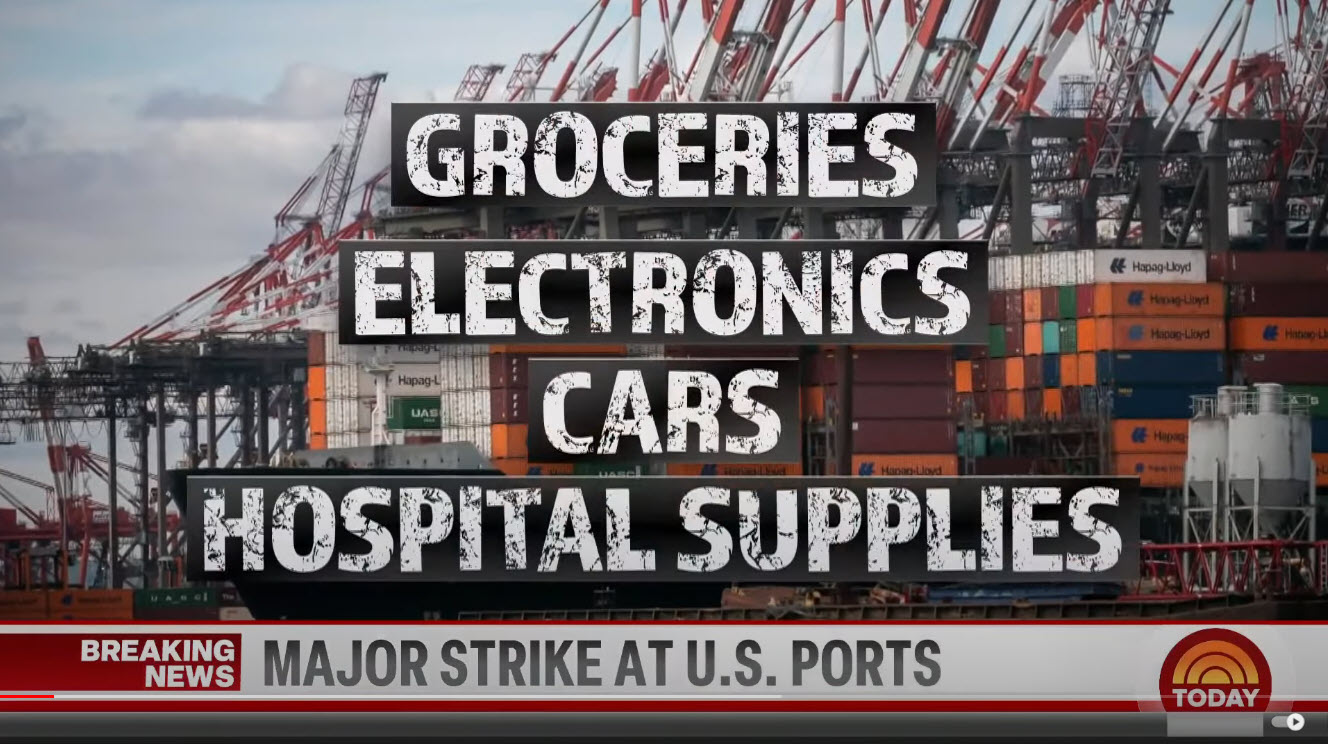
As of midnight, dockworkers along the East and Gulf Coasts of the U.S. have launched the first large-scale work stoppage in nearly 50 years. The strike, initiated by tens of thousands of members of the International Longshoremen’s Association, has effectively halted about half of the nation’s ocean shipping. The workers are demanding better wages and stronger protections against terminal automation, with negotiations for a new labor contract breaking down over these key issues.
The strike is expected to have a severe impact on the U.S. economy, with analysts warning that the disruption could cost billions of dollars per day, threaten thousands of jobs, and drive inflation higher. The affected ports handle a significant portion of the nation’s trade, including essential goods like food, fuel, and industrial materials, making the strike a critical issue for the country’s supply chain.
Despite the nationwide strike, some ports are managing to keep limited operations running. At Port Everglades in Fort Lauderdale, Port Director Joseph Morris assured the public that certain sectors, such as petroleum bulk cargo and cruise activities, are not impacted. “Port Everglades remains open for business,” Morris said, though he warned that prolonged disruptions could still affect the supply chain if the strike continues for several weeks.
In New York, Governor Kathy Hochul is urging calm as dockworkers from Maine to Texas have joined the strike. She noted that roughly 100,000 shipping containers are currently stuck in limbo at the Port of New York and New Jersey. While the port had worked to preemptively move products into trucks before the strike, Hochul acknowledged that continued disruptions could exacerbate supply chain challenges. “We are closely monitoring the situation and encouraging all parties to reach an agreement,” Hochul said, stressing that efforts are being made to minimize the impact on New York’s economy.
In California, the effects of the strike are already being felt on the West Coast, with Gene Soroka, Executive Director of the Port of Los Angeles, calling the situation a “big deal.” Soroka echoed concerns about the national economic consequences, with analysts predicting that the stoppage could exacerbate inflationary pressures and create significant job losses if a resolution is not reached soon.
The primary issues in the labor dispute are wage increases and concerns over automation. Dockworkers are demanding a 77% pay raise over the six-year duration of the contract, citing inflation and the rising cost of living. However, the union’s request for a complete ban on terminal automation has drawn criticism. University of Miami Economics Chair David Andolfatto called the wage increase a “fair ask” given inflation but described the demand to ban automation as unrealistic. “Robots are coming, whether we like it or not,” Andolfatto said, emphasizing the inevitability of technological advancements in the industry.
President Joe Biden has announced that he will not intervene in the strike, despite its potential to disrupt the economy. Speaking to reporters, Biden said he does not support the use of the Taft-Hartley Act, which would allow him to delay the strike through a court order. The President’s stance highlights his administration’s reluctance to undermine union efforts, though the strike’s duration remains uncertain.
The dockworkers’ strike marks a critical moment in U.S. labor relations, with potentially far-reaching effects on global supply chains. As both sides remain at an impasse, businesses, consumers, and workers alike are bracing for the economic fallout from the stoppage.

