

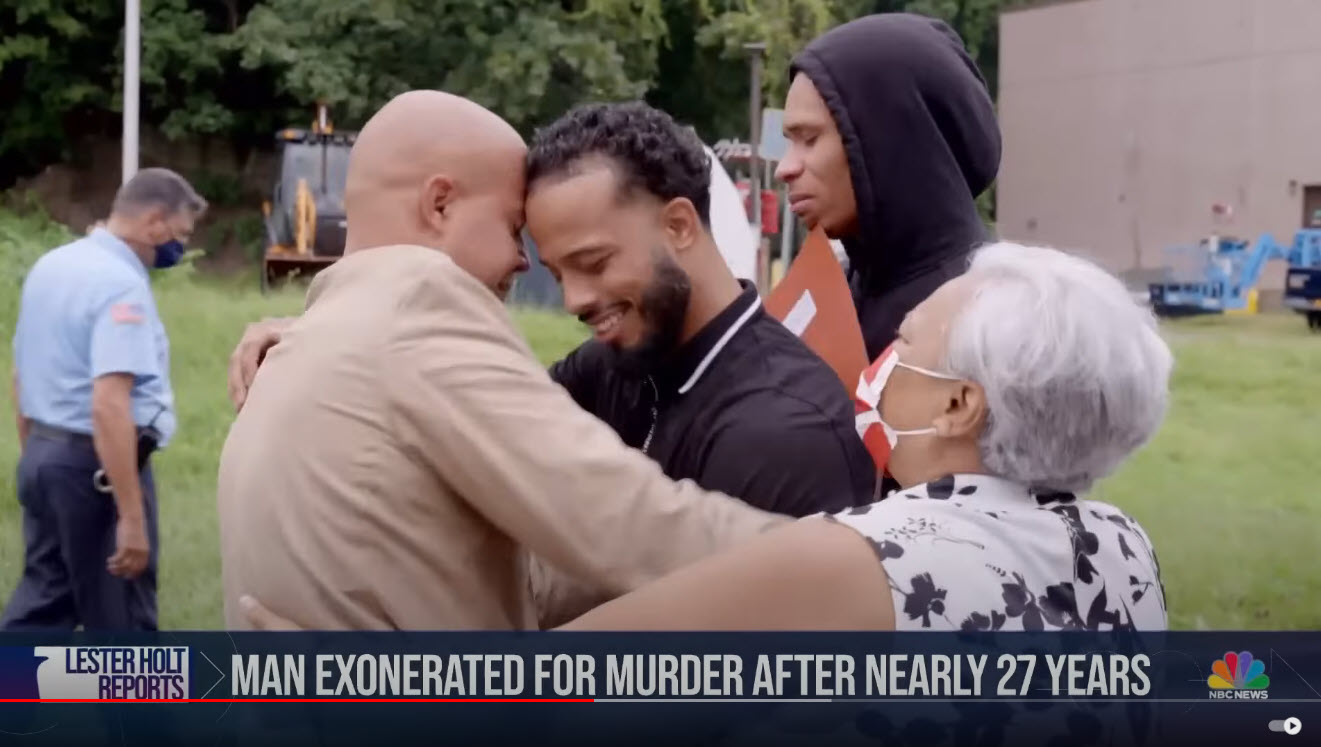
Jon-Adrian “JJ” Velazquez, a man wrongfully convicted of murder, has been exonerated after spending nearly 24 years in prison for a crime he did not commit. On Monday, a Manhattan judge officially cleared Velazquez of all charges related to the 1998 murder of retired New York City police officer Albert Ward, marking the end of a decades-long legal battle.
Velazquez was convicted in 1999 for the shooting death of Ward during a robbery at a Harlem betting parlor. Despite maintaining his innocence from the start, Velazquez was sentenced to 25 years to life in prison. His case drew national attention due to significant doubts surrounding the evidence and witness testimony used to convict him. Over the years, advocates for his release raised concerns about misidentification by witnesses and a lack of physical evidence connecting him to the crime.
The exoneration comes after more than 20 years of tireless efforts from Dateline NBC producer Dan Slepian, who began investigating the case in 2002. Slepian’s investigation, which garnered widespread media coverage, played a pivotal role in bringing to light new evidence and inconsistencies in the original case against Velazquez. Slepian’s reporting helped raise awareness about wrongful convictions, particularly in cases involving flawed eyewitness testimony.
Velazquez’s fight for justice also received support from the Innocence Project and several high-profile figures, including actor and activist Hill Harper. These efforts culminated in Monday’s court ruling, which finally cleared Velazquez’s name after nearly a quarter-century of wrongful imprisonment.
Speaking with NBC News anchor Lester Holt shortly after his exoneration, Velazquez expressed both relief and frustration. “I’m grateful to finally be free, but it’s been a long, painful journey,” he said. “I lost almost 24 years of my life for something I didn’t do. No one should have to go through this.”
Velazquez’s case is the latest in a series of high-profile wrongful convictions that have been overturned in recent years, highlighting ongoing concerns about the U.S. criminal justice system, particularly the reliance on eyewitness testimony and the need for more rigorous standards in criminal investigations.
The exoneration not only frees Velazquez but also serves as a reminder of the flaws in the legal system that can lead to such miscarriages of justice. His legal team is now exploring the possibility of seeking compensation for his wrongful conviction, while advocates continue to push for reforms to prevent similar cases in the future.

