

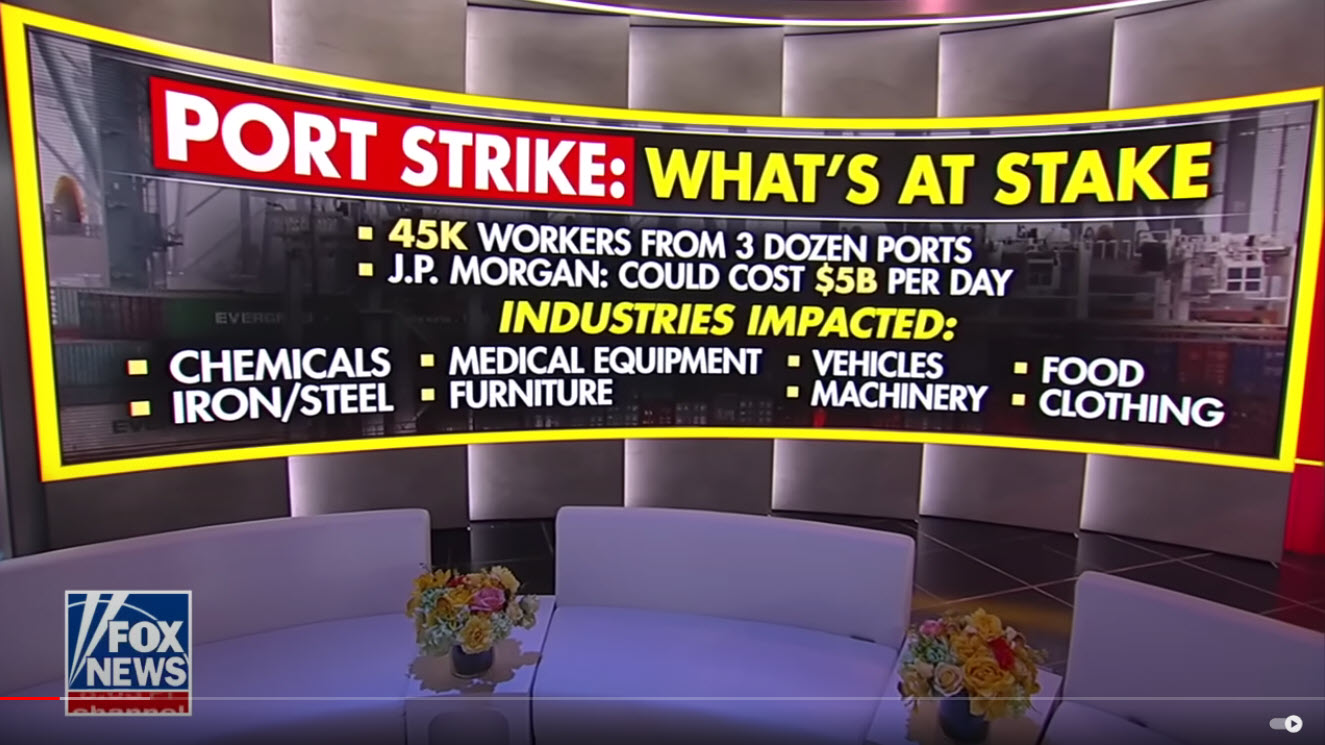
Yesterday, the second day of the dock workers strike along the East Coast and Gulf of Mexico, is causing significant disruptions to the movement of goods across the nation. Dockworkers at major ports, including Port Newark, are continuing their protest, demanding higher wages and a ban on port automation, which they argue threatens their livelihoods. Thousands of workers from the International Longshoremen’s Association (ILA) have halted operations at these critical ports, and their union vows to stay on the picket lines for as long as it takes to secure their demands.
The strike, which impacts ports from Maine to Texas, has already started to send ripples through the U.S. economy, and the longer it continues, the more profound those effects are expected to become. While New York Governor Kathy Hochul has pledged to minimize disruptions to essential services such as grocery stores and medical facilities, the strike is making it increasingly difficult to move goods, with produce and medical supplies particularly at risk of shortages.
The economic impact of the strike is already being felt, and experts are warning that the longer it continues, the more severe the consequences will be. Supply chain expert Dr. Craig Austin of Florida International University (FIU) predicts that the strike could lead to significant price increases on consumer goods, particularly if it stretches beyond a week. “The longer this lasts, the more pressure it puts on the economy. Prices will start to rise for goods ranging from food to electronics,” Austin said.
Estimates suggest that the strike could cost the U.S. economy up to $5 billion per day. Stew Leonard, owner of a chain of supermarkets along the East Coast, expressed concerns about the growing backlog of products stuck on container ships. “We’ve got shipments of champagne and other products floating offshore because of this strike. People will start to feel it soon, especially with the holiday season coming up,” Leonard noted.
Truckers are also warning of a “ripple effect” from the strike. John Esparza, head of the Texas Trucking Association, said the trucking industry is already feeling the strain. “Even when the strike ends, there will be a lag in moving goods, and that could affect holiday shopping and deliveries. Produce will be hit first, but the impact could spread across all industries,” Esparza stated.
At the heart of the strike is a standoff between the dockworkers, represented by the ILA, and the United States Maritime Alliance (USMX), which has been negotiating a new six-year labor contract. The union is pushing for significant wage increases and a ban on automation at ports, fearing that the introduction of automated systems could lead to massive job losses. Negotiations have broken down, with no new talks scheduled as of now.
Gene Seroka, executive director of the Port of Los Angeles, commented on the strike’s potential long-term impacts, even though West Coast ports are not directly involved. “If the strike lasts, it will affect shipment volumes nationwide. The economic losses could be steep, but if the strike ends quickly, the damage can be mitigated,” Seroka said.
President Biden has voiced support for the dockworkers but has indicated that he will not use federal powers to force an end to the strike. The administration has emphasized the importance of resolving the conflict through negotiation, while ensuring that critical goods, such as medical supplies, are prioritized for delivery during the stoppage.
However, the strike has drawn criticism from various political figures and industry leaders who are urging quicker federal intervention. Florida Senator Rick Scott blamed the Biden administration for not doing enough to prevent the disruption, while other lawmakers are calling for a special session of Congress to address the growing crisis.
As the strike enters its third day, many are bracing for its wider impact. Dr. Austin and other experts believe that the strike could last at least a week, with no signs of a breakthrough in negotiations. If the workers remain on strike for an extended period, the economic fallout could be devastating, especially as the nation heads into the holiday season.
For now, the picket lines at Port Newark and other key ports remain strong, with dockworkers determined to fight for job security and fair wages. As the strike continues, the nation will watch closely, hoping for a resolution that can restore the flow of goods and ease the growing strain on the U.S. supply chain.

