

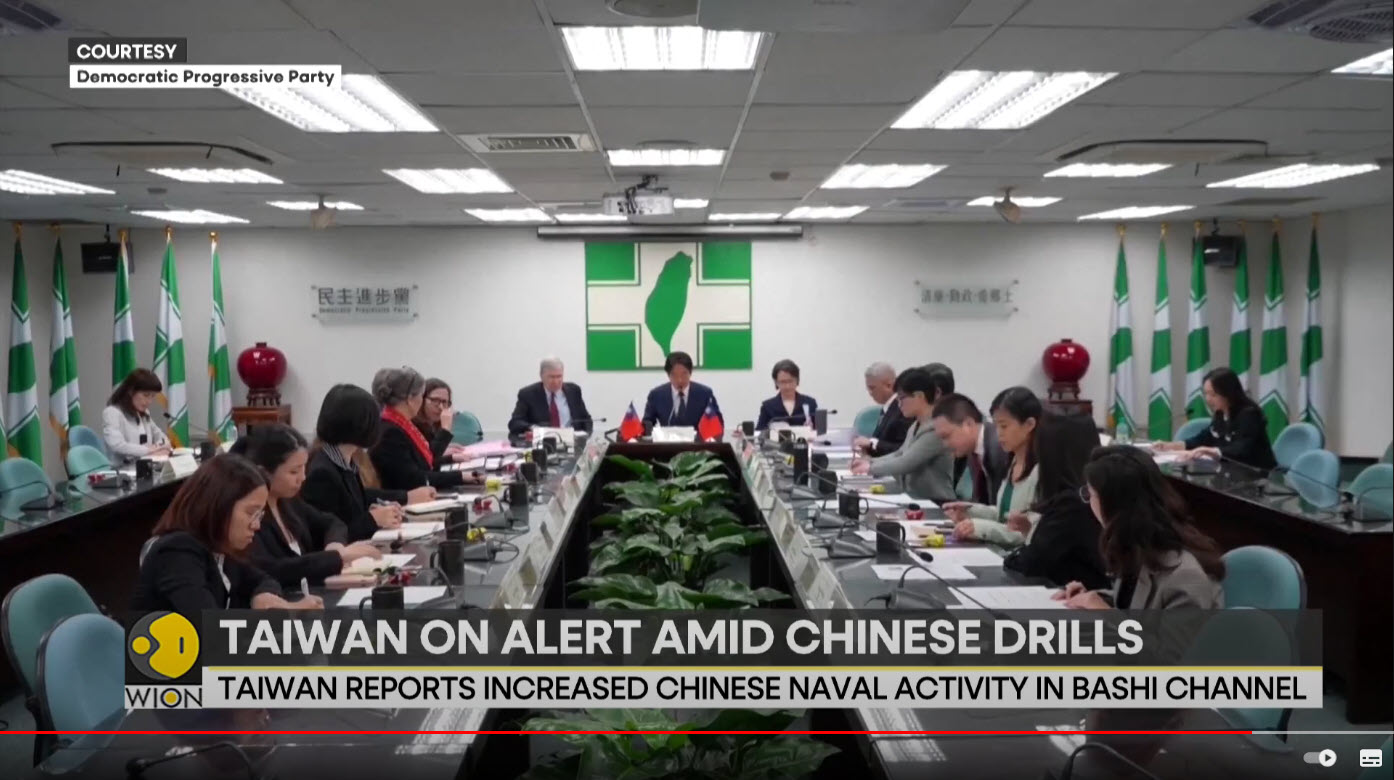
Tensions are escalating in the Taiwan Strait as China conducts large-scale military exercises around Taiwan, prompting serious concern from the United States and raising fears of potential conflict in the region. In response to Taiwan’s National Day celebrations and a speech from Taiwanese President Lai Ching-te, which rejected Beijing’s claims to the island, China launched its “Joint Sword-2024B” drills, involving naval, air, and coast guard forces.
The U.S. State Department has condemned China’s military activities, calling the response “unwarranted” and expressing alarm over the potential for further escalation. “China’s aggressive military provocations in response to a routine annual speech are deeply concerning. Such actions risk destabilizing the region,” a State Department spokesperson said in a statement. The U.S. government reaffirmed its commitment to peace in the Taiwan Strait and called for calm from both sides.
The drills began just after Taiwan’s National Day, which included a speech by President Lai Ching-te, who firmly rejected China’s territorial claims over the self-governed island. “China has no right to represent Taiwan,” Lai declared, adding that Taiwan remains open to cooperation but will not compromise its sovereignty. Beijing swiftly denounced the speech, describing it as separatist rhetoric and justifying the military exercises as a “resolute punishment” for Taiwan’s defiance.
In a show of force, China deployed a record 125 military aircraft, its Liaoning aircraft carrier, and various naval ships in a simulated blockade of key Taiwanese ports. Footage released by Chinese state media showed fighter jets, bombers, and naval vessels conducting exercises aimed at encircling Taiwan, which has left Taiwanese officials and military experts on high alert.
Taiwan’s defense ministry has responded by scrambling its own fighter jets and deploying naval patrols to monitor Chinese movements. Fighter jets were seen taking off and landing at Taiwan’s Hsinchu Airbase, while Taiwan’s military warned that China’s continued drills posed a serious threat to regional stability. The Taiwanese government condemned the exercises, calling them “irresponsible” and asserting Taiwan’s right to defend its sovereignty.
Despite the military pressure, Taiwanese citizens have expressed confidence in their armed forces’ ability to protect the island. “We’ve been through this before, and we trust our military to defend us,” one resident in Taipei said, reflecting a general sense of resilience among the Taiwanese population. Still, the situation remains tense as no end date has been set for the Chinese military drills.
China’s Eastern Theater Command, which is conducting the “Joint Sword-2024B” exercises, said the operations are intended to target “separatist acts” and reaffirm China’s stance that Taiwan is part of its territory. The drills have expanded to the north, south, and east of Taiwan, with Chinese coast guard vessels conducting “law enforcement patrols” in the surrounding waters, further heightening tensions.
The United States, which maintains unofficial relations with Taiwan and provides it with defense support, has responded by reinforcing its own presence in the region. This week, the U.S. announced it is sending additional missile defense systems to Israel and increasing its surveillance efforts around Taiwan as a precautionary measure. However, U.S. officials stress the importance of diplomacy to avoid further escalation.
Analysts warn that the ongoing drills could mark a significant turning point in the region, with both China and Taiwan unwilling to back down. “We are seeing a situation where both sides are entrenched in their positions, and this kind of sustained military activity risks miscalculations,” said Yousef Munayyer, an expert on geopolitical conflicts. “The longer these exercises go on, the more volatile the situation becomes.”
The international community is watching the developments closely, with many urging restraint. However, as China continues its military maneuvers and Taiwan strengthens its defense posture, the future of cross-strait relations remains uncertain.

