

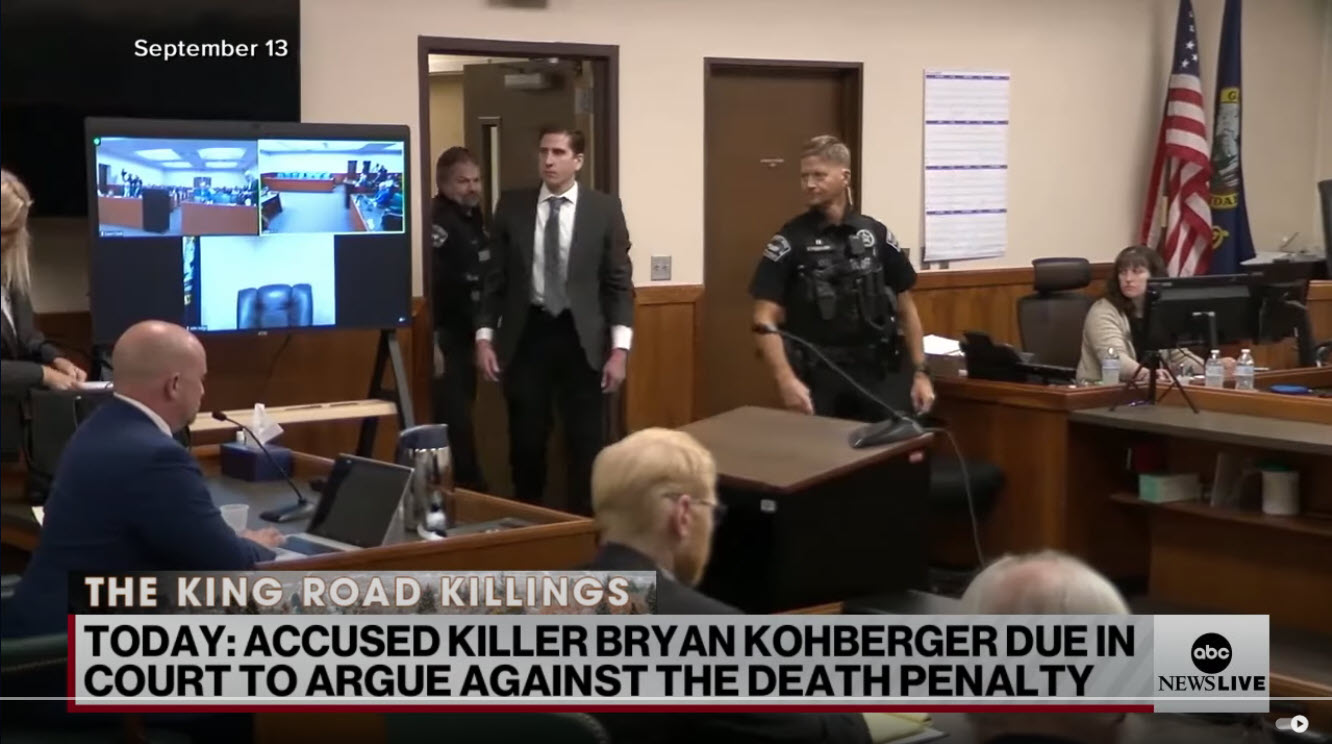
Bryan Kohberger, the former Washington State University criminology Ph.D. student accused of the brutal murders of four University of Idaho students, faces a contentious legal battle as his attorneys move to block the prosecution’s pursuit of the death penalty. Kohberger is charged with four counts of first-degree murder and one count of burglary in connection with the stabbing deaths of Kaylee Goncalves, Madison Mogen, Xana Kernodle, and Ethan Chapin, all of whom were students at the University of Idaho.
The case, which has drawn national attention, revolves around the tragic events of November 2022, when the four students were found fatally stabbed in their shared off-campus residence in Moscow, Idaho. Kohberger’s background as a criminology student has only heightened public interest, as authorities allege he used his academic knowledge of criminal behavior to evade detection.
Kohberger’s attorneys argue that the prosecution’s decision to seek the death penalty is unconstitutional and violates their client’s rights. They contend that Idaho’s capital punishment statute infringes on Kohberger’s due process rights, particularly as he maintains his innocence and prepares to fight the charges in court. The defense team asserts that pursuing the death penalty before trial places undue pressure on the defendant and may hinder a fair trial, as it could influence jury members’ perceptions of his guilt.
The defense’s stance has sparked significant legal debate. In recent court filings, Kohberger’s attorneys argue that capital punishment in this case could be seen as “arbitrary and capricious,” given that the details of the case remain under investigation and that Kohberger’s guilt has yet to be proven in court. The defense team is also pushing to ensure a thorough review of evidence, which they believe could affect the case’s outcome.
The prosecutors, however, remain steadfast in their pursuit of the death penalty. They argue that the severity of the crime justifies capital punishment, emphasizing the “heinous and premeditated” nature of the murders. With the case scheduled for upcoming pretrial hearings, prosecutors are expected to present further evidence to support their push for the ultimate penalty, citing the profound impact on the victims’ families and the community at large.
As the legal teams prepare for trial, the defense has also requested access to specific records and expert witnesses, arguing that a fair defense necessitates a comprehensive review of all evidence. The defense team aims to examine everything from forensic evidence and DNA analysis to Kohberger’s mental health history and personal background. Given Kohberger’s academic experience in criminology, they may also explore the possibility that his interest in criminal behavior influenced his actions, though he continues to deny involvement in the murders.
The families of the victims have publicly supported the prosecution’s pursuit of the death penalty, expressing their belief that justice should reflect the gravity of the crime. Friends and family members of Goncalves, Mogen, Kernodle, and Chapin have called for a swift and just resolution to the case, underscoring the deep impact of their loss on the university community.
Kohberger’s defense team continues to file motions to block the death penalty as they prepare for trial. The case has become a focal point in discussions on capital punishment and criminal justice, with some legal experts arguing that Kohberger’s background adds unique complexity to the case. Others contend that the overwhelming evidence warrants the pursuit of capital punishment.
As the trial approaches, the court must navigate complex legal arguments, including the defense’s contention that pursuing the death penalty compromises Kohberger’s rights. In the meantime, pretrial proceedings will determine the scope of evidence admissible at trial, setting the stage for one of Idaho’s most closely watched murder trials in recent years.

