

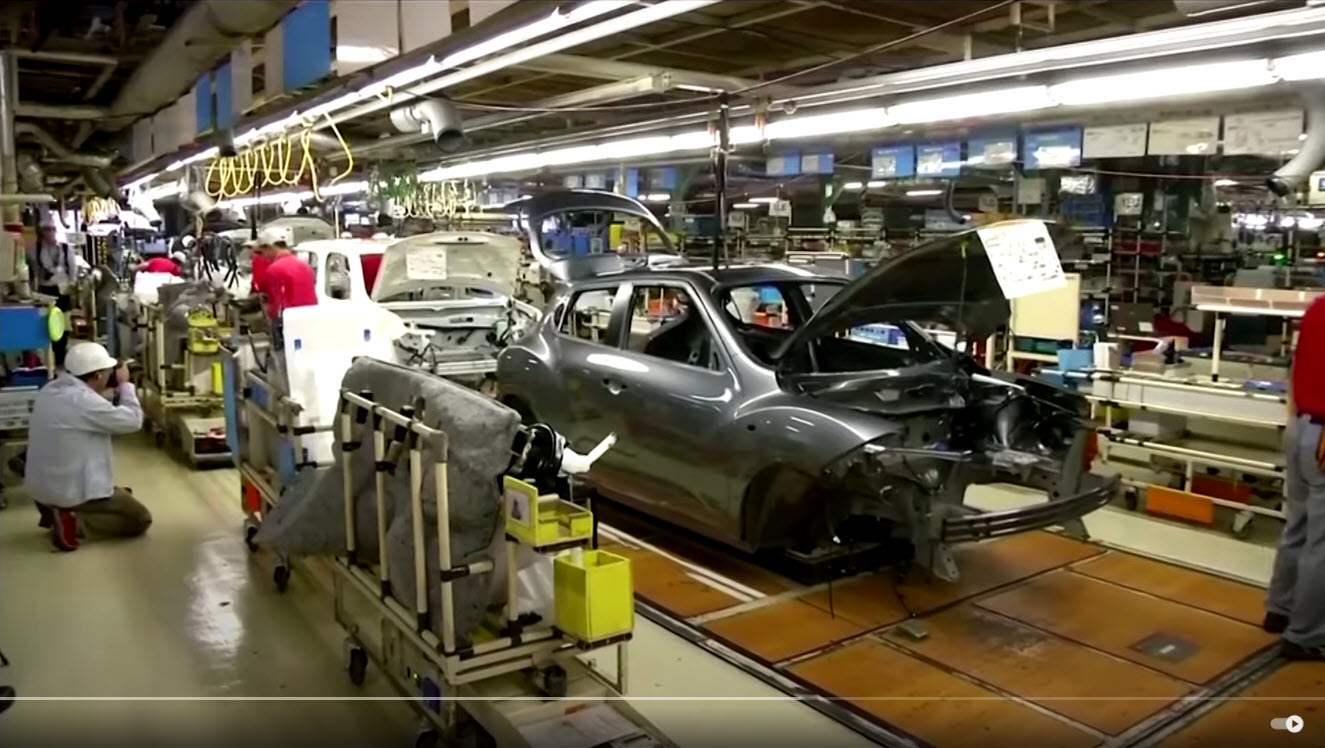
Nissan Motor Co. is making sweeping cuts across its global operations, announcing a plan to reduce its workforce by 9,000 and cut 20% of its worldwide production capacity. These measures come as Japan’s third-largest automaker battles rising competition from Chinese electric vehicle (EV) manufacturers, who have seized market share in the booming EV sector.
The job cuts are part of Nissan’s larger strategy to address declining profits and focus on profitability in a challenging market environment. Nissan has also slashed its annual profit forecast, projecting a much steeper decline than initially anticipated. The company attributes this revision to a complex global economic landscape marked by rising raw material costs, supply chain disruptions, and intense competition in its crucial markets, particularly China.
China, the world’s largest automotive market, has presented substantial challenges for foreign carmakers in recent years. Chinese manufacturers, benefiting from local government incentives and a growing consumer preference for EVs, have dominated the market, squeezing out foreign brands like Nissan. In response, Nissan plans to scale back its presence in China by closing underperforming factories and reducing its vehicle output. The company’s market share in China has been steadily declining as consumers opt for homegrown EV brands that offer competitive pricing, advanced technology, and robust government support.
Nissan’s production cuts will span its global operations, affecting facilities across North America, Europe, and Asia. The company aims to streamline operations and reallocate resources toward its most profitable sectors. Nissan’s recent focus has been on expanding its EV lineup and improving vehicle technology, but it faces a tough road ahead as global automakers race to adapt to an increasingly EV-driven market. While Nissan was an early adopter in the EV market with the introduction of the Nissan Leaf, newer models from both domestic and international competitors have crowded the space, placing additional pressure on the company’s market share and profitability.
In an address to shareholders, Nissan’s CEO acknowledged the difficulty of these decisions but emphasized that they are necessary to strengthen Nissan’s position. “We are committed to creating a more sustainable, efficient, and resilient Nissan,” he stated, highlighting the company’s renewed focus on cost control and investment in high-growth segments. The company remains hopeful that its renewed commitment to EVs and hybrid vehicles will eventually pay off as it attempts to regain market share in the evolving automotive landscape.
This announcement places Nissan among a growing number of international automakers, including Volkswagen and Ford, who are scaling back operations in China and refocusing on profitability amid fierce competition. Industry analysts suggest that Nissan’s cuts signal broader challenges for legacy automakers attempting to compete in markets dominated by aggressive local EV manufacturers.
With a restructuring plan underway, Nissan’s future hinges on its ability to leverage its technology and brand reputation in the increasingly competitive EV market. While the job cuts and production reductions are likely to impact thousands of employees and suppliers, Nissan aims to position itself for a sustainable future amid the shifting dynamics of the global auto industry.

