

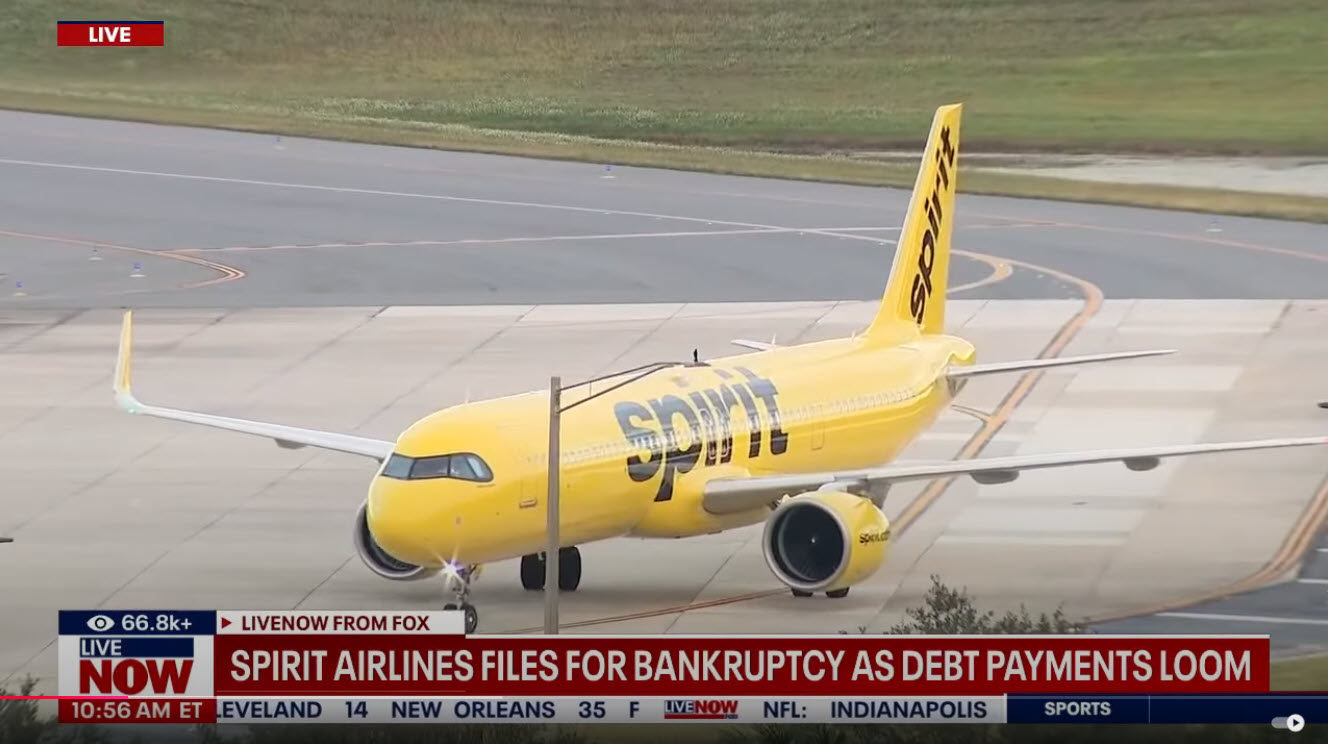
Spirit Airlines, the low-cost carrier headquartered in Dania Beach, Florida, has filed for Chapter 11 bankruptcy following financial challenges that have mounted over recent months. Despite the filing, the airline assures passengers that operations will continue as normal while it restructures under a deal with bondholders for $300 million in financing.
A History of Challenges
Spirit Airlines had been in merger talks with Frontier Airlines and JetBlue Airways in a bid to stabilize its operations and expand its market share. However, those discussions ultimately failed to materialize into a deal. Travel expert Peter Greenberg notes that the collapse of these merger negotiations left Spirit in a precarious financial position.
“The failed talks with JetBlue and Frontier were a missed opportunity for Spirit to secure a stronger foothold in the airline industry,” says Greenberg. He emphasizes that the bankruptcy filing allows Spirit to restructure its debt and attempt a fresh start.
Business as Usual for Passengers
While bankruptcy filings often raise concerns among travelers, Spirit has reassured its customers that flights will continue uninterrupted. “Passengers should not be alarmed,” Greenberg explains. “If flights are canceled, passengers will be reimbursed.” The $300 million financing agreement with bondholders will help the airline maintain operations as it works to exit bankruptcy by early next year.
Spirit’s CEO has pledged to honor existing tickets, frequent flyer points, and bookings during the restructuring process. The company remains optimistic that it can emerge stronger and continue serving as a leader in the budget travel market.
The Financial Landscape
As a prominent low-cost carrier, Spirit Airlines built its brand on affordable ticket prices and unbundled services, appealing to cost-conscious travelers. However, rising fuel costs, post-pandemic travel volatility, and increased competition have strained the airline’s finances. The failure to finalize a merger deal left Spirit unable to offset these challenges, forcing it to seek bankruptcy protection.
The airline industry has seen a growing trend of consolidation, with mergers providing carriers with the resources to compete in an increasingly competitive market. Spirit’s inability to secure such a deal highlights the financial vulnerabilities of standalone budget carriers.
Passenger and Industry Reactions
The bankruptcy filing has sparked mixed reactions from passengers and industry experts. Some travelers expressed concerns over potential disruptions, while others commended Spirit’s decision to prioritize restructuring rather than shutting down.
A frequent Spirit passenger from Miami said, “I’ve always appreciated Spirit’s low fares. I hope they can bounce back and continue offering affordable travel options.”
Future Prospects
As Spirit works through bankruptcy proceedings, analysts point to the possibility of renewed merger talks or strategic partnerships as potential lifelines. Greenberg suggests that the airline’s low-cost model remains viable, provided Spirit can adapt to the challenges of the evolving travel landscape.
“The key for Spirit will be to streamline its operations, manage costs, and rebuild trust among passengers and investors,” Greenberg says.
Impact on Dania Beach
As a Dania Beach-based company, Spirit Airlines’ financial troubles have broader implications for the local economy. The airline serves as a significant employer in the region, and its future will affect countless workers and businesses tied to the travel industry.
Local officials remain hopeful that Spirit’s restructuring will ultimately preserve jobs and maintain the airline’s presence in South Florida.

