

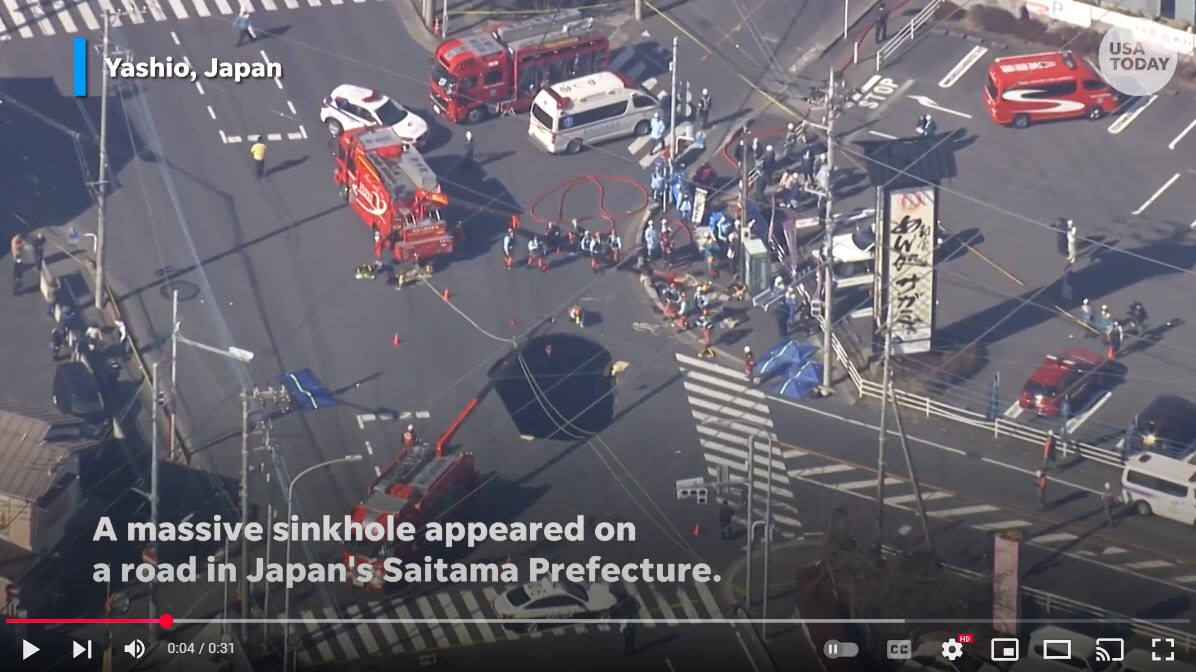
A massive sinkhole has opened in central Japan, swallowing a truck and causing significant damage to nearby infrastructure. The incident, which occurred in the city of Fukuoka, has prompted emergency responses and raised concerns about the safety of underground systems in urban areas.
Witnesses report that the sinkhole appeared suddenly on a busy street, creating chaos during the morning commute. The truck, which was driving through the area, was partially submerged when the ground gave way beneath it. The driver managed to escape with minor injuries, and no fatalities have been reported so far. Nearby pedestrians described hearing a loud rumble moments before the collapse, which left a gaping hole approximately 15 meters wide and 10 meters deep.
Local authorities have cordoned off the area, evacuating nearby buildings as a precaution. Engineers and geologists are currently assessing the damage and investigating the cause of the sinkhole. Initial reports suggest that heavy rainfall in recent weeks may have contributed to soil erosion, weakening the ground’s stability. However, experts are also examining the impact of underground construction projects in the vicinity, including subway expansions and utility maintenance work.
The sinkhole disrupted traffic and public transportation in the region, with several major roads closed and bus routes diverted. Emergency crews are working to stabilize the site and ensure no additional collapses occur. Fukuoka Mayor Soichiro Takashima has promised a thorough investigation into the incident, emphasizing the need to address urban infrastructure vulnerabilities.
This is not the first time Fukuoka has faced a similar crisis. In 2016, a sinkhole of comparable size opened near a busy intersection in the city, leading to questions about the long-term durability of its underground systems. While repairs were completed quickly in that case, critics argue that more comprehensive measures are needed to prevent future incidents.
The incident has drawn national attention, with safety experts calling for stricter monitoring of urban infrastructure. Japan’s aging underground systems, combined with frequent seismic activity and heavy rainfall, present unique challenges for city planners. The government is expected to review its infrastructure policies in response to the Fukuoka sinkhole.
Residents in the affected area have expressed concerns about returning to normalcy. Businesses near the site face disruptions, and property owners worry about potential long-term effects on building stability. Officials have assured the public that ongoing efforts will prioritize safety and transparency in addressing the issue.
The Fukuoka sinkhole serves as a stark reminder of the importance of proactive infrastructure management in densely populated urban areas. As investigations continue, local and national governments will likely face increased pressure to prioritize investments in resilient infrastructure to prevent similar disasters in the future.

