

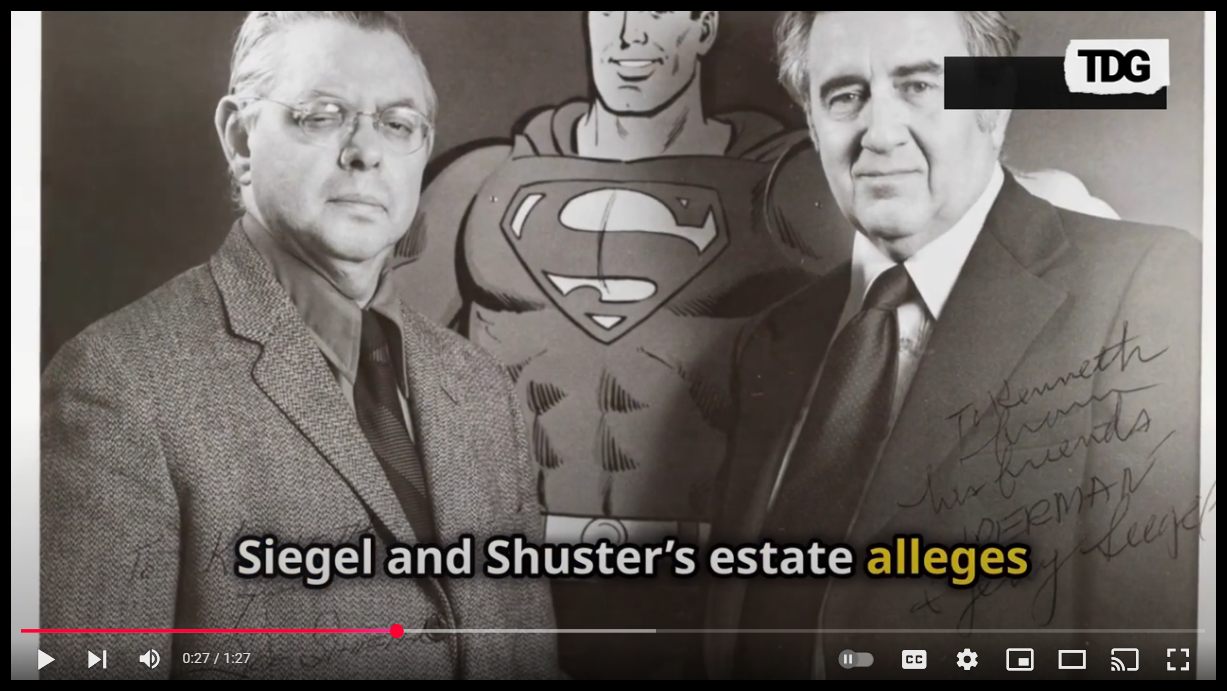
The estate of Joseph Shuster, co-creator of Superman, has filed a federal lawsuit against Warner Bros. Discovery and its subsidiary, DC Comics, alleging that the entertainment giant has been exploiting the Superman character without authorization in several international markets. The lawsuit claims that the copyrights to Superman in jurisdictions such as the United Kingdom, Australia, Canada, and Ireland reverted to Shuster’s estate in 2017 and 2021, in accordance with local copyright expiration laws. However, Warner Bros. and DC Comics have allegedly continued to use the character in these regions without obtaining proper licensing agreements from the estate.
This legal battle comes at a pivotal moment for the Superman franchise, as Warner Bros. prepares for the highly anticipated summer release of Superman, the first film under DC Studios’ new leadership helmed by director James Gunn. The lawsuit aims to block the studio from distributing, promoting, or profiting from Superman-related content in these international markets unless a new agreement is reached with Shuster’s estate.
The case hinges on complex copyright laws that differ across international jurisdictions. In the United States, copyright termination laws allow creators or their heirs to reclaim rights to their works under specific conditions, typically 56 or 75 years after their original publication. However, in 2013, the 9th Circuit Court of Appeals ruled against Shuster’s estate in a similar attempt to reclaim Superman’s copyright under U.S. law, reinforcing Warner Bros.’ legal hold on the character domestically.
Unlike the U.S., several foreign countries operate under different copyright frameworks, which provide for rights reversion to the original creator’s estate after a set period. The Shuster estate argues that this principle applies in Australia, Canada, the U.K., and Ireland, meaning that Warner Bros. and DC Comics no longer have automatic rights to use Superman in these regions. The lawsuit demands financial compensation for previous unauthorized use, as well as an injunction preventing the release of Superman and other related media in these territories unless a licensing deal is reached.
Warner Bros. Discovery and DC Comics have not yet issued a formal response to the lawsuit, but legal experts predict the case could have broad implications for intellectual property rights in the entertainment industry. If Shuster’s estate prevails, it could set a precedent for other creators and heirs seeking to reclaim rights to their work under international copyright laws.
The legal dispute has also sparked renewed debate over the treatment of comic book creators and their heirs, particularly regarding the compensation and control over characters that have become global cultural icons. Superman, first introduced in Action Comics #1 in 1938 by Shuster and writer Jerry Siegel, remains one of the most recognizable and profitable superheroes in history. Despite his iconic status, legal battles over the character’s ownership have persisted for decades.
With the release of Superman just months away, the lawsuit could lead to complications for Warner Bros. in securing international distribution. If a court ruling favors the Shuster estate, the studio may have to reach a settlement or license agreement to proceed with its release strategy in affected regions. The case could also impact Warner Bros.’ long-term plans for the Superman character within the newly structured DC Universe.
As the legal proceedings unfold, industry observers are closely watching how the case will shape future copyright disputes between creators and major entertainment corporations. The lawsuit underscores the ongoing tension between creative ownership and corporate control in Hollywood, with potential ripple effects across the comic book and film industries.

