

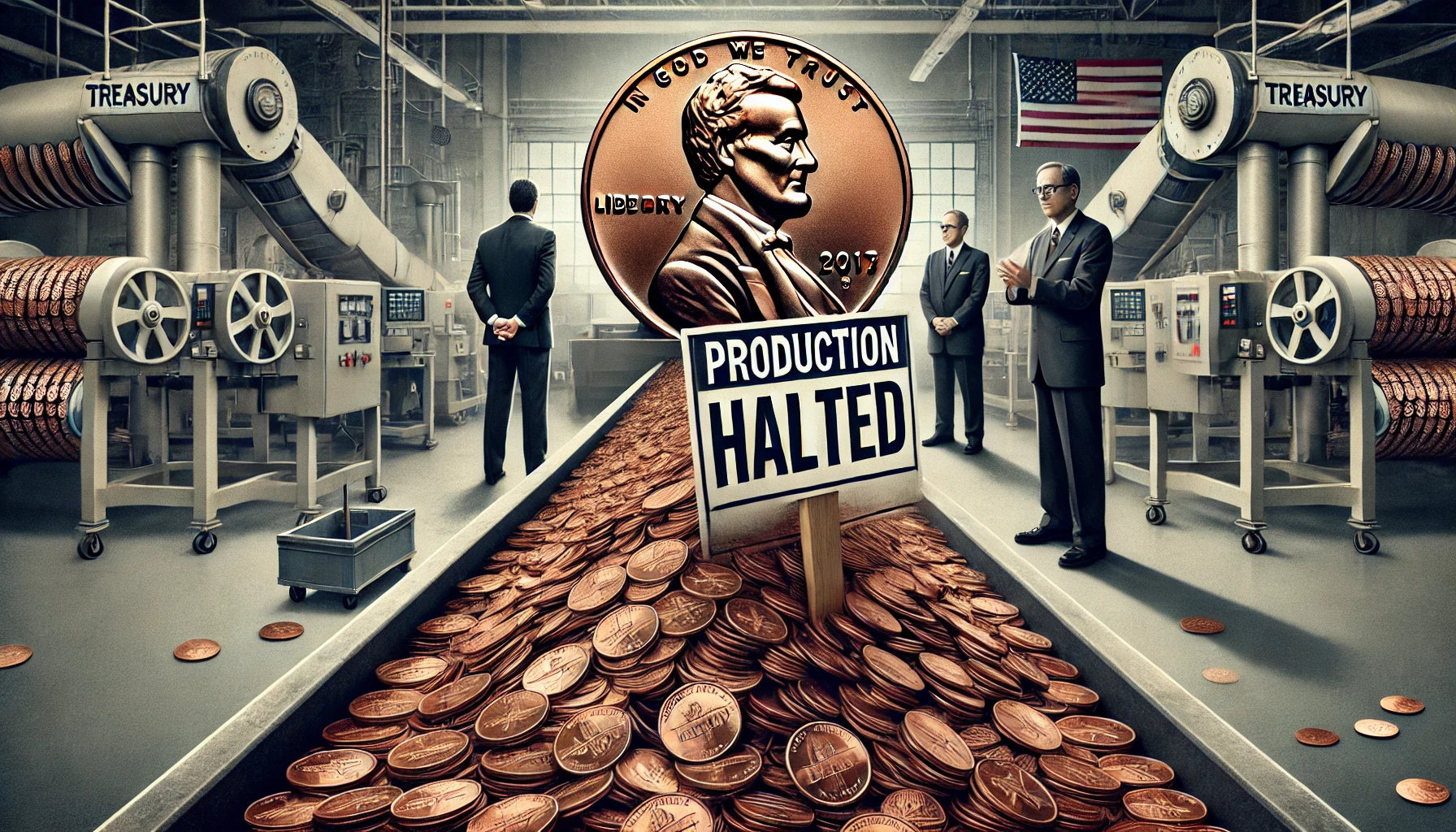
President Donald Trump has instructed the U.S. Treasury Department to cease the minting of new pennies, highlighting concerns over the escalating costs associated with producing the one-cent coin. This decision is part of a broader initiative to eliminate wasteful government spending.
The production cost of a single penny has been a longstanding issue, with recent reports indicating that each coin costs approximately 3.7 cents to manufacture. This discrepancy results in a significant financial loss for the government, with estimates suggesting that the U.S. Mint loses at least $100 million annually on penny production.
The Department of Government Efficiency (DOGE), led by entrepreneur Elon Musk, has been instrumental in assessing and identifying areas of fiscal inefficiency within the federal government. Their analysis revealed that in fiscal year 2023, the Mint produced over 4.5 billion pennies, accounting for around 40% of the 11.4 billion coins minted for circulation. The total expenditure for penny production in that year exceeded $179 million.
The debate over the penny’s relevance has been ongoing, with various stakeholders presenting arguments for and against its continued production. Critics argue that the coin’s minimal purchasing power and the financial losses incurred from its production render it obsolete. They also point to the successful elimination of low-denomination coins in other countries, such as Canada, Australia, and New Zealand, as precedents for this move.
Conversely, supporters of the penny contend that its elimination could lead to increased costs for consumers, as businesses might round prices up to the nearest nickel. Additionally, charities that rely on penny drives for fundraising express concerns about potential negative impacts on their contributions.
Historically, there have been legislative attempts to discontinue the penny. In 1990, former Representative Jim Kolbe introduced a bill to eliminate pennies from cash transactions, proposing rounding to the nearest nickel. Similarly, in 2017, the late Senator John McCain proposed a measure to halt penny production for a decade to study the feasibility of its permanent removal from circulation. However, these efforts did not gain sufficient traction in Congress.
The Treasury Department has not yet issued an official response to President Trump’s directive. As the administration moves forward with this plan, it remains to be seen how the cessation of penny production will impact various sectors, including retail pricing strategies and charitable fundraising efforts.

