

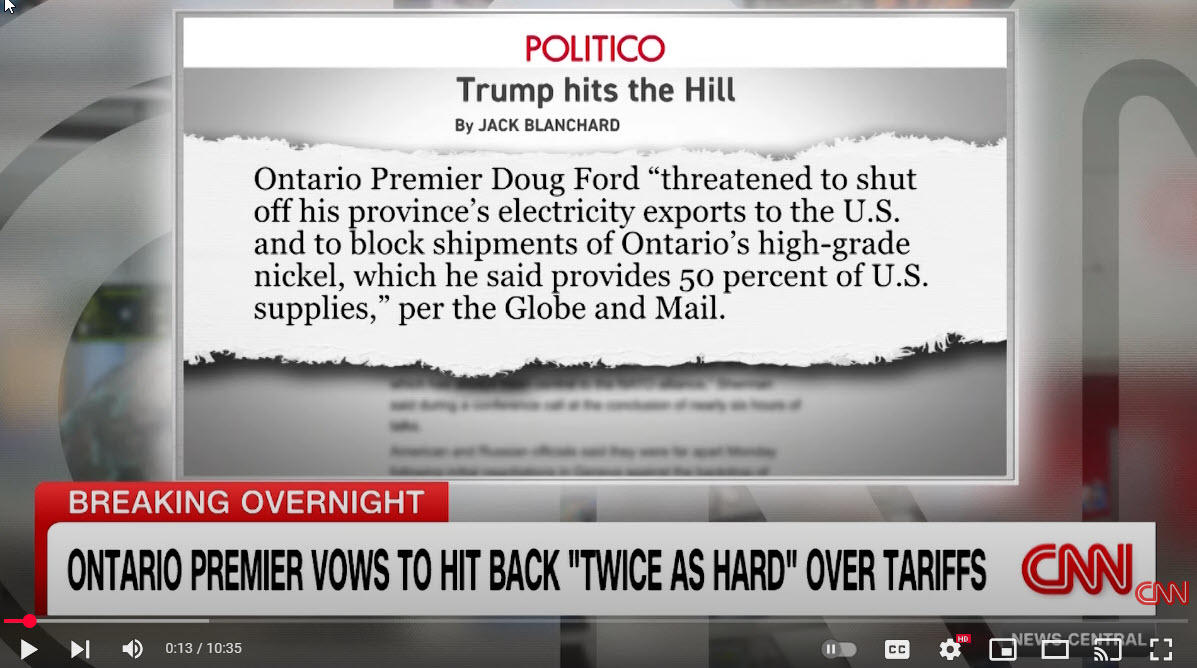
The trade standoff between the United States and Canada intensifies as Ontario Premier Doug Ford warns that he is prepared to cut off oil exports to the U.S. in response to President Donald Trump’s newly implemented 25% tariffs on Canadian goods. Ford, who has previously signaled his willingness to use Canada’s energy resources as leverage, fires back at the Trump administration, accusing it of unfairly targeting Canadian industries and threatening long-term economic damage to both countries.
The tariff dispute escalates after Canadian Prime Minister Justin Trudeau imposes retaliatory tariffs on a range of U.S. products, vowing to defend Canada’s economy from what he describes as reckless trade policies. The new measures include a 25% tariff on $30 billion worth of American imports, targeting sectors such as agriculture, manufacturing, and consumer goods. While Trudeau’s response is expected to hit American exporters, Ford’s warning about potentially restricting Canada’s oil supply to the U.S. presents a more severe economic threat.
Ontario is home to key energy infrastructure, including pipelines that transport Canadian crude oil to U.S. refineries in the Midwest. A disruption to this supply chain could drive up gasoline prices in several U.S. states, particularly in the Great Lakes region, which relies heavily on Canadian imports for fuel production. Ford argues that if the U.S. is going to impose economic hardship on Canada through tariffs, Canada has every right to retaliate using its most valuable exports.
Trump has remained defiant, dismissing Trudeau’s tariffs as ineffective and vowing to increase U.S. tariffs by an equivalent amount if Canada continues to impose countermeasures. In a post on Truth Social, Trump repeats his frequent claim that Canada has been taking advantage of the U.S. on trade for years, stating that his tariffs are necessary to correct economic imbalances.
The escalating trade war comes as both economies face pressures from inflation and shifting global supply chains. Industry leaders on both sides of the border are warning that prolonged trade disputes could lead to job losses and higher consumer prices. American businesses that rely on Canadian raw materials, particularly in the automotive and energy sectors, are urging the White House to reconsider its aggressive tariff strategy before it leads to further economic instability.
As tensions mount, negotiations between U.S. and Canadian trade officials continue behind closed doors in an attempt to de-escalate the situation. While neither side appears willing to back down, the possibility of an oil supply cutoff adds another layer of urgency to resolving the dispute before it causes widespread disruptions. The coming weeks will be critical in determining whether both nations can reach a compromise or if the trade war will escalate into a full-blown economic conflict.

