

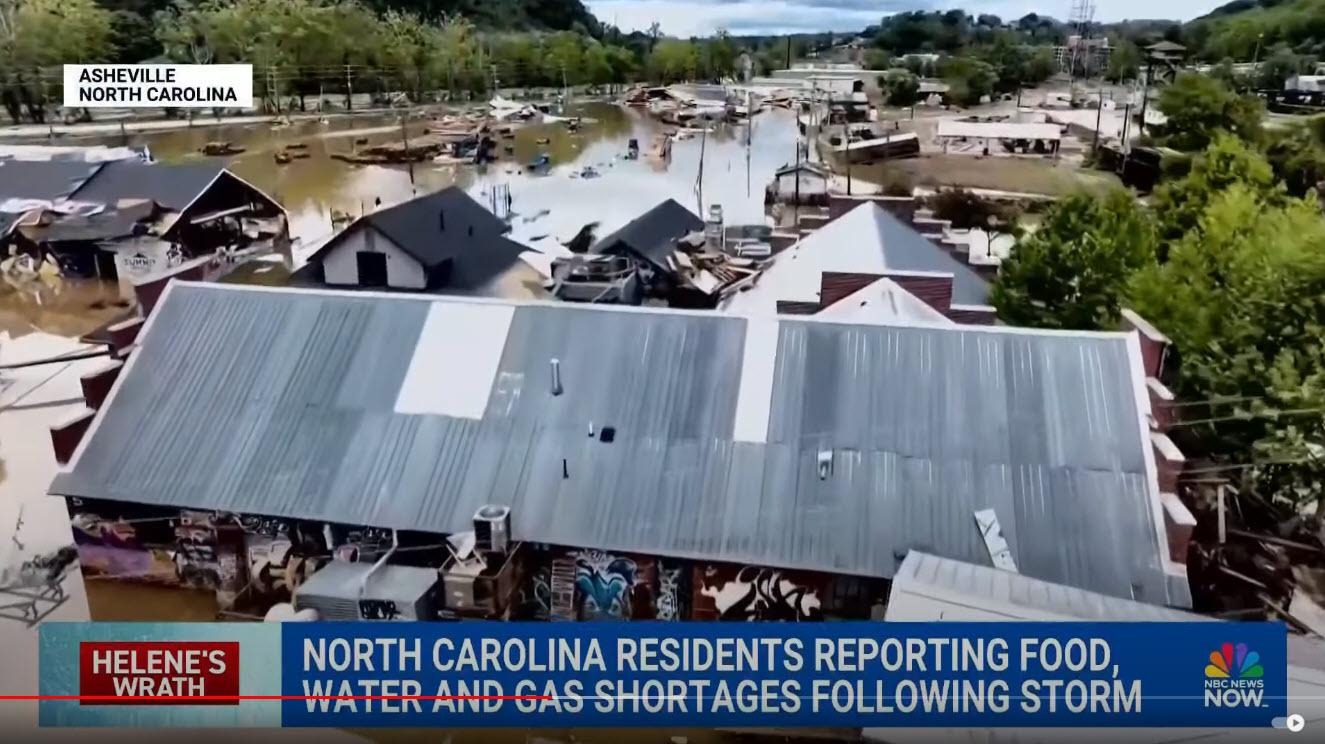
The catastrophic aftermath of Hurricane Helene continues to unfold across the southeastern United States, with at least 120 confirmed deaths and over 600 people still unaccounted for. The storm, which struck with unprecedented force, has caused widespread devastation, particularly in Asheville, North Carolina, where at least 35 people have been confirmed dead. The region, including Buncombe County, is experiencing what officials are describing as “biblical” levels of flooding, leaving the city flattened and resembling a war zone.
The White House has confirmed that more than two million people across the Southeast are without power, including over 400,000 in North Carolina alone. President Joe Biden has deployed additional federal resources to aid the impacted areas, pledging ongoing support as search and rescue operations continue. Biden is expected to visit the region later this week to assess the damage firsthand and meet with local officials.
Asheville, one of the hardest-hit areas, has seen entire neighborhoods submerged in floodwaters. Roads have been washed away, power is out in most areas, and communication systems have collapsed, with poor cell service further complicating rescue efforts. Officials have established makeshift family reunification centers and are going door-to-door on bikes to conduct welfare checks. Emergency shelters are at full capacity, and aid is being shipped in as quickly as possible to provide essential supplies such as water and food.
Buncombe County Sheriff Quentin E. Miller described the situation as grim, with officials and volunteers working tirelessly to track down missing individuals. Drew Reisinger, with the Buncombe County Register of Deeds, said that efforts are underway to identify victims and connect them with their families. “We’re doing everything we can to find those who are missing,” Reisinger said, as search teams continue to comb through collapsed structures and flood-damaged areas.
Homeland Security Secretary Alejandro Mayorkas confirmed that federal assistance had been deployed to Western North Carolina, where the damage has been described as catastrophic. “These weather events are becoming more severe, and we are seeing the results firsthand,” Mayorkas said, noting the worsening impacts of climate change on storm intensity and frequency.
In addition to the human toll, the damage to infrastructure across the Southeast is immense. In Georgia, former President Donald Trump visited the heavily impacted city of Valdosta, where he personally delivered supplies and pledged his support. He also announced that he is working with Elon Musk to bring Starlink internet services to the region, helping residents stay connected in areas where communication networks have been destroyed.
Florida Governor Ron DeSantis has launched Operation Blue Ridge, a multi-agency initiative to provide aid to North Carolina and Tennessee. The operation will include National Guard members, emergency management officials, and first responders. Florida’s Miami-Dade Fire Rescue’s Urban Search and Rescue Task Force One has also been deployed to the Big Bend region to assist with ongoing search and rescue operations.
As the search for missing individuals continues, officials warn that the death toll could rise significantly in the coming days. With entire communities still cut off from emergency services and thousands of homes destroyed, the full scope of the damage caused by Hurricane Helene is still unfolding.

