

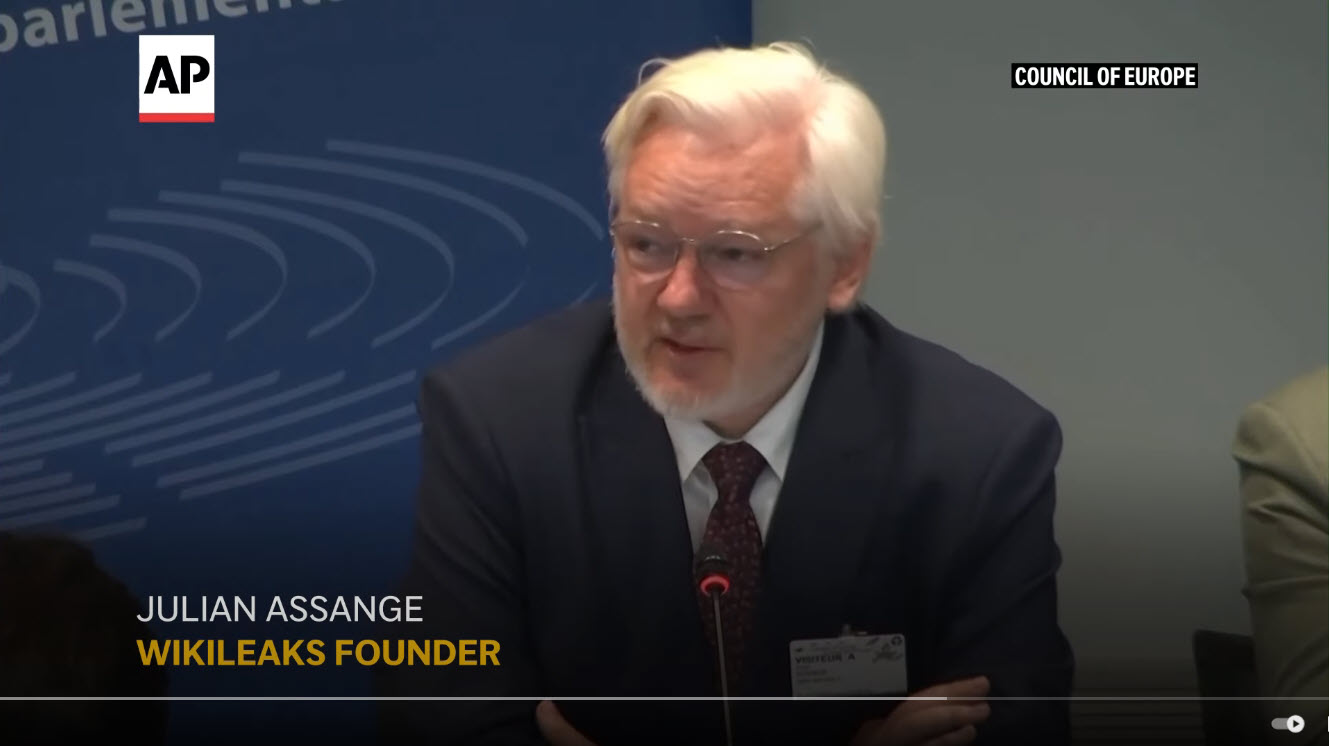
WikiLeaks founder Julian Assange declared Tuesday that he was freed after years of incarceration because he “pled guilty to journalism.” Speaking remotely before the Parliamentary Assembly of the Council of Europe’s legal affairs and human rights committee in Strasbourg, Assange reflected on the toll his years of detention and prosecution have had on his life, his work, and human rights.
Assange, who has been fighting extradition to the United States where he faces espionage charges, used the platform to argue that his legal battles represent a broader assault on press freedom. “I pled guilty to journalism, not to a crime,” Assange stated, contending that the charges against him are politically motivated and serve to punish him for his role in exposing classified information through WikiLeaks.
The evidence Assange provided to the committee centered around the impact of his prolonged detention on both his physical and mental health, as well as the precedent his case sets for journalists worldwide. He warned that his prosecution under espionage laws poses a dangerous threat to investigative journalism, which often relies on whistleblowers and the dissemination of government secrets to hold power accountable.
Since his 2019 arrest at the Ecuadorian embassy in London, where he had taken refuge for nearly seven years, Assange has become a symbol in the global debate over press freedom and state security. Assange’s supporters argue that the U.S. charges, related to WikiLeaks’ publication of confidential military and diplomatic documents, are an attack on free speech. His critics, however, accuse him of recklessly endangering lives by publishing unredacted materials.
During his testimony, Assange also emphasized the severe conditions he endured while in detention, including extended isolation and the psychological strain of facing potential extradition to the U.S. He urged the European legal and human rights community to recognize the dangers posed by his case and to stand in defense of journalistic freedom.
The case has continued to draw international attention, with human rights groups, press organizations, and government officials calling for Assange’s release and opposing his extradition to the U.S. The outcome of his legal fight remains uncertain, though the global implications for press freedom, transparency, and government accountability are significant.
Assange’s remarks in Strasbourg are expected to reignite debates about the role of journalists in a digital age where sensitive information is more accessible than ever before. As he continues his fight for freedom, Assange’s case remains a flashpoint in the struggle between government secrecy and the public’s right to know.

