

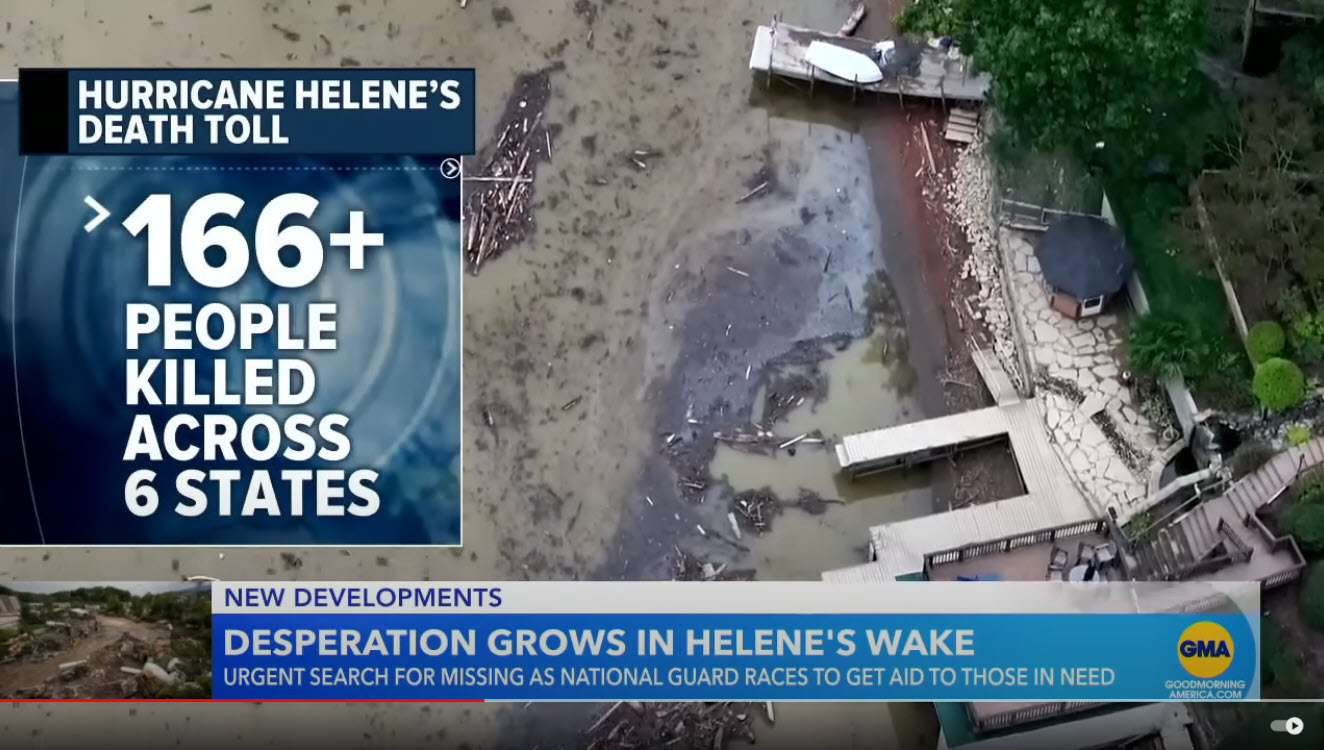
As recovery efforts continue across North Carolina in the wake of Hurricane Helene, the death toll in Buncombe County, one of the state’s hardest-hit areas, remains at 57. Officials warn that this number may rise as search and rescue teams work tirelessly to reach communities still cut off by the flooding. Across the Southeast, more than 160 people have lost their lives due to the storm, and the devastation continues to unfold.
In Buncombe County, which includes the city of Asheville, local authorities are grappling with widespread damage. County Manager Avril Pinder emphasized the catastrophic impact the flooding has had on mountain communities, where entire neighborhoods remain underwater. “Our focus is on getting critical infrastructure, like water systems, back online and ensuring the safety of our residents,” Pinder said. Out of 45 schools in the county, 44 are without water, and many buildings have been repurposed as staging areas for relief efforts.
President Biden’s Visit and Federal Support
President Joe Biden is scheduled to tour the affected areas of western North Carolina today. The president’s visit comes as part of his administration’s pledge to provide federal resources and support to the region. Biden has expressed that his top priority is ensuring that the recovery process is swift and efficient. “We are not leaving until the job is done,” he reiterated, acknowledging that Hurricane Helene was of “unprecedented and historic proportions.”
Biden’s visit will include an aerial survey of the damage before meeting with local officials and rescue teams. Meanwhile, more than 345,000 North Carolinians are still without power, and utility companies are working around the clock to restore services.
Search and Rescue Operations Continue
FEMA teams from across the country have joined forces with the North Carolina National Guard to aid in the rescue of people stranded in remote, mountainous areas. Helicopters and boats are being used to reach those still isolated by floodwaters. While search and recovery operations are making progress, officials remain concerned about the possibility of additional casualties as water levels recede and more areas become accessible.
Mistie Cogbill, a lifelong resident of Asheville, described the storm as unlike anything the community has ever seen. “We’ve had hurricanes before, but nothing like this. It’s like a nightmare that just doesn’t end,” she said. Despite the devastation, Cogbill praised the outpouring of support from neighbors and volunteers who have come together to help those in need. “The community spirit is what’s keeping us going.”
Impact Beyond North Carolina: South Carolina and Georgia Also Reeling
In neighboring South Carolina, President Biden will also meet with Governor Henry McMaster to assess the damage. The president is expected to receive a briefing at Greenville-Spartanburg International Airport later today, alongside Senator Lindsey Graham. South Carolina, too, is struggling with power outages and delayed FEMA applications as state officials try to get the necessary paperwork submitted amid overwhelming need.
Further south, Georgia farmers are reeling from the impact on their crops and livestock. The USDA’s early assessments indicate widespread damage across the state, further complicating the agricultural recovery in the region.
USDA Early Look at GA Farms’ Helene Aftermath
An early assessment reveals that Hurricane Helene has caused significant damage to Georgia’s agricultural sector, with farmers across the state reporting widespread losses. Crops such as peanuts, cotton, and soybeans, which were nearing harvest, have been severely impacted by the heavy rainfall and flooding. Livestock operations have also faced disruption, as pastures and barns have been submerged, leaving farmers scrambling to secure feed and shelter for their animals. The USDA is conducting further evaluations, but initial estimates indicate that the storm’s impact on Georgia’s farming industry could take months, if not years, to fully recover from.
Florida Lawmakers Call for Special Session to Fund FEMA
In the wake of Hurricane Helene, Florida’s US lawmakers on both sides of the aisle want Congress to come back early and boost funding for FEMA. Senator Rick Scott says the special session needs to happen quickly as lawmakers don’t return to the Hill until after the November election. Scott says FEMA clearly needs money to help respond to the fiscal needs of governors whose states were devastated by Hurricane Helene. The price tag could top 30 billion dollars. He says he is hopeful this will be a bipartisan effort. Senator Rick Scott says that FEMA needs more money to fulfill the federal response.
The Road to Recovery
With the storm’s aftermath still unfolding, the path to recovery will be long and challenging. Local, state, and federal officials are working in tandem to clear debris, restore utilities, and help communities rebuild. However, the immediate priority remains saving lives and ensuring that those in isolated areas receive the help they desperately need.
President Biden’s pledge of continued federal support is expected to provide some relief to the region, but the true scale of the damage from Hurricane Helene is still being assessed. The coming weeks will be critical as authorities continue to respond to the widespread destruction caused by the storm.

