

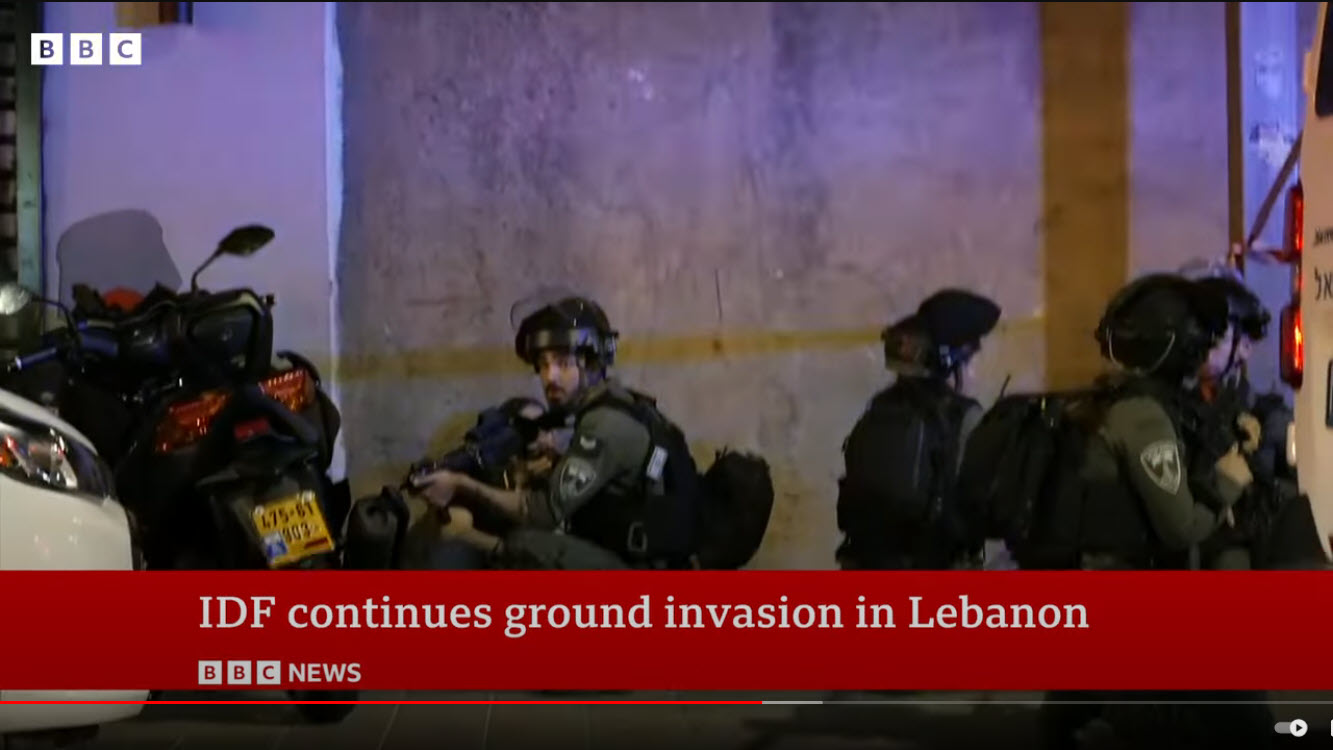
Tensions in the Middle East are at a breaking point as Israeli forces engage in ground battles with Hezbollah fighters in southern Lebanon, just one day after Iran launched a barrage of ballistic missiles at Israel. The conflict, which began after Israeli airstrikes in Lebanon killed a Hezbollah leader, has now intensified into a broader regional crisis. Israeli Prime Minister Benjamin Netanyahu has vowed retaliation, stating, “Iran made a big mistake tonight and it will pay for it,” as Israel continues to defend itself against Hezbollah, an Iran-backed militant group.
The missile attack by Iran, which saw nearly 200 ballistic missiles fired towards Israel, is said to be a direct response to the assassination of key leaders from Hezbollah and Hamas. While most of the missiles were intercepted by Israel’s defense systems, the strike has escalated an already volatile situation. Netanyahu has warned that the price for this attack will be severe, not just for Iran but also for any other group or nation that engages in aggression against Israel. “Whoever attacks us, we will attack them,” Netanyahu declared, signaling that Israeli forces will not hesitate to respond to threats from Lebanon, Yemen, Syria, and Gaza.
The conflict has reverberated across the region, with heightened fears of a wider Middle Eastern war. Iran’s President Masoud Pezeshkian visited Qatar today, where he discussed the escalating tensions with Qatar’s Emir Sheikh Tamim bin Hamad Al Thani. While Pezeshkian insisted that Iran does not seek war, he warned that if Israel strikes again, the response will be “wider and harsher.” The Iranian president also referred to the recent assassination of Hamas leader Ismail Haniyeh in Tehran as a key factor behind the missile barrage. Qatar, which has been mediating ceasefire talks between Israel and Hamas, expressed deep concern about the rapidly deteriorating situation and called for renewed efforts toward diplomacy.
Meanwhile, U.S. President Joe Biden and leaders from the G7 nations are set to hold emergency talks today, discussing ways to de-escalate the situation and prevent further conflict. Biden’s administration has urged restraint on all sides, but with ground fighting underway in Lebanon, the prospect of a peaceful resolution seems increasingly uncertain.
Back in the United States, the situation has sparked a political debate. Florida Senator Rick Scott has been vocal in his criticism of the Biden administration’s handling of the crisis. Scott blamed Biden’s calls for a ceasefire, arguing that Israel has the right to defend itself and should not be pressured to stand down. “When our allies are attacked, that’s an attack on America,” Scott stated, adding that the U.S. should step up military support for Israel. He accused the Biden administration of emboldening Iran and its proxies by easing sanctions and freeing up funding, which he claims has fueled the latest aggression against Israel.
As Israeli forces limit their ground incursions into southern Lebanon, the focus remains on fighting Hezbollah fighters, who have launched several rocket attacks into northern Israel. The battles along the border are intensifying, with heavy exchanges of fire reported. Israeli military officials have expressed confidence in their ability to repel Hezbollah’s advances but have also acknowledged the risk of a prolonged and bloody conflict if the situation continues to deteriorate.
With both sides dug in and unwilling to compromise, the Middle East faces the real possibility of a broader regional conflict. Israel’s determination to hold Iran accountable, coupled with Iran’s warnings of harsher retaliation, has left little room for diplomacy in the immediate future. As international leaders convene to discuss potential de-escalation strategies, the coming days will be critical in determining whether the region inches closer to war or finds a path back to diplomacy.

