

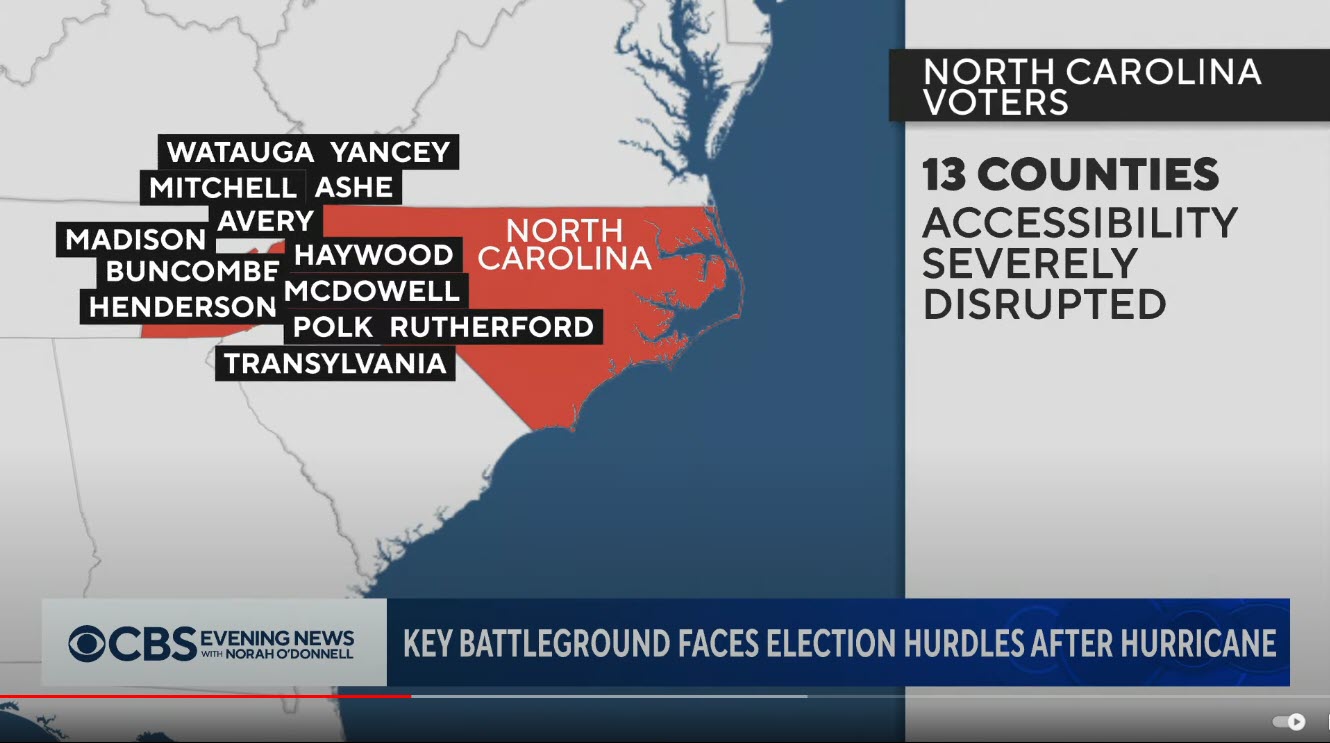
As North Carolina continues to recover from the devastating effects of Hurricane Helene, election officials are expressing concerns about the impact the storm may have on upcoming voting in the state. The western part of North Carolina, which was hit hardest by Helene, remains in recovery mode, with many residents still dealing with power outages, damaged infrastructure, and limited access to polling locations.
In response to these challenges, state officials have passed emergency measures this week aimed at making it easier for survivors of the hurricane to cast their votes in the critical swing state. One of the key provisions allows voters in affected areas to drop off completed absentee ballots at any county election board, not just the one in their home county. This change is intended to ease the burden on those who may still be displaced or cut off from their regular polling stations due to storm damage.
Despite these efforts, election officials acknowledge that the ongoing recovery from the storm has disrupted everyday life for many North Carolinians, making voting a challenge. “Our focus is on ensuring that every voter affected by Hurricane Helene still has the opportunity to make their voice heard,” one election official stated. The absentee ballot measures are a critical part of the state’s effort to ensure that those dealing with the aftermath of the hurricane can participate in the democratic process.
Governor Cooper Responds to Misinformation and Recovery Efforts
Meanwhile, Governor Roy Cooper continues to lead the state’s response to Hurricane Helene. Cooper describes the hurricane as an “eye-opener,” particularly in terms of the challenges that remain for recovery in some of the more remote areas of the state. Search and rescue operations are still underway, as teams work to reach isolated communities that were cut off by flooding and storm damage.
The hurricane left more than a million residents without power at its peak, but the governor reports that the number of outages has now been reduced to around 140,000. Significant efforts are also being made to restore communication and water systems across the affected regions. However, the toll of the storm remains severe, with at least 117 deaths reported in North Carolina alone.
Governor Cooper has also addressed growing concerns over misinformation circulating in the wake of the storm. He reassured the public that North Carolina is receiving the help it needs from both federal and local agencies, with significant resources being directed toward restoring essential services.
Asheville Faces Major Water Challenges
In Asheville, recovery efforts are facing a particularly difficult challenge: restoring clean drinking water to the city. The North Fork Reservoir, which provides the majority of the area’s water, was severely damaged in flooding caused by Helene nearly two weeks ago. Assistant City Manager Ben Woody provided an update, warning that it could take weeks to complete the necessary repairs to get the water plant back online.
Residents of Asheville are relying on bottled water and other emergency resources as teams work around the clock to address the damage. Woody assured the public that all available resources are being directed to restore water service as quickly as possible, but the scale of the repairs has made it a complex and lengthy process.
As recovery efforts continue across North Carolina, state officials are urging residents to remain patient and focused on both rebuilding and exercising their right to vote. The intersection of the hurricane’s aftermath and the upcoming election is a unique challenge, but election officials remain committed to ensuring that every eligible voter is able to participate.

