

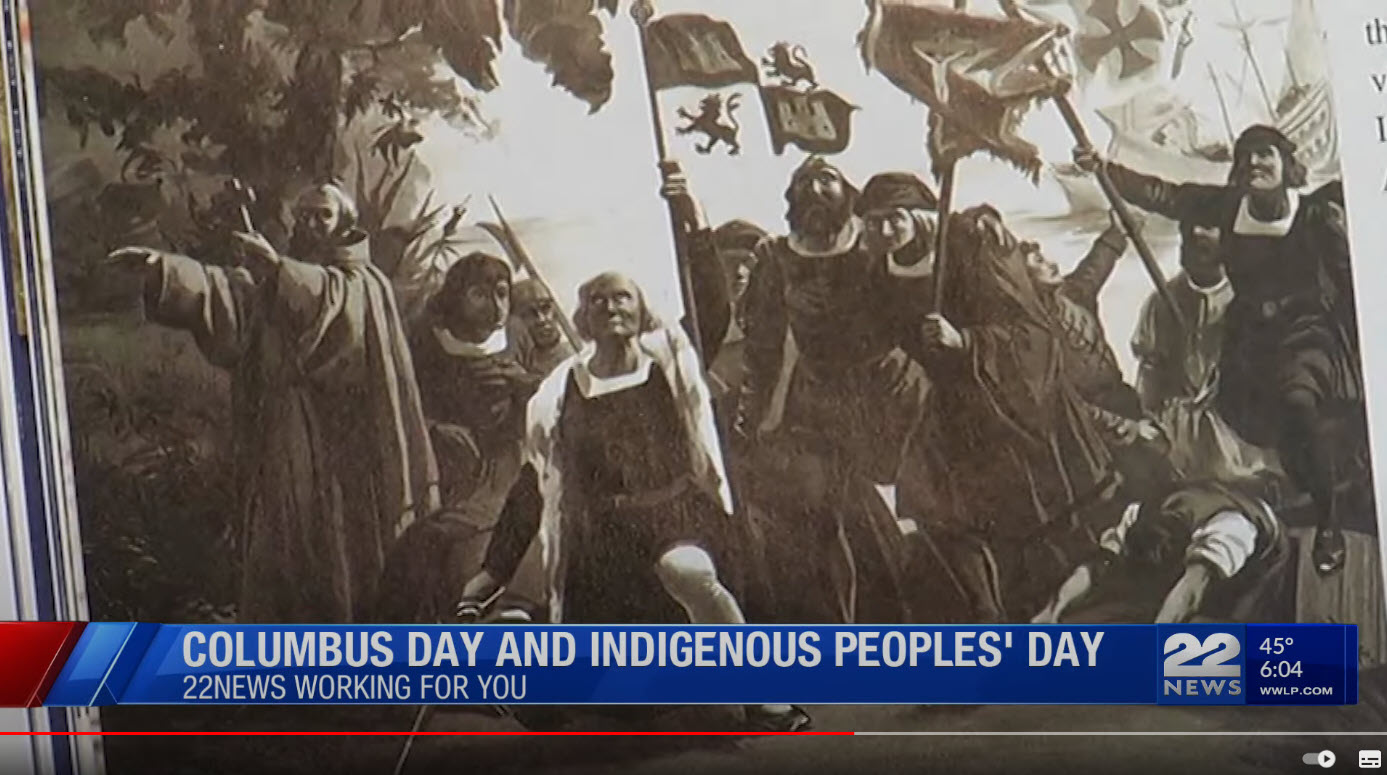
New York City is gearing up for the 80th annual Columbus Day Parade, a tradition deeply intertwined with Italian American heritage, but one that has increasingly sparked debate and controversy in recent years. The parade, which will wind its way through Manhattan, celebrates Christopher Columbus’ 1492 voyage and his “discovery” of the Americas, a moment many Italian Americans hold dear as a symbol of their contributions to the cultural fabric of the United States.
Despite the festive atmosphere, the parade and the holiday it honors are becoming flashpoints in a larger cultural debate. For many Indigenous peoples and their allies, Columbus Day represents the beginning of centuries of colonization, violence, and displacement. In response, there has been a growing movement to replace Columbus Day with Indigenous Peoples’ Day—a holiday that acknowledges the history and cultures of Native American peoples, as well as the ongoing struggles faced by Indigenous communities today.
New York City’s Columbus Day Parade remains one of the largest celebrations of its kind, but the controversy surrounding it is palpable. Italian American communities continue to emphasize the significance of Columbus as a symbol of their immigrant forebears’ perseverance and success in America. “Columbus is a hero for many Italian Americans. He symbolizes our resilience and pride in our heritage,” says Joe DiPietro, a participant in the parade.
However, across New York City and beyond, the calls for change grow louder each year. Several universities and institutions have already taken steps to move away from celebrating Columbus Day. Saint John’s University in Queens, for example, has removed the holiday from its academic calendar, opting instead to recognize Indigenous Peoples’ Day. Other institutions like Seton Hall University in New Jersey and Manhattan College in the Bronx have made similar moves, while Fordham University and Iona College continue to mark the day.
“The time has come to reconsider who we are celebrating,” says Maria Ruiz, a student activist at one of the institutions that no longer observes Columbus Day. “For Indigenous people, Columbus represents centuries of pain and suffering. By shifting to Indigenous Peoples’ Day, we honor the truth of history and the cultures that were nearly wiped out.”
The controversy extends far beyond New York. Los Angeles and other cities across the U.S. have officially recognized Indigenous Peoples’ Day in place of Columbus Day since 2019. The move has sparked new conversations about how to approach historical figures whose legacies are steeped in both achievement and tragedy. In California, celebrations of Indigenous Peoples’ Day have become major cultural events, with thousands attending festivities to honor Native American heritage.
Opponents of renaming the holiday argue that such changes diminish the contributions of Italian Americans and rewrite history through a contemporary lens. “Columbus is a part of our history, flawed as it may be,” says Anthony Savino, a member of an Italian heritage organization in New York. “We should acknowledge that history rather than erase it.”
Supporters of Indigenous Peoples’ Day argue that the holiday provides a more accurate and inclusive representation of American history. “We can’t celebrate a figure who represents the destruction of entire civilizations,” says Ruiz. “This isn’t about erasing Italian heritage—it’s about creating space for stories that have been ignored for too long.”
The tension between tradition and progress continues to shape how Americans approach the legacy of Columbus. As New York City prepares to celebrate Columbus Day with its 80th annual parade, the conversation around whose history is honored and whose is overlooked remains more relevant than ever.

